For decades, nutritional guidance has hinged on a simple, memorable rule: eat your five portions of fruits and vegetables daily. But if you think a banana at breakfast and a side salad at dinner are enough to optimize your longevity, groundbreaking new research might change your grocery list. A major flavanol intake study published on June 8, 2026, reveals that fewer than one in five adults actually consume enough of these specific plant compounds to protect their cardiovascular system.
When it comes to flavanols heart health benefits are unparalleled, but not all produce is created equal. The comprehensive analysis, published in the Food and Function journal 2026, proves that hitting a generic quota of fruits and veggies often leaves individuals completely deficient in the essential antioxidants required to fight off heart disease.
The Science Behind the Groundbreaking Flavanol Intake Study
To understand exactly what is missing from the modern diet, an international team of researchers from the University of Reading, Harvard Medical School, UC Davis, and Mars, Inc. tracked the dietary habits of more than 30,000 participants across the United States and the United Kingdom. Unlike older observational trials that relied on notoriously inaccurate food diaries, scientists measured exact urinary biomarkers to track how the body actually processed the food.
The results were startling. According to the lead author, Dr. Javier Ottaviani, the vast majority of adults fall dangerously short of the 500mg daily target. This 500mg threshold was previously established by the massive COSMOS trial—the largest clinical study on the subject to date—which found that a daily dose of 500mg of flavanols slashed cardiovascular disease mortality by an impressive 27 percent. These compounds are believed to support overall circulation, improve blood vessel elasticity, and drastically reduce systemic inflammation. Unfortunately, the new 2026 biomarker data shows that even among highly health-conscious individuals who consistently eat their greens, fewer than 20% achieve this cardioprotective baseline.
Why "Five a Day Fruit and Vegetables" Falls Short
The idea that generic produce consumption guarantees optimal nutrition is officially outdated. The public health mandate of eating five a day fruit and vegetables has undoubtedly improved global dietary habits, but it treats all plant matter as nutritionally interchangeable.
Professor Gunter Kuhnle from the University of Reading noted that while the overall volume remains good advice, it is time to get specific about which five you choose. If your daily rotation consists heavily of items naturally low in these specific antioxidants, you can easily check off your five servings while absorbing almost zero flavanols. To truly harness the power of a cardiovascular health diet and maximize flavanols heart health potential, consumers must shift their focus from mere quantity to specific, targeted nutrient quality.
Foods High in Flavanols
The Best Fruits for Heart Health
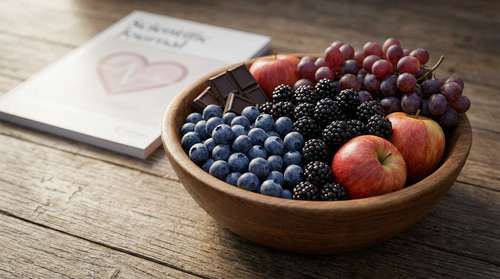
Achieving the 500mg daily goal does not require expensive supplements. You just need to know exactly what to look for in the produce aisle. By strategically swapping out generic snacks for foods high in flavanols, you can easily meet the clinical threshold. Here are some of the best fruits for heart vitality, ranked by their approximate yield per standard serving:
- Plums: A 500g punnet packs a massive 450mg of flavanols, nearly covering your entire daily requirement.
- Cranberries: Roughly 300mg per 250g serving.
- Blackberries: Delivering about 250mg per 200g punnet, these are an ideal addition to morning oats.
- Green Tea: While not a fruit, a single 250ml cup yields around 200mg, making it the perfect beverage to wash down a meal.
- Broad Beans (Fava Beans): Just a small 80g handful offers roughly 140mg.
- Cherries: About 130mg per 400g serving.
- Apples (with skin): A medium 200g apple provides a respectable 110mg, but the skin must be kept intact where the highest concentration of compounds lives.
How to Build a Smarter Cardiovascular Health Diet
Armed with this new data, optimizing your daily intake is surprisingly simple. You do not need to overhaul your entire lifestyle to see the flavanols heart health connection work for you. Small, deliberate substitutions make the biggest difference for your long-term wellness.
For example, trading your morning coffee for a cup of high-quality green tea immediately banks 200mg. Snacking on a medium unpeeled apple in the afternoon adds another 110mg. Toss a handful of blackberries into your breakfast yogurt, or add broad beans to a lunch salad, and you have effortlessly crossed the 500mg finish line without overthinking your meals or increasing your overall caloric intake.
The underlying message from the scientific community is clear: intention matters. The blanket advice of simply eating plants is evolving into a more refined nutritional science. By making smart, targeted choices at the grocery store, you can transform a basic, generic meal plan into a scientifically proven shield against cardiovascular decline. Your heart does not just want any fruit—it craves the right ones.