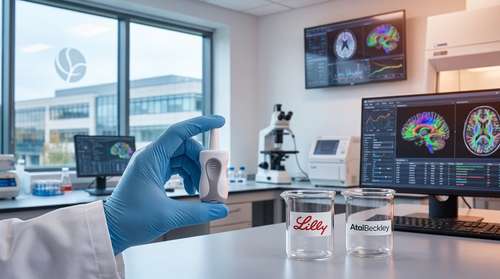
The landscape of mental health treatment is often characterized by slow, incremental progress, leaving many patients feeling stuck in a cycle of trial and error. However, the latest maneuver by one of the world's most prominent drugmakers suggests a rapid acceleration is underway. The highly anticipated Eli Lilly AtaiBeckley acquisition has officially been announced, marking the largest financial commitment to date by a legacy pharmaceutical giant into the once-stigmatized realm of hallucinogenic therapeutics. Valued at up to $3.8 billion, this historic deal sets the stage for a massive paradigm shift in how healthcare providers address complex mood disorders, specifically through the aggressive advancement of a pioneering psychedelic treatment for depression.
Big Pharma Validates Psychedelic Therapeutics
For years, the psychiatric field has grappled with plateauing innovation, relying heavily on daily medications that fail to provide adequate relief for nearly a third of patients. Eli Lilly's sudden and substantial entry into this space changes the commercial calculus entirely. Under the terms of the definitive agreement, Lilly will pay $2.8 billion upfront—translating to $6.75 per share in cash, representing a substantial 40% premium over the biotechnology company's recent 30-day volume-weighted average trading price. Furthermore, AtaiBeckley shareholders are eligible to receive up to $1 billion in contingent value rights if specific development and regulatory milestones are successfully met, bringing the total potential acquisition package to roughly $3.8 billion.
AtaiBeckley itself is a recently formed powerhouse, created in late 2025 through the strategic combination of Germany-based Atai Life Sciences and Oxford-based Beckley Psytech. Christian Angermayer, the founder and largest shareholder of AtaiBeckley, framed the multibillion-dollar sale as the ultimate catalyst for patient access. He noted that integrating with a pharmaceutical juggernaut provides the resources, scale, and distribution network necessary to push transformative medicines across the finish line far faster than an independent firm could achieve alone. By absorbing AtaiBeckley's entire clinical-stage pipeline, Eli Lilly is positioning itself to directly challenge existing advanced psychiatric interventions, such as Johnson & Johnson's ketamine-derived Spravato, which currently requires cumbersome twice-weekly clinic visits.
BPL-003: A Treatment Resistant Depression Breakthrough
The undisputed crown jewel of this massive buyout is BPL-003 mebufotenin benzoate. Designed as an intranasally administered synthetic form of 5-MeO-DMT—a powerful compound historically derived from specific plant species and the Colorado River toad—this modern therapeutic has shown remarkable clinical promise. For the millions of adults whose severe depressive symptoms persist despite multiple rounds of conventional therapies, this asset represents a genuine treatment resistant depression breakthrough.
Carole Ho, executive vice president and president of Lilly Neuroscience, recently highlighted the urgency of this crisis, noting that treatment-resistant depression stubbornly persists even after numerous therapeutic interventions have failed. During its Phase 2b clinical trials, the 5-MeO-DMT nasal spray produced rapid, statistically significant reductions in depressive symptoms. Unlike daily pills that can take weeks or months to accumulate baseline efficacy, BPL-003 begins working almost immediately. Trial participants experienced profound relief starting as early as Day 2, following a single in-clinic visit that lasted approximately two hours on average. Crucially, these beneficial effects were successfully maintained through Day 57, demonstrating highly durable relief from a single administration. Recognizing its immense public health potential, the FDA has already granted the therapy Breakthrough Therapy Designation.
How Rapid Acting Neuroplastogens Rewire the Brain
To understand why this therapeutic approach is so revolutionary, one must look closely at the underlying biological mechanics of rapid acting neuroplastogens. Traditional antidepressants, such as selective serotonin reuptake inhibitors, primarily work by modulating neurotransmitter levels in the brain. However, emerging psychiatric research indicates that severe, chronic depression involves a physical loss of synaptic plasticity—the brain's inherent ability to form, adapt, and strengthen vital neural connections.
Instead of merely tweaking serotonin availability, investigational compounds like BPL-003 aim to physically restore synaptic connectivity. They actively promote the rapid growth of new neural pathways in regions of the brain critical for mood regulation. This structural repair offers a fundamentally distinct mechanism of action, addressing the root physiological deficits of depression rather than simply managing its surface-level chemical symptoms.
Navigating Psychedelic Medicine FDA Guidelines and Future Milestones
The road to widespread commercialization is now structured around rigorous late-stage clinical validation and evolving psychedelic medicine FDA guidelines. The contingent value rights built into the acquisition framework are directly tied to the successful navigation of these complex regulatory pathways. Specifically, Eli Lilly is rapidly advancing BPL-003 into a massive Phase 3 clinical program consisting of two parallel pivotal studies, aptly named ReConnection 1 and ReConnection 2. Future financial payouts are linked not just to clinical success, but to formal U.S. regulatory approval and the subsequent DEA rescheduling of the substance, a necessary legal step for any Schedule I derivative aiming for pharmacy shelves.
Beyond the flagship BPL-003 program, Eli Lilly is acquiring a broader, highly diversified psychiatric pipeline. This includes VLS-01, a proprietary buccal film formulation of DMT currently in Phase 2b testing for treatment-resistant depression, which could completely bypass patient compliance issues associated with nasal sprays. Additionally, the deal encompasses EMP-01, an oral formulation of R-MDMA showing early promise for patients suffering from social anxiety disorder.
By throwing its unparalleled scientific infrastructure and financial weight behind AtaiBeckley, Eli Lilly is not just absorbing a promising biotech firm; it is firmly cementing the role of psychedelics in mainstream modern medicine. For patients who have exhausted all conventional options, the dawn of a new, highly effective, and structurally transformative therapeutic era may finally be on the horizon.