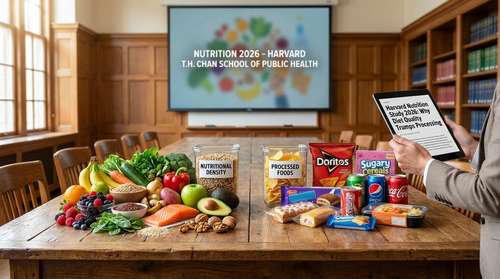
The quest to regulate America's grocery aisles has hit a significant roadblock. While consumer advocates eagerly await a legally binding ultra-processed foods definition, FDA leadership is signaling that finalizing these federal guidelines is proving much harder than initially anticipated. This delay occurs at a critical juncture in public health. Recent epidemiological modeling suggests that drastically cutting these heavily engineered items from our diets could save tens of thousands of lives, placing immense pressure on the government to act swiftly.
Health and Human Services Secretary Robert F. Kennedy Jr. has made combating chronic disease a cornerstone of his tenure, pushing aggressively for sweeping changes to how the commercial food industry operates. Yet, translating broad public health objectives into enforceable regulatory classifications is testing the limits of current nutritional science and exposing deep divides among researchers.
A "Quite Challenging" Roadblock in Chicago
The complexities of categorizing the modern food supply were on full display this week. During a keynote address from Donald Prater, IFT First 2026 attendees heard a candid assessment of the agency's current progress. Crafting a cohesive regulatory framework is proving "quite challenging," the FDA's acting deputy commissioner for food admitted to the gathered crowd of industry scientists and corporate leaders.
The core issue lies in the nuances of manufacturing and formulation. The FDA is currently evaluating multiple competing classification proposals to find a standard that makes both scientific and regulatory sense. "Just because it's a tough challenge, it doesn't mean it's something that we should shy away from," Prater stated, affirming that the initiative remains one of the core FDA food safety and nutrition priorities. However, the agency faces the daunting task of building a category that supports consistent enforcement without unintentionally vilifying nutritious household staples.
Are All Processed Foods Bad? The Classification Dilemma
The ongoing delay highlights a fierce debate among nutritional experts and dietitians: are all processed foods bad? Under the widely used NOVA classification system—which categorizes items purely by the extent and purpose of their industrial processing—highly engineered products like sodas, candy, and packaged pastries share the same designation as commercially produced whole-wheat bread, flavored yogurt, and fortified tofu.
Grouping such nutritionally diverse products under a single umbrella severely complicates the regulatory landscape. Industry groups argue that certain processing methods, such as fermentation or nutrient fortification, actively enhance food security and public health. Regulators are struggling to draw a clear line between foods processed for preservation and convenience versus those formulated with cosmetic additives, artificial emulsifiers, and excessive added sugars.
The Reality of Preventable Deaths
While the semantics of food classification are fiercely debated, the health consequences of modern diets are becoming impossible to ignore. A groundbreaking new Canadian study published this week in the American Journal of Preventive Medicine starkly quantified these risks. Researchers utilized extensive dietary tracking and mortality data, concluding that population-wide reductions in consumption could avert over 15,000 preventable deaths. Ultra processed foods were identified as a massive driver of cardiovascular disease within the study's modeling.
These findings echo a growing body of global evidence linking heavily manufactured items to severe health outcomes, including obesity, type 2 diabetes, and certain cancers. With these products currently accounting for more than half of the total dietary energy consumed in high-income countries, public health advocates argue that waiting for perfect scientific consensus is actively harming the population.
RFK Jr. and the Push for Transparency
The timeline for federal action has rapidly evolved into a point of political friction. For HHS Secretary RFK Jr, ultra processed foods represent an urgent crisis. Kennedy, who has frequently referred to heavily processed chemical additives as "poison," originally indicated that the agency would release a proposed framework by April of this year. That deadline came and went without a publication, leaving consumer watchdog groups increasingly frustrated.
Establishing this baseline terminology is the crucial first step for the administration's broader transparency agenda. Kennedy is actively advocating for strict front of package nutrition labeling 2026 rollouts. The primary goal is not necessarily to ban these products outright, but to mandate stark, standardized warning labels that force brands to compete directly on health metrics. If shoppers can easily identify and avoid the most heavily engineered items at a single glance, manufacturers will be financially incentivized to reformulate their recipes.
Navigating the Future of Grocery Store Aisles
For domestic food manufacturers, this extended period of uncertainty presents immense strategic hurdles. Once finalized, the official categorization will dictate far more than just packaging. It will influence advertising claims, ingredient restrictions, public school procurement policies, and potentially open the floodgates for consumer litigation regarding misleading health halos.
The agency must now thread a very delicate needle. It requires a framework robust enough to withstand inevitable industry pushback, yet flexible enough to acknowledge the realities of modern food production. As researchers continue to untangle the specific physiological impacts of individual artificial additives, the American grocery ecosystem sits on the precipice of its most significant transformation in decades. Until the government can agree on exactly what makes a food "ultra-processed," the burden remains heavily on the consumer to navigate the aisles with caution.