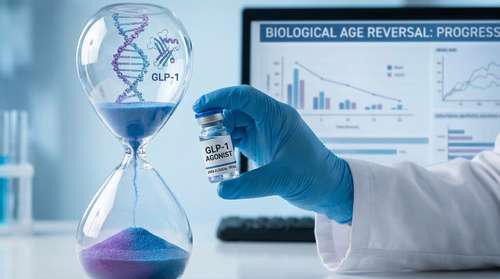
Is the solution to the great epidemic of the 21st century contained within a small plastic syringe? What began as a standard treatment for type 2 diabetes has transformed in just a few short years into a global phenomenon that is altering not only the face of medicine but also the global economy, supply chains, and the very way humanity perceives willpower.
The "Ozempic" phenomenon is not merely a passing diet trend out of Hollywood or Silicon Valley. It represents a classic disruption of the healthcare industry, combining a pharmacological breakthrough with a brilliant, unprecedented business model.
https://www.youtube.com/watch?v=Tggk-jkL3lk
Biology Over Psychology: Silencing the "Food Noise"
To fully grasp the magnitude of this phenomenon, one must first understand the mechanism of action. Unlike previous generations of weight-loss pills, which offered marginal results accompanied by psychiatric side effects or cardiovascular risks, the active ingredient in Ozempic (Semaglutide) acts as a GLP-1 hormone receptor agonist.
While the drug slows gastric emptying, its true power lies in the brain. It acts directly on the hypothalamus, transmitting a continuous signal of satiety. The immediate result reported by patients is the disappearance of what is known as "Food Noise"—those intrusive, often obsessive thoughts about the next meal.
Herein lies the most significant paradigm shift: Ozempic has completely detached obesity from the realm of "character flaws" and self-discipline, shifting it firmly into the metabolic-biological domain. The drug provided clinical proof that obesity is often a chronic state of chemical imbalance that can be regulated and corrected, much like high blood pressure. Once clinical trials demonstrated an average body weight reduction of around 15%—figures previously reserved exclusively for extreme surgical interventions like bariatric surgery—the market immediately recognized the potential.
https://www.youtube.com/watch?v=RhMecLkINXA
The GLP-1 Economy: When a Drug Becomes a National Growth Engine
The economic shockwave generated by Ozempic (and its sister drug, Wegovy, which is specifically indicated for weight loss) has created a rare macroeconomic anomaly. The developing Danish pharmaceutical company, **Novo Nordisk**, has surged to become the most valuable company in Europe by market capitalization, bypassing established giants across all sectors.
The company's staggering revenues have directly impacted Denmark's Gross Domestic Product (GDP), forced the Danish central bank to adjust interest rates, and created a scenario where an entire national economy is heavily reliant on a single product line. Simultaneously, this success has ignited an aggressive arms race within the pharmaceutical industry. Competitors like Eli Lilly (with Zepbound and Mounjaro) have rushed to launch treatments based on similar and combined mechanisms, promising even higher percentages of weight loss.
Effectively, the weight-loss drug category has evolved into a "monthly subscription" for body management. It is disrupting traditional diet and supplement industries, and even altering the consumption forecasts of fast-food giants and supermarket chains—simply because consumers on Ozempic buy, and eat, significantly less.
https://www.youtube.com/watch?v=w02hgCoGwSg
The Fine Print: The Subscription Model of the Human Body
However, this brilliant business model also has a dark side, presenting ethical and medical challenges that remain unresolved:
The Rebound Trap:
Clinical data reveals a clear trend—Ozempic does not "cure" obesity. Upon cessation of the drug, the appetite returns to its previous capacity, typically leading to patients regaining roughly two-thirds of the lost weight within a year. For pharmaceutical companies, this is the ultimate recurring revenue model; for the patient, it means a chronic, highly expensive, lifelong dependence on the drug.
The Sarcopenia Risk:
Such a drastic and rapid reduction in weight brings a critical side effect: a significant loss of muscle mass (Sarcopenia), rather than just fat. Without the strict integration of resistance training and a high-protein diet, patients may find themselves thin yet metabolically and physically weakened, exposed to risks of osteoporosis and fractures.
Supply Chains and Medical Cannibalization:
The mass influx of consumers seeking to lose weight, largely through off-label prescriptions and private medicine, has created a severe global shortage. Consequently, type 2 diabetes patients—for whom the drug is a daily medical necessity to prevent life-threatening complications—are left struggling to access their medication.
https://www.youtube.com/watch?v=a_vJYkb_Rjk
The Bottom Line
Ozempic and the broader GLP-1 class of drugs are not just "Hollywood magic." They represent a colossal scientific leap, proving that chemical regulation can overcome generations of psychological struggle. Nevertheless, this phenomenon raises weighty questions about the future of public healthcare: Who will fund an expensive miracle drug required for a lifetime? Have we turned our body weight into a product managed by a monthly subscription?
Until these questions are answered, the market has already spoken. Ozempic is here to stay, not merely as a medication, but as an economic and cultural force actively reshaping the world.