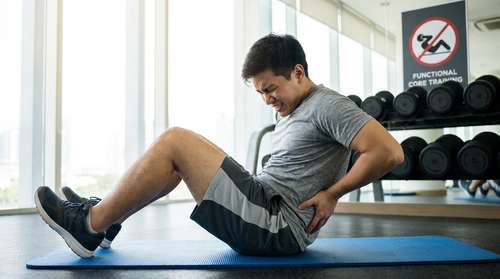
If you are still dropping to the gym floor to crank out endless repetitions of crunches, it is time to drastically update your fitness routine. As of late July 2026, leading strength and conditioning experts have issued fresh, definitive warnings about this classic abdominal movement. For anyone wondering why sit ups are bad, the answer lies in modern biomechanics and muscle activation patterns. Far from being the ultimate core builder, this outdated exercise is highly ineffective for abdominal definition and is likely wreaking havoc on your spine.
The Biomechanics of Injury: Lower Back Pain From Sit Ups
Recent sports science assessments confirm that the traditional sit-up is fundamentally flawed. While fitness enthusiasts historically measured their athletic prowess by their two-minute rep count, experts now understand that the movement generates catastrophic compressive forces on the lumbar spine. Studies have shown that a standard sit-up imposes roughly 3,300 newtons of compression on the spine. This massive force repeatedly squeezes the spinal discs, which can eventually lead to painful herniations and chronic discomfort.
When examining lower back pain from sit ups, the root cause is rarely a weakness in the abdominal muscles themselves. The pain originates from the mechanics of the movement, which forcefully loads the anterior spine while entirely ignoring the core's biological purpose. According to Dr. Lee Brown, a strength and conditioning expert cited in late July 2026, the ongoing reliance on sit-ups is rooted more in Hollywood movie montages and archaic boxing routines than actual exercise science.
The Hip Flexor Trap
The true danger of the sit-up lies in its deceptive muscle activation. Sit-ups do not isolate your abdominal wall. Instead, the movement is primarily driven by your hip flexors, specifically a deep muscle known as the psoas major. When you aggressively train these muscles through repetitive trunk flexion, they can become hypertonic, meaning they remain chronically stiff and tight. This severe hypertonicity creates a muscular imbalance that pulls your pelvis forward, creating a dumping ground for harmful shearing forces directly into your lower back.
Planks vs Sit Ups: The Military Shift to Functional Core Training
The debate of planks vs sit ups is no longer a debate at all. Recognizing the high injury rates associated with archaic fitness tests, the U.S. military has completely overhauled its physical readiness protocols. Branches including the Army and Navy have formally eliminated the sit-up from their combat fitness tests, replacing it with the forearm plank. This historic transition was made to better evaluate actual combat readiness and drastically reduce training-related lower back injuries among service members.
This institutional shift highlights the critical importance of functional core training. Your midsection is not designed to repeatedly crunch your torso forward. Biomechanically, the core is engineered to resist external forces, protect the delicate spinal column, and safely transfer power between the upper and lower body. Planks demand that your transverse abdominis, obliques, and lower back muscles work together as a unified corset. This mimics the comprehensive stability required for real-world movements, whether you are lifting heavy groceries, swinging a golf club, or carrying tactical gear.
How to Strengthen Core Without Sit Ups
Transitioning away from classic crunches does not mean sacrificing a strong midsection. In fact, learning how to strengthen core without sit ups will yield superior athletic performance and a much more defined aesthetic. The key is prioritizing functional movements that challenge your ability to maintain a neutral spine under tension.
Best Exercises for Abs
To build legitimate functional strength and achieve visible definition safely, top physical therapists recommend a mix of anti-extension, anti-rotation, and loaded carrying movements:
- The Bird Dog: From a tabletop position on all fours, extend your opposite arm and leg while keeping your torso completely still. This builds posterior chain stability and is highly recommended by pain specialists for injury prevention.
- Dead Bugs: Lying flat on your back, slowly lower your opposite arm and leg toward the floor without letting your lower back arch or lift off the ground. This is a premier movement for isolating the anterior core in a spine-neutral position.
- Suitcase Carries: Walk slowly with perfect posture while holding a heavy dumbbell or kettlebell in one hand. This forces your obliques to fire aggressively to prevent your torso from leaning, building remarkable lateral stability and grip strength.
- Forearm Planks: The new gold standard for testing endurance, planks recruit a superior balance of muscles on the front, sides, and back of the body compared to isolation movements.
Reversing the Damage: Hip Flexor Tightness Workouts
If years of crunching have left you with chronic stiffness and pain, you must actively undo the damage. Integrating targeted hip flexor tightness workouts into your weekly routine is absolutely essential for long-term spinal health. Focus on deep lunge stretches, kneeling psoas stretches, and mobility disciplines like Pilates or yoga, which naturally lengthen the hip flexors while building intrinsic core strength. By prioritizing mobility and stretching the psoas major, you can correct the anterior pelvic tilt caused by old-school routines and finally alleviate that persistent lower back tension.