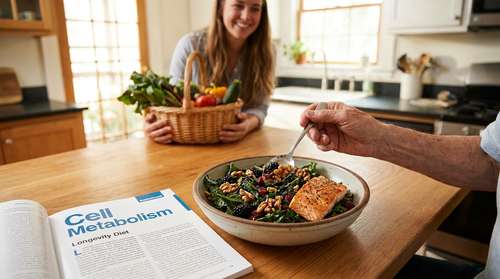
For decades, women navigating the physical transitions of aging have searched for sustainable, scientifically backed ways to protect their cardiac health. Now, striking new data reveals that strict, restrictive eating isn't necessary to achieve profound cardiovascular protection. Instead, a flexible approach is taking center stage, with recent findings highlighting significant Planetary Health Diet benefits for older adults. According to research presented this week, embracing this environmentally conscious, plant-rich framework can reduce the likelihood of major cardiac events by nearly a third.
The latest findings emerged at the NUTRITION 2026 conference, hosted by the American Society for Nutrition in National Harbor, Maryland. Researchers unveiled the results of a massive two-decade analysis, offering some of the most compelling evidence to date for a plant-forward diet for heart health. For women navigating the complexities of aging, these insights provide a highly accessible blueprint for longevity.
The Groundbreaking 20-Year Research Behind the 28% Drop
To understand the sheer scale of these findings, you have to look at the massive data pool. The researchers utilized comprehensive dietary and health records from the landmark Women's Health Initiative study, a long-term national health investigation funded by the National Heart, Lung, and Blood Institute. By tracking 66,892 postmenopausal women over a comprehensive 20-year follow-up period, the team could identify long-term trends that shorter studies often miss. When the initial data collection began between 1994 and 1998, all of the participants were completely free of cardiovascular disease, ensuring that the results accurately reflected preventative benefits rather than disease management.
Lead researcher Donya Shahamati, a doctoral student in public health at the University of California, Irvine, detailed how her team scored participants based on how closely their daily eating habits aligned with the Planetary Health Diet index. The results were staggering.
Women whose eating habits most closely mirrored the dietary framework experienced a 28% reduction in their overall risk of cardiovascular disease compared to those with the lowest adherence scores. Importantly, the research team separated the data to examine specific conditions, finding consistent risk reductions across coronary heart disease, stroke, and heart failure.
Why Heart Disease Prevention Postmenopause Matters
Cardiac risk isn't static. For women, the physiological shifts that occur during and after menopause create unique vulnerabilities. As estrogen levels plummet, vascular elasticity often decreases while cholesterol profiles can shift unfavorably. This makes heart disease prevention postmenopause one of the most critical priorities in geriatric and preventative medicine.
The biological mechanisms behind this 28% risk reduction are multifaceted and powerful. Plant-based foods are inherently rich in dietary fiber, antioxidants, and essential phytonutrients, which actively work together to reduce systemic inflammation and improve overall endothelial function. When you replace saturated fats—commonly found in heavy red meats and full-fat dairy—with the unsaturated fats abundant in nuts, seeds, and olive oil, you naturally lower harmful LDL cholesterol while maintaining protective HDL cholesterol levels. For women transitioning through the later stages of life, this natural dietary defense mechanism effectively counteracts the sudden loss of estrogen's built-in cardiovascular protection.
Cardiovascular risk increases with age and tends to rise after menopause, Shahamati emphasized during her presentation. Many women feel intense pressure to adopt extreme or highly restrictive eating regimens to combat these natural metabolic changes. This study proves that harsh dietary limitations are entirely unnecessary for lowering cardiovascular risk.
What Exactly is the Planetary Health Diet?
Unlike fad diets focused solely on rapid weight loss, the Planetary Health Diet was originally developed by the EAT-Lancet Commission to balance human nutritional needs with environmental sustainability. However, the unexpected byproduct of this eco-friendly eating style is its massive protective effect on the human body.
The framework heavily emphasizes foods grown from the earth while drastically minimizing—but not entirely eliminating—animal products and highly processed items. It champions fruits, vegetables, whole grains, legumes, nuts, and unsaturated fats. Conversely, it encourages limiting red meats, added sugars, saturated fats, and refined carbohydrates.
Small Changes, Massive Impact
Perhaps the most encouraging takeaway from the extensive study is that perfection is absolutely not required to see results. The research clearly showed that even moderate, incremental adherence to the dietary guidelines provided highly noticeable cardiovascular protection. You don't have to become a strict vegetarian or give up your favorite family recipes entirely to experience profound Planetary Health Diet benefits. The key is consistency and making better choices when the opportunity arises.
According to the researchers, moving toward a plant-forward diet for heart health can be achieved through highly realistic, manageable daily adjustments. Actionable examples presented at the NUTRITION 2026 conference included:
- Swapping out traditional butter for heart-healthy unsaturated options like olive oil or avocado.
- Committing to just one entirely meatless meal per week.
- Choosing whole grains, such as a hearty bowl of oatmeal, over refined cereals for breakfast.
- Making sure vegetables visually occupy at least half of your dinner plate.
A Flexible Path to Lowering Cardiovascular Risk
The rigid nature of many health interventions often leads to burnout and eventual abandonment. The true power of these new findings lies in their flexibility. By utilizing data from the Women's Health Initiative study, researchers have validated a nutritional approach that accommodates real-world eating habits, cultural preferences, and budget constraints.
For decades, medical professionals have urged older adults to watch what they eat, often focusing on what must be removed from the plate. The Planetary Health Diet flips this narrative, focusing instead on the abundance of nutrient-dense, plant-based foods that should be added. The evidence is now indisputable: feeding yourself in a way that supports the planet simultaneously offers a powerful shield for your heart. For postmenopausal women looking to safeguard their future, filling up on plants might just be the most effective medicine available.