For decades, health experts have championed physical activity for its profound physical and mental benefits. However, a dangerous new wave of appearance-driven social media workout trends is actively discouraging young women from working out. In mid-July 2026, leading health organizations—including non-profits like ExerciseNZ—issued urgent warnings about the rapid spread of scientifically baseless terminology dominating social platforms. At the center of this controversy are two viral concepts: the runner's waist myth and the cortisol face TikTok trend.
These viral buzzwords suggest that running widens your midsection and that exercise-induced stress causes facial puffiness. But what does the science actually say? Here is a deep dive into why these claims are fundamentally flawed and how the battle of exercise science vs tiktok misinformation is one we need to win for the sake of public health.
Does Running Make Your Waist Bigger? Unpacking 'Runner's Waist'
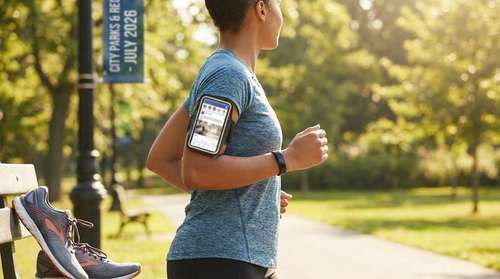
One of the most pervasive fears circulating right now is the concept of a "runner's waist." Influencers with no formal medical or fitness training are claiming that regular running will create a wider, boxier midsection. The theory suggests that running excessively builds up the oblique muscles along the sides of the abdomen, thereby ruining a coveted hourglass figure.
So, does running make your waist bigger? The medical and physiological answer is an absolute no.
To understand why, we have to look at how muscle growth—known as hypertrophy—actually works. Growing large, bulky muscles requires high-resistance loads (like heavy weightlifting), a calorie surplus, and progressive overload. Running provides none of these. Hitting the pavement is a cardiovascular endurance exercise that operates on low resistance and repetitive motion.
The Physiology of Core Endurance
While running certainly activates your core and obliques to maintain balance and stability, it does so at an incredibly low intensity compared to resistance training. Recent biomechanical analyses confirm that oblique activation during running stays entirely within normal stabilizing ranges. It simply lacks the heavy, isolated load required to significantly increase muscle size. The idea that jogging will thicken your core is physiologically implausible.
The Truth About 'Cortisol Face' and Exercise
Another trending panic is the phenomenon of "cortisol face." Creators are warning young women that the physical stress of working out will elevate their cortisol levels, leading to permanent facial puffiness and bloating. This has led many to abandon cardiovascular workouts entirely, terrified of developing a swollen appearance.
This exercise cortisol facial puffiness claim takes a legitimate medical concept and distorts it completely. Chronic, dangerously high cortisol can indeed cause a rounded face, a medical symptom known as "moon facies". However, medical experts emphasize that this is a symptom of severe endocrine disorders, such as Cushing's syndrome, or a result of prolonged steroid medication use. It is not a recognized medical condition caused by going to the gym for 45 minutes.
How Working Out Actually Impacts Stress
While it is true that physical exertion temporarily spikes cortisol to help your body manage energy during a workout, this is a healthy, acute response. Often, what influencers misidentify as facial swelling immediately after a run is simply temporary vasodilation—the natural expansion of blood vessels that brings a flush to the skin to cool the body down. This dissipates quickly.
In the long run, regular, moderate-intensity exercise actually lowers your baseline cortisol levels. Activities like cycling, swimming, and running improve your body's insulin sensitivity and help regulate stress hormones effectively. Quitting exercise out of fear of a puffy face removes one of the most powerful natural tools you have for managing daily anxiety.
The Broader Impact of Unqualified Fitness Influencers
The rise of these aesthetic-driven fears is part of a larger, systemic problem with fitness content on platforms like TikTok. Studies analyzing fitness ecosystems frequently reveal that the vast majority of viral advice is distributed by creators lacking any certified credentials in kinesiology, sports medicine, or nutrition. The result is a chaotic landscape where scientifically sound advice is drowned out by fear-mongering and clickbait.
Fitness organizations are particularly concerned about how these trends target young women. By framing natural bodily responses to movement as aesthetic flaws that need to be "fixed" or avoided, these trends breed an unhealthy relationship with physical activity. Exercise becomes viewed as a punishment or a hazard, rather than a celebration of what the human body can achieve.
Prioritizing Health Over Social Media Aesthetics
The recent pushback from the fitness and medical communities highlights a troubling shift. The hyper-fixation on microscopic aesthetic changes is overshadowing the undeniable mental and physical benefits of movement. Health and mental well-being are consistently the two most common, evidence-backed reasons people should engage in physical activity. When unqualified influencers hijack this narrative, they leverage deep-seated body image insecurities to generate views.
Seeing these viral fitness myths debunked by professionals serves as a crucial reminder that social media algorithms prioritize sensationalism over scientific accuracy. Decades of research confirm that cardiovascular training builds endurance, protects the heart, and stabilizes the core without creating a boxy physique.
When evaluating the latest fitness advice on your feed, always consider the source. The overwhelming consensus from sports scientists, physiologists, and doctors remains unchanged: exercise is vital for longevity and overall health. Do not let a misleading video dictate your fitness journey. Trust your body, trust the science, and keep moving.