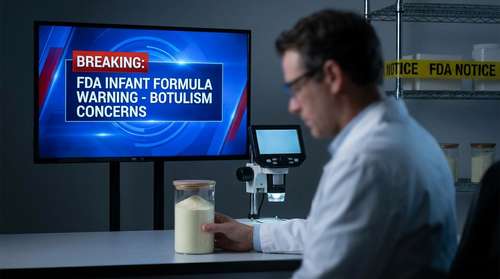
In a forceful move to protect the nation's most vulnerable population, the U.S. Food and Drug Administration (FDA) issued an urgent directive on July 13, 2026, demanding the infant formula industry implement stricter oversight of its ingredient supply chains. This sweeping FDA infant formula warning arrives on the heels of a devastating string of public health crises, including two domestic botulism emergencies and an international toxin contamination. Federal regulators are now putting the burden squarely on manufacturers to actively monitor and verify the safety of raw materials before they ever reach the mixing vat.
Unprecedented Safety Failures Spark Federal Action
For parents and caregivers, infant formula is an essential source of nutrition that requires absolute trust. Unfortunately, that trust has been severely tested over the last several months. The agency’s latest intervention is a direct response to what regulators describe as a pattern of severe safety failures. According to the FDA's open letter to manufacturers, packagers, and distributors, ignoring or downplaying early safety signals has directly led to preventable, life-threatening illnesses in infants.
The core issue lies deep within infant formula supply chain safety protocols. Rather than finished products being contaminated during the final stages of manufacturing, the recent outbreaks originated from raw ingredients supplied by third-party vendors. By the time the final cans were sealed and shipped to retail stores, the danger was already locked inside. The FDA is now explicitly stating that knowing where ingredients come from, how they are processed, and what risks they carry is a non-negotiable manufacturer responsibility.
The Baby Formula Botulism Outbreak: A Two-Part Crisis
The catalyst for the FDA's heightened scrutiny stems from a dual-pronged baby formula botulism outbreak that marked the first confirmed formula-linked botulism cases in the United States in nearly 50 years. Infant botulism is a rare but incredibly serious condition that attacks the nervous system, often presenting as muscle weakness, poor feeding, and a loss of head control before progressing to potential respiratory arrest.
The ordeal began with the ByHeart formula botulism crisis spanning late 2025 and early 2026. In this initial outbreak, 48 infants across 17 states were hospitalized after consuming contaminated ByHeart Whole Nutrition formula. Investigators traced the Clostridium botulinum spores to a single shared ingredient: organic whole milk powder supplied by a third-party dairy processor. Because the pathogen was sealed inside the product at the ingredient level, caregivers had no visual or olfactory cues to alert them to the danger.
The Nara Organics Recall
Just as the industry was implementing corrective measures, a second emergency emerged. The rapid Nara Organics recall 2026 in June involved powdered formula manufactured in Europe that had been distributed nationwide. State health departments flagged multiple cases of infant botulism linked to the product, prompting a voluntary withdrawal of all Nara Organics Whole Milk Organic Infant Formula from store shelves and online retailers. Once again, early investigations pointed toward shared vulnerabilities within the complex network of raw ingredient suppliers.
Global Cereulide Formula Contamination Spreads
While domestic health agencies battled botulism, a separate and equally alarming crisis was unfolding internationally. From late 2025 through early 2026, a massive cereulide formula contamination event sent shockwaves through the global nutrition market.
Health officials recorded nearly 150 suspected and confirmed cases of cereulide intoxication across 10 different countries. Cereulide is a potent toxin produced by certain strains of Bacillus cereus bacteria. It causes sudden, severe nausea and vomiting, and alarmingly, the toxin cannot be destroyed by standard heat treatments like boiling feeding equipment.
The culprit was eventually identified as contaminated arachidonic acid (ARA) oil, an omega-6 fatty acid commonly added to baby formula to support developmental brain and eye growth. Traced back to a supplier in China, this compromised ARA oil prompted sweeping downstream recalls from multiple global manufacturers, including a major withdrawal by a2 Milk in the U.S. market in May 2026. Consequently, the FDA added the implicated supplier to stringent import alerts, while European regulators heavily tightened their own import controls.
Rebuilding Trust: Identifying Safe Baby Formula Brands
With recent headlines dominated by hospitalizations and urgent recalls, caregivers are understandably anxious about identifying safe baby formula brands. The FDA’s July 13 mandate aims to restore this lost confidence by pressing companies to implement rigorous, independent testing of all supplier shipments before integrating them into consumer products. Regulators explicitly advised manufacturers to stay vigilant regarding global safety signals, such as import alerts and outbreak investigations, rather than waiting for finished product testing to reveal a flaw.
Moving forward, the defining characteristic of a secure brand will be its supply chain transparency. Industry experts recommend that parents look for companies proactively announcing enhanced third-party laboratory testing, sharing their raw material auditing processes, and maintaining open communication about ingredient sourcing. While the recent crises have rattled parents, the FDA’s aggressive new stance is a vital step toward ensuring that a simple bottle of formula never again poses a hidden threat to a child's life.