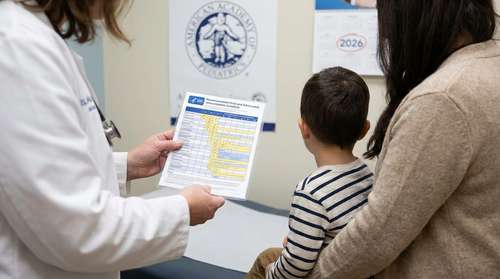
A massive rift in American pediatric healthcare has reached a tipping point this summer. Following aggressive moves by the Trump administration to overhaul federal health directives, parents are facing unprecedented confusion over the childhood vaccine schedule 2026. For decades, the Centers for Disease Control and Prevention (CDC) and major medical organizations operated in lockstep. Now, that relationship has fractured, leaving families caught between conflicting government directives and clinical consensus.
Leading medical organizations, including the American Academy of Pediatrics (AAP), are taking a firm stand. They are urging families to ignore recent federal rollbacks and continue following historically proven, science-backed schedules. As local health officials and doctors completely reorganize how they share public health information in late July 2026, navigating this complex landscape requires clear, evidence-based guidance.
The Growing Rift: AAP vs CDC Vaccine Recommendations
At the heart of the current debate is a fundamental disagreement over how many vaccines kids need for optimal protection. Earlier this year, the CDC—under the direction of Health and Human Services (HHS) Secretary Robert F. Kennedy Jr.—shrank its universally recommended pediatric immunizations from 17 to just 11.
The federal agency removed universal recommendations for vaccines protecting against rotavirus, influenza, COVID-19, hepatitis A, hepatitis B, and meningococcal disease. Federal officials justified the move by citing a desire to align with "peer developed countries" like Denmark, which has a smaller, less diverse population and a vastly different healthcare infrastructure. A subsequent executive order in May 2026 further directed federal agencies to realign guidelines with these international models.
The response from the medical community was swift and severe. The resulting AAP vs CDC vaccine recommendations clash marks the first time in decades that the AAP has refused to endorse the CDC’s guidelines. Instead, the AAP released its own independent 2026 schedule, maintaining routine immunization against 18 preventable diseases. More than a dozen major medical groups, including the American Medical Association, and at least 28 state health departments have publicly backed the AAP's broader schedule.
How Doctors Are Adjusting Pediatrician Vaccine Advice
The policy shifts have radically altered the atmosphere inside exam rooms. Pediatricians across the country are now actively sidestepping the CDC. According to reports emerging in July 2026, many clinical practices are overhauling their websites and patient portals to remove links to the CDC, redirecting parents to state health departments or the AAP for reliable information.
This pivot in pediatrician vaccine advice stems from a growing concern over disease outbreaks. Measles cases have spiked significantly this year, with over 900 confirmed cases across 23 states by early 2026. At the same time, regions face deadly whooping cough outbreaks. Doctors argue that scaling back immunizations removes the critical safety net of herd immunity.
When families ask about routine shots, pediatricians emphasize that the recent federal changes were administrative and political, not scientific. No new clinical safety data prompted the CDC to downgrade those specific shots. Instead, the agency shifted them to a "shared clinical decision-making" category, meaning doctors and parents must negotiate them on a case-by-case basis.
Is the CDC Schedule Safe? A Parent Guide to Child Vaccines
With competing schedules dominating the news, many families are understandably asking: is the CDC schedule safe for my child?
Strictly speaking, the 11 vaccines remaining on the CDC's truncated list are safe and necessary. However, pediatric infectious disease experts warn that relying solely on the reduced federal schedule leaves children vulnerable to severe illnesses that are otherwise entirely preventable. Diseases like hepatitis and rotavirus can cause severe complications, hospitalizations, and long-term health consequences.
A comprehensive parent guide to child vaccines right now points back to the AAP’s robust 2026 framework. The AAP emphasizes that comparing the U.S. infectious disease risk to that of European nations ignores fundamental geographic and systemic differences. America’s unique healthcare access gaps make universal prevention at the pediatric level a critical necessity.
If you are scheduling a back-to-school wellness visit, come prepared to discuss the full spectrum of immunizations. Medical professionals recommend asking for the AAP-endorsed schedule rather than the CDC minimums.
Navigating Childhood Immunization Guidelines Moving Forward
The battle over childhood immunization guidelines is currently playing out in federal courts, with judges issuing temporary stays on some of the administration's sweeping overhauls. However, viruses do not wait for judicial rulings.
For parents, the most reliable path forward is maintaining an open, trusting dialogue with a licensed pediatrician. Local doctors are intimately familiar with regional outbreak data and the specific health risks facing your community.
The consensus from the medical establishment remains unwavering. Decades of peer-reviewed research, clinical trials, and epidemiological data support the comprehensive immunization schedule historically used in the United States. While federal websites may look different today, the biological science protecting children from infectious diseases remains exactly the same. Safeguarding that standard of care now rests heavily on the shoulders of local doctors and informed parents.