For years, the wellness industry has preached a simple, unyielding rule: if a food item is made in a factory, it will inevitably damage your body. A groundbreaking Harvard nutrition study 2026 has just upended that core narrative, revealing that what is inside your food matters far more than how it was manufactured. Following more than 200,000 U.S. adults over several decades, researchers found that overall nutritional density dictates long-term cardiometabolic health, largely rendering the fear of industrial processing irrelevant for high-quality foods.
The 40-Year Analysis: Diet Quality vs Food Processing
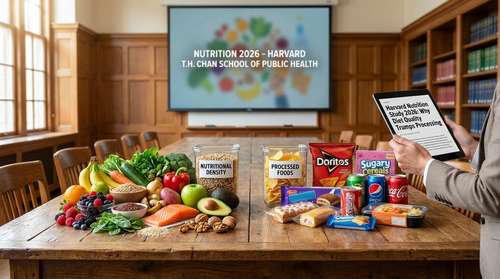
Presented on July 28 at the NUTRITION 2026 conference in National Harbor, Maryland, this comprehensive analysis tracked American dietary habits spanning from the 1980s well into the 2020s. Xiaowen Wang, PhD, a postdoctoral research fellow at the Harvard T.H. Chan School of Public Health, spearheaded the massive data initiative. By pooling detailed dietary records from three extensive U.S. cohort studies, the research team created one of the most thorough investigations into modern eating patterns ever conducted.
Participants' meals were meticulously scored twice to settle the ongoing debate regarding diet quality vs food processing. First, the researchers evaluated nutritional value using a standardized plant-based diet index. Next, they scored the same foods for industrial processing using the widely recognized Nova classification system. By crossing these two distinct metrics, Wang's team divided the food data into four unique quadrants, separating healthy and unhealthy items across both minimally processed and ultra-processed forms.
Rethinking the Health Risks of Ultra Processed Foods
Over the past decade, public health campaigns have increasingly demonized the factory production of our meals. However, the latest Harvard data indicates we might be using too broad a brush when assessing the health risks of ultra processed foods. The "ultra-processed" label has functioned as a convenient shorthand for unhealthy junk food, yet the researchers proved this metric is an imprecise tool for predicting individual health outcomes.
Consumers routinely ask health professionals, "is processed food bad for you?" The answer, according to this new research, is entirely dependent on the specific nutrient profile of the product in question. The study demonstrated that nutritionally robust processed items—such as fortified whole-grain cereals, packaged whole-grain breads, canned beans, and canned fruits—delivered virtually identical cardiometabolic benefits to their minimally processed whole-food counterparts. The sheer act of processing in a factory setting did not inherently strip these items of their health benefits.
The True Value of Healthy Plant Based Diets
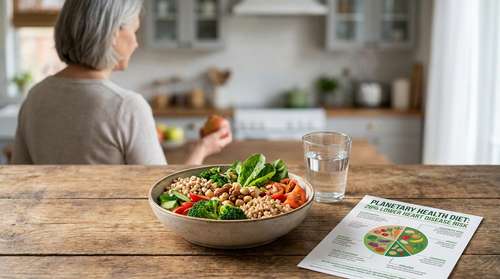
The inverse reality proved equally true. Minimally processed foods lacking nutritional value consistently raised disease risk despite their natural, kitchen-made origins. Items like white rice, homemade cakes baked from refined flour, potatoes, and fruit juices offered poor long-term health outcomes. Wang noted that individuals prioritizing healthy plant based diets rich in whole grains, fruits, vegetables, nuts, and legumes will see significant health protections, even if a portion of those items comes from a can, jar, or plastic wrapper.
Impact on Heart Disease and Diabetes Risk Factors
During the massive four-decade follow-up period, roughly half of the study participants died or developed severe chronic conditions. When analyzing the primary heart disease and diabetes risk factors, researchers found that diet quality cleanly and decisively split the groups. The pattern held firm across all three major negative health outcomes tracked by the team: cardiovascular disease, type 2 diabetes, and all-cause mortality.
Within each tier of diet quality, the risk remained nearly identical whether a meal was manufactured on a massive industrial scale or chopped and prepared by hand in a home kitchen. High-quality nutrition reliably lowered risk, while poor-quality diets raised it, completely independent of the processing tier. While specific ultra-processed categories like sugary sodas and chemically preserved meats remain highly detrimental, the overarching category of "ultra-processed" is not universally toxic.
What This Means for Shoppers
This revelation offers immense practical relief for everyday consumers battling soaring grocery store prices and increasingly busy daily schedules. Shifting the public health focus away from arbitrary processing levels gives shoppers permission to utilize convenient, shelf-stable items without the associated guilt, provided those items pack a strong nutritional punch. This is particularly crucial for lower-income households or those living in food deserts, where fresh, minimally processed produce is often inaccessible or prohibitively expensive.
Reading nutrition labels for adequate dietary fiber, low added sugars, and minimal saturated fats remains the absolute gold standard for healthy grocery shopping. The process of industrial manufacturing itself is not a dietary villain; rather, the historical tendency of manufacturers to fill processed foods with cheap sugars and fats is what caused the crisis. By prioritizing nutrient-dense ingredients over the location of their preparation, consumers can protect their long-term health while still enjoying the conveniences of modern food production.