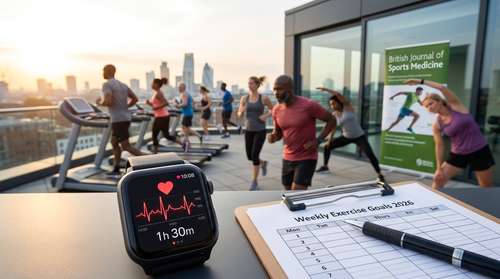
If you want to maximize your heart's longevity, the long-standing question of how much exercise do you need just received a startling new answer. For decades, global health authorities have heralded 150 minutes of weekly activity as the gold standard for warding off disease. However, a major new analysis published this week in the British Journal of Sports Medicine suggests that hitting this traditional target offers only an 8% to 9% reduction in cardiovascular events. To push that risk reduction past 30%, you might need to quadruple your efforts.
The concept of the optimal weekly workout time is undergoing a massive shift. Instead of checking off a quick 22-minute daily walk, researchers are now pointing to roughly 1.5 hours of daily movement to achieve profound biological benefits. Let's break down exactly what this means for your heart health fitness goals and how to sensibly approach the new weekly exercise guidelines 2026.
Rethinking Cardiovascular Health and Exercise
This groundbreaking British Journal of Sports Medicine study comes from researchers at Macao Polytechnic University, who combed through health data from more than 17,000 UK Biobank participants. By outfitting adults—with an average age of 57—with continuous wrist-worn fitness trackers, scientists could measure their exact physical output over a seven-day period. Furthermore, participants completed a stationary bike test to establish their baseline cardiorespiratory fitness, specifically their VO2 max.
The observation period spanned nearly eight years. Over that timeframe, researchers tracked 1,233 cardiovascular incidents among the group, including strokes, heart failure, atrial fibrillation, and heart attacks. The staggering revelation? Those who logged between 560 and 610 minutes of exercise per week saw their cardiovascular risk plummet by more than 30%. The data makes a compelling case that the standard minimums are just that—bare minimums.
Why Your Baseline Fitness Level Dictates Your Needs
You cannot apply a blanket prescription to fitness. The researchers found a fascinating discrepancy between individuals of varying baseline health metrics. Participants who were currently the least fit needed to log an additional 30 to 50 minutes of weekly activity to achieve the same cardiovascular protection as the fittest participants. This completely changes how doctors might advise patients on cardiovascular health and exercise. A personalized approach based on your current physical capability is proving to be far more effective than a generic public health flyer.
Adjusting to the Weekly Exercise Guidelines 2026
If the prospect of accumulating 610 minutes of weekly movement sounds intimidating, consider the types of activity that actually qualify. The study specifically tracked moderate physical activity. You don't have to spend 10 hours running at a high-intensity threshold or lifting incredibly heavy weights.
Moderate intensity simply refers to activities that elevate your heart rate and cause you to breathe a bit heavier, yet still allow you to carry on a conversation. This can include brisk walking, recreational cycling, swimming, pushing a lawnmower, or engaging in active sports like tennis. Chunking your daily routine into three 30-minute blocks of activity makes this target vastly more approachable. A brisk walk before breakfast, a lunchtime cycling session, and a post-dinner stroll can seamlessly get you to the finish line without requiring grueling endurance sessions.
The real challenge lies in combating the extremely sedentary nature of modern life. A 30-minute gym session cannot fully undo the physiological damage of sitting at a desk for nine hours. By aiming for 1.5 hours a day, you essentially force your body into a state of continuous metabolic engagement, improving vascular function and autonomic regulation throughout the day.
Setting Realistic Heart Health Fitness Goals
Should you immediately jump from a sedentary lifestyle to 10 hours of exercise a week? Absolutely not. Rapidly scaling your volume increases the risk of musculoskeletal injuries and burnout. Instead, view the question of how much exercise do you need through a progressive and sustainable lens.
Vascular function, metabolic health, and cardiorespiratory efficiency develop cumulatively over time. The extended volume of movement forces the heart muscle to adapt, strengthening its ability to pump blood efficiently while simultaneously lowering resting blood pressure and cholesterol levels. Begin by consistently hitting the foundational 150-minute mark. Once that feels effortless, look for organic ways to inject more movement into your routine. Walk or bike to nearby errands, schedule walking meetings, and embrace active weekend hobbies. Your ultimate optimal weekly workout time doesn't have to happen entirely inside a gym setting.
The findings from this new British Journal of Sports Medicine study aren't meant to discourage those struggling to find time for fitness. The 8% to 9% cardiovascular risk reduction achieved with standard guidelines is still a meaningful medical victory. However, if you want to optimize your longevity and fortify your body against heart disease, it is time to consider 150 minutes the starting line rather than the finish line.