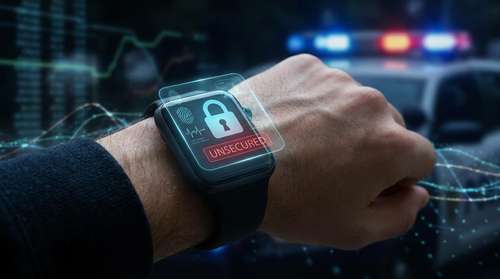
When you strap on a smartwatch or slide a health-tracking ring onto your finger, you are handing over a deeply intimate portrait of your daily life. From the exact moment you fall asleep to the spikes in your resting pulse during a stressful meeting, your device knows it all. But according to a major new investigation released this week, those digital companions are keeping secrets of their own. The latest findings underscore unprecedented fitness tracker privacy risks 2026 is forcing consumers to confront, revealing that the vast majority of top-tier wellness brands are failing at basic data security.
The Bombshell EFF Smartwatch Data Security Report
The Electronic Frontier Foundation (EFF) just released a comprehensive analysis of the wearable tech industry, and the results are deeply unsettling. In their highly anticipated EFF smartwatch data security report, researchers evaluated the privacy policies of 10 leading brands—including household names like Garmin, Fitbit, Oura, and Whoop. The primary focus of the investigation was assessing how these companies handle two critical pillars of privacy: end-to-end encryption and law enforcement data demands.
The investigation reveals a glaring industry-wide blind spot. Despite millions of Americans relying on these devices to log sensitive physiological metrics, nearly all manufacturers treat data security as an optional luxury rather than a fundamental requirement. The EFF explicitly warned that the current ecosystem leaves highly personal health data exposed to unnecessary risks, urging companies to implement standard digital safeguards immediately.
The Encryption Gap: Garmin vs Apple Watch Encryption
One of the most alarming discoveries from the EFF's recent publication involves how health metrics are secured on company servers. For anyone wanting to securely protect wearable fitness data, the gold standard has historically been end-to-end encryption. This technology scrambles your information so that only you can read it; not even the company hosting the data holds the key to unlock your files.
However, the reality of the wearable market is incredibly stark. When examining Garmin vs Apple Watch encryption protocols, the EFF found that only Apple currently offers default end-to-end encryption for biometric history stored in its Health app. Major competitors, including Garmin and Google-owned Fitbit, rely solely on encryption in transit and at rest. While that stops external hackers from intercepting your steps and sleep cycles mid-air, it leaves the data perfectly legible to the companies themselves. If a manufacturer can see your information, they can easily be compelled to hand it over.
Rising Oura Ring Privacy Concerns
The lack of robust security measures has sparked specific Oura ring privacy concerns following the EFF's breakdown. As smart rings surge in mainstream popularity, consumers are generating continuous streams of baseline temperature readings, blood oxygen levels, and cardiovascular data. Yet, the EFF highlighted that Oura, along with the majority of the reviewed wellness brands, does not end-to-end encrypt this sensitive user information.
To their credit, Oura updated its privacy policy in late June 2026, promising to actively evaluate methods to increase transparency. They joined Whoop in committing to notify users if authorities request their data, provided they are legally allowed to do so.
The Limits of Policy Promises
While policy updates are a step in the right direction, privacy advocates argue that promises of future transparency do not mitigate the immediate vulnerabilities of unencrypted biometric storage. Without end-to-end encryption, the backdoor for government and third-party access remains wide open, regardless of a company's commitment to notify users after the fact.
The Growing Threat of Health Tracker Law Enforcement Warrants
Why does corporate access to your sleep scores and step counts matter? The answer lies in the increasing frequency of health tracker law enforcement warrants. Surveillance analysts and technology watchdogs now view wearables as an overlooked goldmine for tracking citizen movements and physiological states.
If police serve a warrant to a company that holds unencrypted data, the manufacturer is legally obligated to surrender it. This poses unprecedented risks for heart rate monitor privacy protection. An elevated heart rate combined with GPS data can place a user at a specific location in a heightened emotional or physical state—highly circumstantial evidence that has already been utilized to build cases in criminal investigations.
Astonishingly, only Apple and Google currently publish regular transparency reports detailing exactly how often they receive and comply with these government demands. The remaining eight companies evaluated by the EFF keep consumers entirely in the dark regarding the frequency of third-party data requests.
Navigating Wearable Security Moving Forward
The wearable tech market has successfully convinced consumers that logging every bodily function is essential for maintaining a healthy lifestyle. But this latest digital rights push proves that technological convenience cannot come at the expense of fundamental civil liberties. The intimate details of your physiology deserve the highest level of digital protection available.
If you are currently relying on a smart device or shopping for a new fitness tracker, the EFF's findings make one thing abundantly clear: consumers must prioritize brands that explicitly document their encryption standards and regularly publish transparency reports. Until the broader wellness industry adopts end-to-end encryption by default, your daily jog and nightly sleep cycle will remain an open book to corporate executives and government agencies alike.