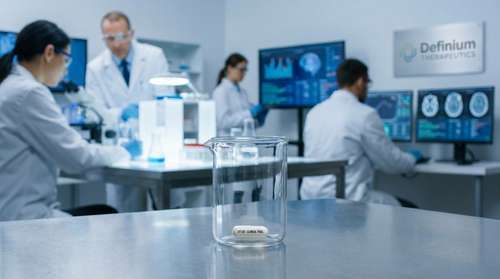
Millions of people living with debilitating mental health conditions just received a historic wave of hope. For decades, the psychiatric community has relied on a slowly evolving roster of daily medications that often come with severe side effects and delayed efficacy. On June 22, 2026, Definium Therapeutics released highly anticipated data that could permanently alter the landscape of psychiatric medicine. The company announced that its optimized LSD formulation, DT120, successfully outperformed a placebo in treating major depressive disorder during the landmark Emerge Phase III trial. This marks the first time a classic psychedelic has delivered a successful Phase III readout for major depression, proving that a single, supervised dose can provide rapid and durable relief. For researchers tracking this LSD depression clinical trial, the results aren't just promising—they are fundamentally practice-changing.
A Historic Milestone in Psychedelic Therapy for Depression
The Emerge study enrolled 149 adults suffering from major depressive disorder across 20 clinical sites. Participants were administered a single 100-microgram dose of Definium Therapeutics DT120, an orally disintegrating tablet (ODT) designed for immediate absorption. The topline Phase 3 psychedelic trial results were nothing short of remarkable.
At the six-week mark, patients taking DT120 experienced an 8.1-point placebo-adjusted drop on the Montgomery-Åsberg Depression Rating Scale (MADRS). To put this into perspective, this magnitude of symptom reduction exceeds the historical benchmarks set by currently approved treatments, including traditional SSRIs and ketamine-based therapies like Spravato. Definium CEO Rob Barrow described the findings as "unprecedented," noting the medication's ability to deliver robust relief without requiring daily pill consumption.
Rapid Onset and Lasting Relief
One of the most persistent challenges in psychiatric medicine is the agonizing wait time associated with standard antidepressants, which often take four to six weeks to begin working. The DT120 clinical data flips this paradigm entirely.
According to the newly released figures, patients experienced a dramatic 14.2-point placebo-adjusted reduction in depression scores just one week after their dosing session. This rapid onset is highly critical for individuals suffering from severe symptoms who require immediate intervention. Furthermore, the therapeutic effects proved remarkably durable. At week 12, participants maintained a 7.3-point placebo-adjusted benefit, confirming that lysergide major depressive disorder treatments can offer sustained neurological benefits long after the active compound has left the patient's system.
Safety, Tolerability, and the Patient Experience
Efficacy means little if a drug cannot be safely administered. Fortunately, the safety profile for DT120 appears pristine. Definium Therapeutics reported no serious adverse events and no signals of increased suicidal ideation among trial participants. Because the medication is delivered utilizing proprietary Zydis technology, it bypasses some of the gastrointestinal discomfort occasionally associated with traditional oral psychedelics.
During the supervised dosing session, patients are monitored by trained healthcare professionals who provide support as the acute effects take hold. This structured environment not only mitigates the risk of challenging psychological experiences but also maximizes the therapeutic potential of the compound.
Setting a New Standard for Treatment Resistant Depression Breakthroughs
Major depressive disorder impacts more than 21 million adults annually in the United States alone. A significant portion of these individuals fail to achieve remission through standard pharmacological therapies, leaving them caught in a frustrating cycle of trial and error. Unlike traditional SSRIs that primarily act by chronically elevating synaptic serotonin levels, DT120 operates as a partial agonist of the serotonin 5-HT2A receptor. This mechanism is believed to promote rapid neuroplasticity—effectively rewiring neural circuits that have become entrenched in depressive thought patterns.
This unique pharmacological approach is precisely why researchers are categorizing these compounds as treatment resistant depression breakthroughs. Financial markets responded immediately to the news, with Definium Therapeutics' stock surging over 30% in premarket trading. Capitalizing on this momentum, the company swiftly secured a $700 million equity offering to fund its aggressive commercialization and regulatory submission plans.
The Path Forward for Next Generation Antidepressants
With the Emerge trial meeting all primary and key secondary endpoints, Definium is now preparing for its next regulatory hurdles. The company is actively exploring a breakthrough therapy designation to expedite the FDA review process, though additional clinical milestones remain before full market authorization.
The broader implications of this success extend far beyond Definium Therapeutics. The impressive performance of DT120 is likely to accelerate investment and research across the entire psychedelic medicine sector. Competitors developing psilocybin and DMT-based therapeutics will now face heightened pressure to demonstrate similar efficacy and safety profiles. However, for the patients and their families who have spent years navigating the limitations of conventional psychiatry, the corporate race is secondary to the ultimate prize: a genuinely effective treatment that provides long-lasting relief from the heavy burden of severe depression.
If approved, these next generation antidepressants will not just be a novel alternative; they could become a primary intervention for millions. The successful application of a classically stigmatized compound into a highly optimized, medical-grade therapeutic highlights how far psychedelic science has evolved. As researchers continue to unpack these historic findings, the future of mental health treatment is arriving faster than anyone predicted.