The Trump administration is preparing to release its highly anticipated federal ultra processed foods definition, introducing a framework that strikes a strategic compromise between sweeping public health goals and food industry realities. According to recent reports, the upcoming guidelines will explicitly exempt infant formulas and items that meet existing FDA healthy food criteria. By issuing this framework as a research definition rather than pursuing a lengthy formal rulemaking process, officials aim to fast-track the measure while sparing nutrient-dense staples like whole-grain breads and fortified yogurts from the controversial ultra-processed label.
Bypassing Formal Rulemaking for the Ultra Processed Foods Definition
Creating a singular federal standard for what constitutes an ultra-processed product has been a complicated endeavor. For nearly a year, the Department of Health and Human Services (HHS) and the U.S. Department of Agriculture (USDA) have sifted through thousands of public comments following a joint 2025 Request for Information.
Instead of moving through proposed and final regulatory rules, the administration is reportedly opting to launch the ultra processed foods definition purely for research purposes. Former FDA Center for Food Safety and Applied Nutrition Director Susan Mayne recently noted that this approach allows the White House to bypass bureaucratic bottlenecks. While a research definition lacks immediate regulatory enforcement, it signals how the government intends to approach future policymaking, dietary guidelines, and federally funded nutrition programs. The definition is expected to target specific synthetic food additives and artificial colors, guiding scientists and policymakers without immediately upending supermarket shelves.
How the FDA Healthy Food Criteria Shape the Exemptions
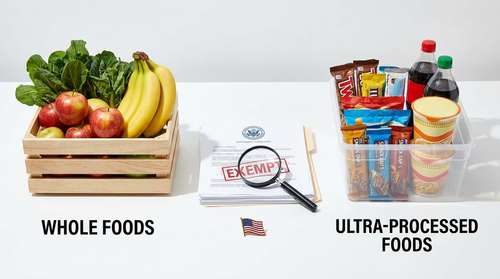
The most notable aspect of the incoming framework is the implementation of UPF food exemptions for specific categories. Items that currently qualify for the FDA's healthy claim will avoid the ultra-processed designation. To meet these FDA healthy food criteria, a product must contain a meaningful amount of food from at least one of four key groups—such as vegetables, fruits, or low-fat dairy—and adhere to strict federal caps on added sugars, sodium, and saturated fats.
When analyzing processed foods vs whole foods, nutritionists often point out that processing itself isn't inherently dangerous. Fortifying whole-grain bread with essential vitamins or producing low-sugar yogurts involves industrial processing, yet these foods deliver undeniable nutritional benefits. The impending exemptions reflect a pragmatic approach to this nuance, ensuring that consumers are not discouraged from purchasing accessible, nutrient-dense products that simply require commercial preparation.
Safeguarding Infant Formula
Infant formula is another critical category shielded under the new parameters. Given the strict manufacturing regulations and essential role formula plays in infant development, health officials and industry leaders recognized that classifying it alongside junk food could spark unnecessary panic among parents. The administration's move guarantees that this vital nutritional source remains uncontroversial and widely available.
The Influence of Make America Healthy Again MAHA
This incoming definition is a cornerstone of the broader Trump administration nutrition policy, heavily influenced by HHS Secretary Robert F. Kennedy Jr. Under the banner of Make America Healthy Again MAHA, the administration has aggressively targeted the childhood chronic disease epidemic.
The Robert F Kennedy Jr food guidelines have frequently pinpointed ultra-processed foods, synthetic dyes, and chemical additives as primary drivers of America's health crisis. However, establishing a concrete ultra processed foods definition requires balancing bold public health rhetoric with the intricate realities of the domestic food supply. While the MAHA movement initially championed widespread crackdowns on all heavily manufactured foods, the upcoming research definition indicates a slight pivot toward voluntary industry action and targeted scientific study.
Industry Lobbying and the Future of the Grocery Aisle
Food manufacturers have watched the development of this framework with intense scrutiny. With Americans currently sourcing more than half of their daily calories from ultra-processed items, major brands faced severe financial risks if their healthier product lines were swept into a broad regulatory dragnet.
The industry lobbied heavily to ensure the government factored nutritional makeup into the final text, successfully arguing for the UPF food exemptions. Companies want to avoid the stigma associated with the ultra-processed label, especially as modern shoppers become increasingly health-conscious and ingredient-savvy.
While the new definition will not forcibly pull products from grocery store shelves tomorrow, it lays the groundwork for how the federal government evaluates the American diet. By carving out safe harbors for items meeting the FDA healthy food criteria, the administration is signaling to food conglomerates that nutritional quality can ultimately outweigh the level of industrial processing. The result is a nuanced, bifurcated approach to the food system—one that seeks to eliminate the most egregious artificial additives without penalizing the staples that keep American families fed.