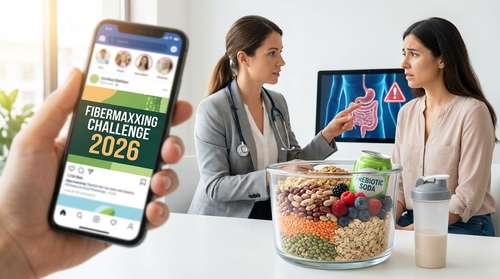
Scroll through your social media feed this week, and you will inevitably encounter the latest dietary obsession dominating April 2026. Influencers are blending massive scoops of chia seeds into smoothies, downing multiple functional beverages, and tracking their daily roughage down to the gram. This is the era of fibermaxxing, a movement that has officially unseated protein as the reigning champion of the wellness world. Driven by viral social media "glow-up" transformations and the urgent digestive needs of a booming GLP-1 user base, hitting massive daily dietary targets has become the ultimate status symbol in health spaces.
But as supermarket aisles fill with fortified snacks and supplements, gastroenterologists and registered dietitians are raising red flags. The prevailing "maxxing" mindset—pushing intake far beyond standard nutritional guidelines—is sending a growing number of people to clinics with severe digestive distress. What started as a well-intentioned push to close a widespread dietary gap has quickly morphed into a risky extreme.
The Shift: Fiber vs Protein 2026
For the past decade, protein was the undisputed king of macronutrients. However, industry analysts and food executives recently began signaling a changing of the guard. The fiber vs protein 2026 debate has largely been settled in the consumer market, with dietary roughage emerging as the focal point of new product innovation.
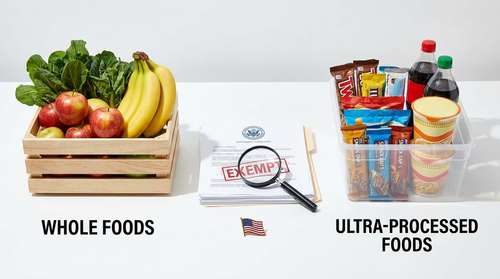
The cultural pivot makes sense conceptually. The vast majority of American adults consume only about 15 grams of fiber daily—roughly half the recommended 25 to 38 grams. In response, brands have flooded the market with accessible functional foods. Enthusiasts actively tout prebiotic soda benefits, citing improved microbiome diversity, steady energy, and blood sugar stability. Yet, the current iteration of the trend encourages not just meeting the baseline, but doubling or tripling it. Participants in recent viral nutrition challenges boast about consuming upwards of 70 grams of fiber in a single day. To hit these staggering numbers, many rely on heavily processed, artificially fortified junk foods rather than whole, plant-based meals.
The Impact of a High Fiber Diet for GLP-1 Users
You cannot discuss this year's functional food boom without looking at the pharmaceutical landscape. Millions of Americans are now utilizing GLP-1 medications for weight management and metabolic health. These drugs work partially by slowing gastric emptying, which naturally suppresses appetite but frequently triggers a highly uncomfortable side effect: severe constipation.
Consequently, adopting a high fiber diet for GLP-1 management is practically mandatory for patients trying to maintain digestive regularity. Because these medications compress appetite into smaller eating windows, users are seeking nutrient-dense snacks that provide lasting satiety and structural nutrition without adding empty calories. The problem arises when this genuine medical necessity trickles down to the broader public as a gamified extreme. GLP-1 users are specifically advised by their physicians to increase their roughage slowly and steadily, balancing it with adequate protein to prevent muscle loss. The internet, however, has taken the concept and stripped it of all moderation.
The Hidden Dangers of Too Much Fiber
Gastroenterologists are increasingly treating the fallout of aggressive, overnight dietary changes. The human digestive tract is highly adaptable, but it requires time to build the specific bacterial colonies necessary to ferment complex carbohydrates. When you drastically spike your intake, the system backs up and begins producing excessive gas.
The dangers of too much fiber, especially when introduced rapidly, go far beyond mild discomfort. Patients are presenting with intense abdominal bloating, debilitating cramps, and paradoxically, severe constipation. Soluble and insoluble roughage both require substantial water to move smoothly through the gastrointestinal tract. If an individual engages in extreme consumption without drastically increasing their hydration, the material forms a hardened mass in the intestines, sometimes resulting in dangerous bowel blockages.
The Risk of Nutrient Malabsorption
Beyond the immediate physical pain, long-term extreme "maxxing" carries a silent biological risk: nutrient malabsorption. High volumes of insoluble fiber bind to essential minerals in the digestive tract, essentially sweeping them out of the body before the intestines can absorb them. Dietitians warn that individuals consistently consuming more than 50 grams daily are at high risk of developing deficiencies in calcium, iron, magnesium, and zinc. Over time, this chronic depletion can contribute to anemia, decreased bone density, and a compromised immune system—the exact opposite of the wellness "glow-up" promised by online influencers.
Navigating Gut Health Trends 2026
The core message from the medical community is not to abandon these nutrients entirely. Hitting the recommended 25 to 38 grams daily remains one of the most effective ways to protect against cardiovascular disease, regulate blood sugar, and support a healthy microbiome. The key is dismantling the extreme behavioral patterns associated with gut health trends 2026.
Experts recommend a strategic, phased approach. Rather than participating in intense challenges, add just one new fiber-rich food to your routine each week. Prioritize whole-food sources like lentils, black beans, raspberries, and oats over processed snack bars fortified with isolated synthetic powders. Most importantly, deliberately increase your water intake in tandem with your dietary changes to ensure smooth digestion.
The widespread desire to optimize our diets is a positive shift in public health. But as the current landscape clearly demonstrates, more is not always better. True metabolic health requires consistency, hydration, and patience—things you simply cannot buy or fast-track, no matter what your social media feed suggests.