The latest Vitamin D breast cancer study is fundamentally shifting how doctors view nutritional supplementation during cancer treatment. A landmark clinical trial published in late April 2026 reveals a staggering statistic: adding a daily low-dose Vitamin D supplement to standard chemotherapy increases the rate of full cancer remission by nearly 80%. As medical professionals continually seek effective nutrition for chemotherapy support, this widely accessible, inexpensive vitamin is emerging as a powerful ally in the fight against the disease.
The 2026 Vitamin D Breast Cancer Study: By the Numbers
Conducted by researchers at the Botucatu School of Medicine at São Paulo State University in Brazil, the trial followed 80 women over the age of 45 who were diagnosed with early-stage disease. All participants were preparing for neoadjuvant chemotherapy—a specialized treatment administered prior to surgery to shrink tumors.
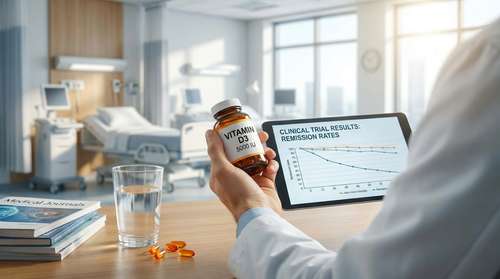
Half of the women received a daily dose of 2,000 IU of Vitamin D, while the other half took a placebo. The results, evaluated after six months of treatment, were remarkable. Among the patients taking the active supplement, 43% experienced a pathological complete response, meaning the cancer entirely vanished from their breast tissue. In stark contrast, only 24% of the women in the placebo group achieved this same outcome.
A pathological complete response is considered the gold standard metric for evaluating the success of neoadjuvant therapy. When a surgeon operates and finds zero active cancer cells remaining in the extracted tissue, the patient faces a significantly lower risk of long-term recurrence. Mathematically, the 19-point gap between the two groups represents a 79% relative increase in full remission rates, placing this Vitamin D breast cancer study at the forefront of modern oncology discussions.
Natural Cancer Treatment Boosters: Supercharging Chemotherapy
Experts have long understood that nutrition plays a critical role in patient outcomes, but the specific mechanisms of breast cancer survival nutrition are coming into sharper focus. Scientists increasingly view Vitamin D as a potent chemosensitizer. Instead of directly attacking tumors like standard pharmaceutical interventions, the nutrient operates at a cellular level to make malignant cells more vulnerable to existing chemotherapy drugs.
This interaction hinges on the complex relationship between Vitamin D immune system cancer responses. The biologically active form of the vitamin binds to cellular receptors, modulating genes responsible for cell growth and apoptosis, which is the body's method of programmed cell death. When cancer cells try to resist the toxic effects of chemotherapy, adequate Vitamin D levels essentially strip away their biological defenses.
Expanding Oncology Nutrition Research
The Brazilian trial does not exist in an isolated vacuum. It builds upon an expanding base of oncology nutrition research tracking how baseline health metrics dictate treatment success. For example, a comprehensive 2024 meta-analysis found that patients with sufficient serum Vitamin D levels experienced a 22% reduction in chemotherapy non-response and a 35% lower risk of disease progression.
Historically, the medical establishment viewed dietary supplements with healthy skepticism, primarily due to a lack of rigorous, randomized trials. However, the paradigm is shifting. Clinical investigators are designing sophisticated studies to isolate exactly how lifestyle and dietary factors influence pharmaceutical efficacy. The push for evidence-based natural cancer treatment boosters aims to minimize the harsh side effects of toxic drugs while maximizing their tumor-shrinking potential. When tracking Vitamin D cancer remission 2026 trends, it becomes clear that oncologists are increasingly treating nutritional deficiencies as modifiable risk factors rather than secondary concerns.
Addressing the Hidden Deficiency Epidemic
The implications of these findings are particularly profound given the widespread nature of nutrient deficiencies. Current estimates suggest that nearly two-thirds of the American population carries inadequate levels of this vital hormone. For women facing a cancer diagnosis, entering treatment with depleted reserves might mean missing out on one of the most effective natural cancer treatment boosters available.
Major risk factors for clinical deficiency include:
- Limited natural sun exposure due to lifestyle or geography
- Darker skin tones, which naturally require more UV exposure for synthesis
- Older age, which decreases the skin's ability to produce the vitamin
- Underlying conditions that negatively affect gastrointestinal absorption
Many patients remain completely unaware of their status until they request a specific blood test. The recent data highlights that checking baseline levels is no longer a luxury—it is a critical first step in personalizing a patient's care plan.
What Patients Should Do Next
While the latest Vitamin D breast cancer study offers immense hope, medical professionals emphasize that supplementation is an adjunct therapy, not a standalone cure. No patient should abandon traditional treatments or begin taking massive doses of vitamins without medical supervision. Excessive intake can lead to toxicity, causing calcium buildup in the blood and serious kidney complications.
If you or a loved one are preparing for or currently undergoing chemotherapy, the best immediate action is a conversation with your oncology team. Ask for a 25-hydroxy vitamin D blood test to determine your current baseline. If your levels fall below the recommended 30 ng/mL threshold, your doctor can prescribe a tailored dose—often around the 2,000 IU mark used in the study—to safely optimize your body's therapeutic response.
Small adjustments to a patient's daily regimen can yield life-altering dividends. By combining cutting-edge medicine with targeted, evidence-based nutritional support, the medical community is moving one step closer to making full remission the standard expectation rather than the exception.