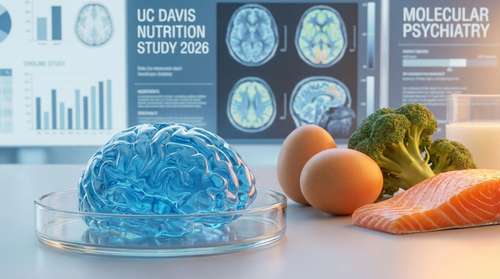
For millions of Americans, the daily battle with generalized worry, panic, or social phobias feels like a strictly psychological struggle. Groundbreaking new research flips this narrative, revealing a tangible physical culprit: the direct relationship between choline and anxiety. According to a landmark study published today, May 16, 2026, in the journal Molecular Psychiatry, patients suffering from chronic stress disorders share a striking chemical deficit in a critical region of the brain.
Researchers at UC Davis Health analyzed decades of brain imaging data and discovered that people with severe worry have significantly depleted stores of this vital dietary nutrient. This discovery offers a measurable biological marker for distress, suggesting that prioritizing essential nutrition for anxiety may be a missing puzzle piece in modern mental health treatment.
The Groundbreaking UC Davis Nutrition Study 2026
For years, psychiatrists have treated emotional dysregulation primarily through cognitive therapies and pharmaceuticals targeting specific neurotransmitters. Yet, the UC Davis nutrition study 2026 highlights a fundamentally different mechanism: cellular nourishment.
Led by Dr. Jason Smucny and Dr. Richard Maddock, the meta-analysis examined brain chemistry across 712 individuals—370 diagnosed with anxiety disorders and 342 healthy controls. By utilizing advanced magnetic resonance spectroscopy, the team found that anxious individuals had an 8% reduction of choline in the prefrontal cortex. This specific brain area serves as the command center for executive function, decision-making, and emotional regulation.
This deficit is monumental. As the first clear chemical brain pattern ever identified for these disorders, it shifts the focus toward how brain chemistry and diet intersect. Maddock noted that the constant state of heightened arousal and stress appears to increase the metabolic demand for this nutrient. Essentially, an anxious brain burns through its supply faster than the body can replenish it, leaving the nervous system starved of the raw materials it needs to calm down.
Recognizing Choline Deficiency Symptoms in Daily Life
The human body produces a tiny amount of this compound naturally, but it is nowhere near enough to meet standard metabolic demands. Consequently, the vast majority of our supply must come from our plates. Unfortunately, dietary surveys consistently show that a large portion of the population fails to reach the recommended daily intake.
When your nervous system runs dry, the impact extends far beyond persistent worry. Common choline deficiency symptoms often masquerade as general burnout or accelerated aging. You might experience persistent brain fog, memory lapses, chronic fatigue, and unexpected mood swings. Because this compound is required to maintain cell membranes and produce acetylcholine—a neurotransmitter responsible for learning and muscle control—a lack of it compromises both mental sharpness and emotional resilience.
Recognizing these warning signs is crucial. When the prefrontal cortex cannot access adequate fuel, it loses its ability to effectively put the brakes on the amygdala, the brain's fear center. This biochemical failure creates a vicious cycle where stress depletes reserves, and the resulting deficiency triggers even more psychological distress.
The Best Foods for Brain Health and Emotional Control
The most empowering aspect of this May 2026 discovery is the actionable solution it provides. Repairing this hidden deficit does not necessarily require a lifetime of prescription medications; it can begin in the grocery store. Prioritizing the best foods for brain health can actively rebuild your cognitive reserves and stabilize your mood over time.
Top Dietary Sources to Replenish Your Mind
To achieve the recommended 425 to 550 milligrams daily, you must be intentional about your meals. The most potent sources are animal-based, though plant-based options exist for those who know where to look.
- Pasture-Raised Eggs: The yolk is an absolute powerhouse, delivering roughly 150 milligrams per egg. Starting your day with two eggs provides more than half your daily requirement.
- Grass-Fed Beef and Organ Meats: Beef liver is unparalleled, offering over 300 milligrams per serving. Standard cuts of grass-fed beef also provide a robust dose, alongside other nutrients for mental health like zinc and vitamin B12.
- Cruciferous Vegetables: For plant-based eaters, broccoli, Brussels sprouts, and cauliflower offer modest but valuable amounts.
- Soybeans and Nuts: Roasted soybeans and almonds are excellent snacks to keep levels stable throughout the day.
Redefining Mental Health Through Nutritional Psychiatry
We are entering a new era of medicine where the line between the kitchen and the pharmacy is steadily blurring. By proving the undeniable link between brain metabolism and mood regulation, the latest findings validate what holistic practitioners have long suspected: proper nutrition is foundational to psychological well-being. Anxiety disorders affect roughly 30% of adults, making this research more urgent than ever. Acknowledging that chronic worry has a physical root in the brain's prefrontal cortex completely changes how we approach patient care.
If you constantly battle nervousness or an inability to switch off racing thoughts, evaluating your nutritional intake is a necessary first step. While severe psychiatric conditions still require comprehensive medical supervision and therapy, restoring basic chemical balance through targeted dietary changes offers a profound strategy. Dr. Smucny emphasizes that appropriate supplementation and dietary adjustments could finally help restore this lost chemical equilibrium. Upgrading your plate might just be the most effective, accessible way to calm your mind and reclaim your emotional stability.