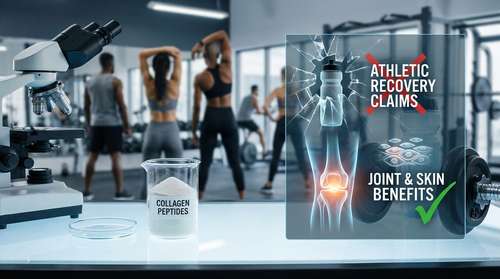
If you've been adding a scoop of collagen peptides to your protein shake in hopes of bouncing back faster from a heavy lifting session, you might want to rethink your strategy. For years, wellness influencers and supplement brands have aggressively marketed collagen for muscle recovery. However, a sweeping new scientific review from Anglia Ruskin University (ARU) has just dismantled these widespread fitness claims. The largest collagen study 2026 has delivered to date reveals a complex truth: while this popular protein holds immense value for aging joints and skin, it falls completely flat as an athletic enhancer.
What the Largest Collagen Study 2026 Actually Found
Published this week in the prestigious Aesthetic Surgery Journal Open Forum, the comprehensive umbrella review leaves little room for debate. A dedicated research team led by Professor Lee Smith at ARU aggregated data from 16 systematic reviews and 113 randomized controlled trials, encompassing nearly 8,000 participants worldwide. By combining such a massive and diverse dataset, scientists were able to cut through the marketing noise and isolate exactly what this supplement can and cannot do.
The fitness community has long debated the pressing question: does collagen improve athletic performance? The answer, according to the hard data, is a resounding no. Researchers rigorously evaluated various performance metrics, including post-exercise muscle soreness, tendon mechanical properties, and strength restoration. They found no meaningful improvements in any of these critical areas. The protein simply does not act as the fast-acting ergogenic aid that many pre- and post-workout formulations claim it to be. Furthermore, the study examined cardiometabolic indicators such as blood pressure and cholesterol, yielding mixed or inconclusive results that fail to support broad metabolic claims.
The Truth About Post-Workout Collagen Benefits
Walk into any commercial gym, and you will inevitably spot athletes shaking up collagen-infused beverages in the locker room. The prevailing assumption has been that because our muscles, tendons, and ligaments are composed largely of collagen, consuming it directly after strenuous physical activity rebuilds those damaged tissues faster. The ARU findings directly contradict this heavily marketed narrative.
While the researchers did identify modest support for muscle architecture and mass in the specific context of healthy aging, these physiological effects are gradual and sustained. They do not translate to immediate post workout collagen benefits for active individuals looking to reduce delayed onset muscle soreness (DOMS) or speed up their return to the gym. As a result, fitness supplement trends 2026 are already showing a rapid, dramatic shift. Professional trainers, strength coaches, and evidence-based athletes are dropping collagen from their immediate post-exercise recovery stacks. Instead, they are returning to fast-absorbing whey or plant-based complete proteins, which provide the full spectrum of essential amino acids required to trigger rapid muscle protein synthesis.
Proven Efficacy: Collagen Supplements Joint Health and Skin
This exhaustive review is not a total takedown of the multi-billion dollar supplement industry. In fact, it provides the strongest empirical evidence yet for the protein's clinical utility outside the weight room. For individuals seeking collagen for osteoarthritis relief, the findings are incredibly promising. The systematic data confirms that regular supplementation significantly reduces joint pain and stiffness in osteoarthritis patients, allowing for a far better quality of daily life and improved mobility. When it comes to collagen supplements joint health capabilities, the science remains rock solid.
Beyond joint mobility and structural support, the aesthetic findings are equally robust. Participants who committed to a daily oral regimen experienced measurable, statistically significant improvements in skin hydration and overall elasticity. However, the researchers specifically noted that these anti-aging benefits are highly dependent on dose and duration. You will not see drastic surface-level changes overnight, nor is it a quick fix for deep wrinkles. Rather, sustained, long-term use acts as a foundational support system for dermal and musculoskeletal health.
Adjusting Your Daily Supplement Strategy
The scientific consensus is now exceptionally clear: timing and intent matter more than ever. If your primary goal is to alleviate joint wear-and-tear as you age, or to improve skin resilience against environmental stressors, adding this unflavored protein to your morning coffee remains a smart, evidence-backed decision. The long-term structural benefits are thoroughly validated by independent researchers rather than just industry-funded trials.
But if you are strictly chasing faster recovery times, decreased soreness, and elevated sports performance, your money is much better spent elsewhere. Consumers must learn to look past flashy marketing labels and bold manufacturer promises. As clinical data finally catches up with the booming wellness sector, the most successful athletes and health enthusiasts will be those who align their daily supplement intake with hard, verified science rather than fitness influencer hype.