If your social media feed has been dominated by influencers blending sludge-like psyllium husk concoctions in a race to hit 50 grams of fiber before noon, you’ve witnessed the peak of "fibremaxxing." While the intention behind this viral 2025 trend was noble—closing the nutritional gap in a fiber-deficient world—the results have often been less than glamorous. For many, the sudden influx of roughage led to severe bloating, cramping, and digestive distress rather than the promised wellness glow. Enter fibrelayering: the nuanced, sustainable 2026 evolution that experts are calling the true key to metabolic mastery.
Fibremaxxing vs. Fibrelayering: The Shift from Quantity to Diversity
The distinction between these two approaches marks a maturity in how we understand digestive wellness strategies. Fibremaxxing treats fiber as a singular metric to be crushed—a game of numbers where more is always better, often achieved through supplements or massive singular doses. This "shock and awe" tactic frequently overwhelms the microbiome, leading to what gastroenterologists call "fermentation dysbiosis," where gut bacteria rapidly ferment excess fiber, producing uncomfortable gas.
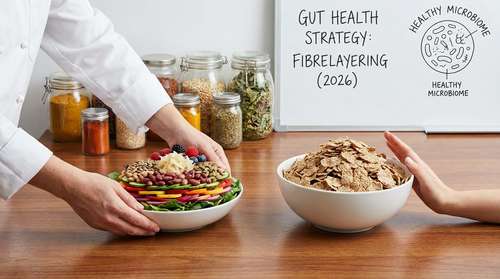
Fibrelayering, a term gaining traction this week among top nutritionists like Sasha Watkins of Mindful Chef, flips the script. Instead of maxing out grams, the goal is to layer different types of plant fibers—soluble, insoluble, and prebiotic—slowly throughout the day. This method respects the microbiome's need for adaptation. Think of it as interval training for your gut rather than running a marathon without practice. By spreading intake across meals, you allow your microbial ecosystem to adjust, metabolize, and thrive without the bloat.
The Biological Case for 'Slow and Steady'
Why does pacing matter? Your gut is home to trillions of bacteria, each with specific dietary preferences. When you flood the system with just one type of fiber (like a massive bowl of bran), you only feed a small fraction of these microbes, leaving others starving and potentially causing an imbalance.
Soluble vs. Insoluble: The Layering Effect
Fibrelayering advocates for a strategic mix. Soluble fiber (found in oats, apples, and beans) dissolves in water to form a gel, helping to stabilize blood sugar and lower cholesterol. Insoluble fiber (in whole wheat, nuts, and cauliflower) adds bulk and keeps things moving. The 2026 protocol suggests pairing these in every meal to optimize fiber for metabolic health. For instance, layering chia seeds (soluble) over a crunchy kale salad (insoluble) provides a dual-action benefit that regulates digestion speed while feeding a broader spectrum of gut bacteria.
The '30 Plants' Protocol: Microbiome Diversity in Action
Central to the fibrelayering movement is the revival and refinement of the "30 plants a week" challenge. Research continues to show that the single greatest predictor of a healthy gut is microbiome diversity, which is directly correlated with the variety of plants you consume.
In 2026, this concept has evolved into "plant points." It’s not just about eating 30 servings of broccoli. The new rules of engagement count herbs, spices, nuts, seeds, and even coffee beans as distinct points. A sprinkle of cinnamon on your morning latte counts. A dash of oregano in your pasta sauce counts. This approach makes increasing fiber without bloating far more achievable because it relies on micro-doses of variety rather than massive volumes of a single vegetable.
Practical Fibrelayering: A Sample Day
How does this look on a plate? Here is how to transition from a 'maxxer' to a 'layerer' mindset:
- Breakfast: Instead of a 20g fiber supplement drink, start with a "layered" porridge. Oats (base), topped with a tablespoon of flaxseeds (layer 1), a handful of blueberries (layer 2), and a dusting of pumpkin seeds (layer 3).
- Lunch: Skip the giant raw salad that leaves you distended. Opt for a warm grain bowl with quinoa, roasted sweet potato (easier to digest than raw), and a fermented pickle garnish for probiotic support.
- Dinner: Incorporate legumes gently. A lentil soup with added carrots and celery offers soft, cooked fibers that soothe the gut while keeping you full.
Why This Trend Matters Now
As we move deeper into 2026, the conversation is shifting from "gut health" as a buzzword to digestive wellness strategies as a pillar of longevity. The rise of fibrelayering parallels a broader fatigue with extreme wellness hacks. We are learning that biology rewards consistency, not intensity. By adopting this layered approach, you aren't just avoiding a stomach ache; you are cultivating a resilient, diverse internal ecosystem capable of supporting your immunity, mood, and metabolism for the long haul.