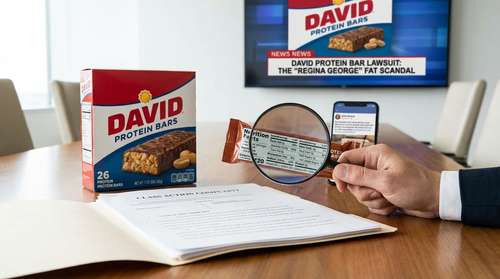
If you have scrolled through fitness communities online over the last 48 hours, you have likely witnessed a complete meltdown regarding a massive high protein snack scandal. A viral class-action David protein bar lawsuit alleges that the notoriously lean macros of the internet's favorite workout snack might be drastically understated. Consumers are claiming they have been tricked into eating bulking bars instead of diet snacks, sparking a wave of frustrated comparisons to the iconic 2004 movie Mean Girls.
The Core Allegations of the David Protein Bar Lawsuit
Since hitting the market in late 2024, David protein bars have dominated the fitness industry with a nutritional profile that seemed almost too good to be true. The gold-packaged bars proudly advertise 28 grams of protein, zero sugar, and just two grams of fat, all for a mere 150 calories. For bodybuilders and macro-trackers, this ratio was revolutionary.
However, an explosive legal complaint filed in New York federal court tells a different story. According to the lawsuit, independent laboratory testing conducted by an FDA-accredited facility found severe discrepancies. The tests allegedly revealed that the bars contain between 263 and 275 calories—nearly an 83% increase over the advertised amount. Even more alarming for consumers, the fat content measured between 11.76 and 13.52 grams per bar, representing an astonishing 400% spike above the label's claims.
This discrepancy sits at the center of the most prominent case of protein bar mislabeling 2026 has seen so far. Under Food and Drug Administration (FDA) regulations, packaged foods are granted a 20% margin of error for nutritional reporting. If the independent lab results hold up in court, the brand's deviations would far exceed federal limits.
"No One is Getting Regina Georged"
The sheer scale of the alleged fat and calorie increases immediately drew viral attention on platforms like TikTok and X. Countless fitness influencers and daily consumers began posting videos claiming they had been "Regina Georged"—a direct reference to the movie Mean Girls, where the antagonist is secretly fed heavy Swedish nutrition bars disguised as a weight-loss product.
The backlash grew so loud this week that Peter Rahal David protein founder and the mind behind the wildly successful RXBar brand, had to publicly address the cinematic comparisons. Rahal took to social media to firmly push back against the panic, stating, "No one is getting Regina Georged." The company insists that its labels are entirely accurate and strictly follow FDA compliance standards for specific food engineering.
Understanding the EPG Fat Substitute Controversy
To understand the massive gap between the laboratory test results and the company's nutritional claims, you have to look at the exact ingredients inside the wrapper. The brand's defense hinges entirely on an ongoing EPG fat substitute controversy.
EPG, or Esterified Propoxylated Glycerol, is a lab-modified plant oil that functions as a fat alternative. In a standard dietary fat, you will find roughly nine calories per gram. However, EPG is engineered so that human digestive enzymes cannot fully break it down. Because it largely passes through the digestive tract unabsorbed, EPG contributes only about 0.7 metabolizable calories per gram while still providing the rich mouthfeel of a traditional fat.
The Bomb Calorimeter Debate
Rahal argues that the plaintiffs' laboratory testing relied on a tool called a bomb calorimeter. This traditional testing method literally burns a food sample in a controlled chamber and measures the total heat released to determine its caloric value. When you burn EPG in a lab, it produces the same energy as a regular fat. But as the company quickly pointed out, the human stomach is not a fiery laboratory oven.
According to the brand's defense, David protein bar calories are calculated based on what the human body can actually absorb and use for energy, which is the standard the FDA requires for non-digestible ingredients. They maintain that the 150-calorie label is a mathematically and biologically accurate reflection of what consumers are digesting.
Why Nutrition Label Accuracy Matters
This legal battle represents a critical moment for the functional food industry. For the average person, an extra 100 calories might not ruin a diet. But for athletes, diabetics, and strict macro-trackers, nutrition label accuracy is non-negotiable.
- Metabolic Impact: Consumers rely on accurate fat and carbohydrate counts to manage medical conditions.
- Consumer Trust: A brand built entirely on its "perfect" nutritional profile risks total alienation if those numbers are perceived as marketing fiction.
- Industry Precedent: How courts rule on the measurement of lab-created fats could change how every diet food company labels their products moving forward.
The lawsuit currently seeks class-action status to represent buyers in California, Illinois, and New York, pursuing damages and injunctive relief to halt the sale of the allegedly mislabeled products. As the company prepares to fight the claims vigorously with celebrity legal representation, consumers are left to decide whether they trust the science of food engineering or the results of standard laboratory testing.