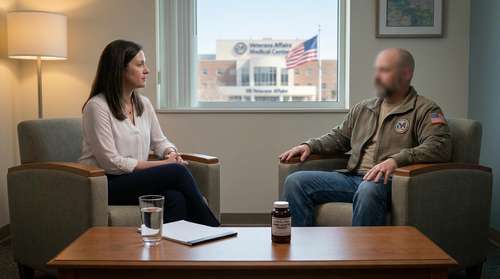
For decades, combat veterans returning home with invisible wounds have found themselves battling a dual crisis: post-traumatic stress disorder and co-occurring substance abuse. Traditional medications and therapies often fall short, leaving a desperate need for medical innovation. This week, the U.S. Department of Veterans Affairs took a monumental step forward by launching a historic VA MDMA clinical trial designed to evaluate the safety and efficacy of psychedelic medicine. Announced on Tuesday, the landmark study will test MDMA-assisted therapy for veterans suffering from severe PTSD and alcohol use disorder.
How the VA MDMA Clinical Trial Works
Taking place primarily at the VA Providence Healthcare System in Rhode Island, the randomized, placebo-controlled study will enroll approximately 80 veterans. Researchers are also actively recruiting participants from the VA Connecticut Healthcare System in West Haven. The structure of this VA MDMA clinical trial is straightforward but highly rigorous: participants will receive either pharmaceutical-grade MDMA or an active placebo. Both treatments are paired with intensive, structured psychotherapy.
The department is working closely with the Food and Drug Administration (FDA) to ensure the highest safety standards, monitoring patients in a strictly controlled clinical setting. Patients participating in the study do not simply receive medication; the clinical protocol involves extensive psychological preparation, followed by multiple day-long medication sessions where trained therapist dyads guide the patient through their trauma. Afterward, patients undergo critical integration appointments to unpack their insights and translate them into long-term behavioral changes.
A Changing Landscape for Veteran Mental Health Treatments
The push for alternative mental health therapy has gained unprecedented momentum at the federal level. This latest trial directly follows President Donald Trump's recent executive order, "Accelerating Medical Treatments for Serious Mental Illness," signed in April. The directive was specifically designed to cut through regulatory red tape, encouraging broader clinical trial participation and expediting drug approvals for psychedelics.
VA Secretary Doug Collins emphasized the necessity of this shift, pointing out that improving care requires an "all-of-the-above strategy". By exploring these non-traditional avenues, the VA aims to offer genuine breakthroughs for individuals who have exhausted standard pharmaceutical options. Currently, the department is managing 19 active clinical trials focused on psychedelic therapies, backed by more than $23 million in external funding.
Community Backing for Psychedelic Therapy Veterans
Advocacy groups are already championing the government's pivot toward these novel interventions. The Veterans of Foreign Wars (VFW) publicly welcomed the announcement, framing the research as a critical tool for suicide prevention. VFW National Commander Carol Whitmore noted that because no single treatment works universally, pursuing careful, intentional research into alternative therapies is a moral imperative. For many in the military community, exploring MDMA-assisted therapy PTSD represents a beacon of hope, especially as patients seek options beyond commonly prescribed antidepressants that often carry heavy side effects.
The Science of MDMA for Alcohol Use Disorder and Trauma
Why focus on a compound historically known as a recreational drug? The clinical application of MDMA is vastly different from its illicit use. In a therapeutic environment, the drug temporarily alters the brain's fear response, increasing feelings of trust and compassion while decreasing the defensiveness typically triggered by traumatic memories. This unique neurological window allows patients to engage deeply with psychotherapy, processing horrific experiences without becoming emotionally overwhelmed.
Current gold-standard treatments for PTSD, such as prolonged exposure therapy, demand that patients repeatedly confront their most terrifying memories. Understandably, this leads to high dropout rates, especially among those battling co-occurring substance abuse. The pharmacological assistance of MDMA softens the psychological blow, keeping patients engaged in the therapeutic process long enough to experience lasting relief.
This mechanism is particularly relevant for the target demographic of the new trial. Within the VA health care system, an estimated 63 percent of veterans presenting with substance use problems also have a PTSD diagnosis. Using MDMA for alcohol use disorder alongside trauma therapy addresses the root cause of the addiction rather than just managing the symptoms. When trauma goes untreated, patients often self-medicate with alcohol. By targeting both conditions simultaneously, researchers hope to see a dramatic reduction in both PTSD severity and alcohol reliance.
The Future of VA PTSD Clinical Trials
As this groundbreaking study progresses, it will likely serve as a blueprint for future veteran mental health treatments. Data gathered from the 80 participants in Providence and West Haven will be shared directly with the FDA, potentially paving the way for eventual nationwide approval and rescheduling of the compound. While officials strongly caution against self-medicating or seeking out unprescribed substances, the legitimate medical exploration of these compounds marks a paradigm shift in psychiatric care.
If the results mirror earlier private studies, MDMA-assisted therapy PTSD protocols could soon transition from experimental research to a standard of care. For the thousands of service members who have sacrificed their physical and psychological well-being, the success of these VA PTSD clinical trials cannot come soon enough. The medical community will be watching closely over the coming months as the VA navigates this uncharted, yet deeply promising, territory.