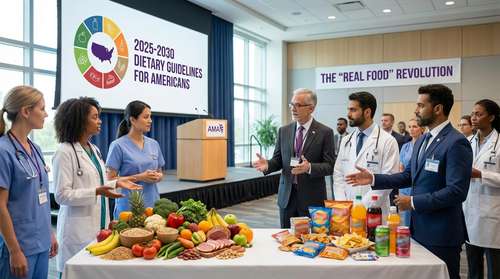
A seismic shift in American dietary policy is officially moving from government documents into your doctor's office. During a landmark AMA nutrition webinar held today, April 29, 2026, thousands of healthcare providers gathered to coordinate the clinical rollout of the new 2025-2030 Dietary Guidelines for Americans. The core mandate delivered to physicians nationwide is both clear and uncompromising: prescribe real food and actively counsel patients to eliminate industrial, additive-heavy products from their daily routines.
This coordinated effort represents a massive pivot in public health strategy. Rather than simply managing the symptoms of chronic disease with pharmaceuticals, the medical community is aggressively targeting the root cause: a food supply saturated with hyper-palatable, nutrient-void products. By explicitly warning against ultra-processed food health risks and prioritizing whole-food nutrition, officials are attempting to reverse the escalating metabolic syndrome epidemic that currently burdens the national healthcare system.
The End of the Ultra-Processed Era
For decades, mainstream dietary advice frequently focused on isolating single nutrients like saturated fat or carbohydrates. This reductionist approach often inadvertently gave a free pass to heavily engineered foods that met arbitrary numerical targets but offered zero structural nutrition. The real food diet 2026 framework entirely dismantles that outdated methodology.
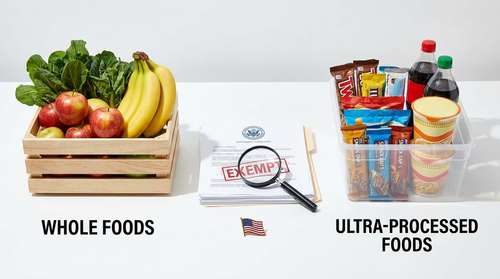
Today's clinical directives mandate that healthcare providers assess a patient's intake of highly processed foods just as routinely as they check blood pressure or resting heart rate. The urgency stems from mounting clinical data linking heavily manufactured foods to severe, long-term health outcomes. Presentations during this week's medical summit highlighted how chemical emulsifiers, artificial sweeteners, and refined carbohydrate isolates degrade the human microbiome and trigger chronic, systemic inflammation. Products containing modified starches, hydrogenated oils, and artificial flavorings are officially on the chopping block.
By shifting the therapeutic focus toward a comprehensive gut health eating plan, medical professionals are equipping patients with the biological tools necessary to naturally regulate blood sugar, manage weight, and protect cardiovascular function. The message from the American Medical Association is unequivocal: food quality matters just as much as food quantity.
Translating the 2025-2030 Dietary Guidelines for Americans
The text of the updated guidelines, which initially debuted earlier this year, takes a remarkably stricter stance than its predecessors. It slashes previous limits on added sugars—advising that children under 10 avoid them entirely—and explicitly names intact whole grains, legumes, and fresh produce as non-negotiable dietary staples. However, public health experts acknowledge that the true impact of these recommendations depends entirely on how they are implemented at the community and clinical levels.
During yesterday's preliminary clinical workshops, registered dietitians outlined actionable strategies for metabolic health nutrition that move far beyond restrictive calorie counting. The guidelines note that nearly half of cardiometabolic deaths in the United States are currently linked to poor diet. By addressing this directly, the AMA's new protocols aim to drastically reduce the 80 percent of healthcare dollars currently spent treating diet-driven chronic diseases. Doctors are now encouraged to provide patients with specific, localized resources for acquiring minimally processed meats, intact grains, and seasonal vegetables. This practical guidance effectively teaches patients how to navigate around the middle aisles of the standard American grocery store, where ultra-processed items typically dominate the shelves.
The Mainstreaming of the Fibermaxxing Trend
One of the most fascinating cultural phenomena to align perfectly with this new medical rollout is the sudden explosion of the fibermaxxing trend. Originally popularized on social media platforms earlier this spring, the concept of strategically maximizing daily fiber intake has now received formal, enthusiastic medical endorsement.
Physicians are leveraging this viral momentum to help patients hit the ambitious target of 25 to 38 grams of fiber per day. Because dietary fiber is exclusive to plant-based whole foods, adopting a high-fiber lifestyle naturally crowds out processed snacks and empty calories. By consciously filling plates with lentils, chia seeds, broccoli, and steel-cut oats, Americans are inadvertently adopting the exact dietary patterns required to heal metabolic dysfunction and restore optimal digestive health.
A Future Fueled by Real Food
The transition away from cheap, convenient, packaged meals toward a fundamentally different way of eating requires significant behavioral and environmental changes. The AMA recognizes that overcoming modern food environments—which are virtually flooded with hyper-palatable, chemically formulated products—is an immense challenge for the average consumer.
To address this friction, today's rollout included announcements of new funding initiatives for community teaching kitchens, as well as expanded insurance coverage for medical nutrition therapy. These programs are designed to teach essential cooking skills and make fresh ingredients more accessible to underserved populations.
Ultimately, the success of the new 2025-2030 Dietary Guidelines for Americans hinges on this united front between policymakers, frontline physicians, and empowered patients. As doctors begin dispensing dietary advice with the same rigorous attention as pharmaceutical prescriptions, the national narrative around nutrition is fundamentally transforming. We are no longer simply eating for convenience or basic sustenance; we are utilizing real food to actively reclaim our metabolic health.