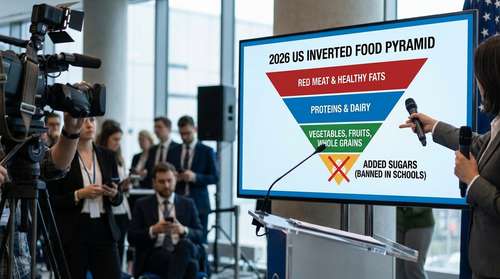
In a historic move that permanently alters the landscape of American nutrition, the USDA announced on Monday the immediate implementation of the 2026 US Food Pyramid across all federal food programs, including the National School Lunch Program. This directive, issued just weeks after the initial unveiling of the USDA Dietary Guidelines 2025-2030, officially cements the controversial "inverted food pyramid" into policy. The new framework marks a radical departure from decades of grain-based advice, placing nutrient-dense animal proteins and healthy fats at the foundation of the American diet while declaring an explicit war on added sugars and ultra-processed foods.
The End of the Grain Era: Meat and Fats Take Priority
For over forty years, the base of the food pyramid was occupied by breads, cereals, and grains. As of this week's mandate, that era is officially over. The new inverted food pyramid prioritizes "high-quality, bioavailable protein" as the primary caloric source for metabolic health. Under the new visual guide, the widest section—representing foods to consume most frequently—is now populated by red meat, poultry, eggs, and full-fat dairy.
This shift is not merely aesthetic. The updated USDA Dietary Guidelines 2025-2030 explicitly recommend increasing daily protein intake to 1.2–1.6 grams per kilogram of body weight—nearly double the previous standard. Officials argue this change is necessary to combat the nation's twin epidemics of obesity and sarcopenia (muscle loss). "We are returning to an ancestral baseline," noted a USDA spokesperson during Monday's press briefing. "The data is clear: the restriction of animal fats and the overconsumption of refined carbohydrates has failed the American public."
Metabolic Health Diet: The Science Behind the Shift
The core philosophy driving this overhaul is nutrient density. The new guidelines argue that animal proteins like lean steak, venison, and liver offer a more complete micronutrient profile—including essential B12, iron, and zinc—than their plant-based counterparts. By focusing on animal protein benefits, the administration aims to stabilize blood sugar levels and improve metabolic flexibility among the population.
Dr. Sarah Voth, a metabolic health researcher involved in the guideline review, explained the rationale in a statement released yesterday. "We are moving away from a calorie-centric model to a nutrient-centric one. A calorie from steak affects the body's hormones differently than a calorie from bread. To reverse insulin resistance, we must prioritize foods that satiate without spiking blood glucose."
Redefining Healthy Fats in 2026
Perhaps the most polarizing aspect of the "Great Nutrition Reset" is the rehabilitation of fats. The healthy fats 2026 standards now categorize naturally occurring animal fats—such as tallow, butter, and the fats found in whole milk—as "foundational lipids" essential for hormone production and brain health. While the guidelines technically retain a cap on saturated fats, the visual prominence of butter and red meat in the new pyramid sends a conflicting message that many experts interpret as a green light for unrestricted consumption. Vegetable oils, once the darling of heart health advice, have been demoted in favor of olive oil, avocado oil, and animal fats.
Critics Sound the Alarm on Saturated Fat
The rollout has not been without fierce opposition. A coalition of nutritionists and cardiologists released a counter-statement this morning, warning that the new inverted food pyramid ignores established science regarding LDL cholesterol and heart disease. Critics argue that the "Make America Healthy Again" agenda is prioritizing ideology and industry interests over long-term cardiovascular data.
"Replacing whole grains with unlimited red meat and butter is a dangerous experiment," said Dr. Frank Hu of the Harvard T.H. Chan School of Public Health in a recent commentary. "While reducing processed sugar is commendable, the pendulum has swung too far in the opposite direction, potentially ignoring the risks associated with high saturated fat intake." Despite these concerns, the USDA is moving forward, citing emerging research that challenges the diet-heart hypothesis.
Implementation: Changing School Lunches and WIC
Monday's announcement makes these guidelines mandatory for institutions receiving federal funding. This means school cafeterias will see a rapid transformation starting next semester. Sugary chocolate milk and processed grain snacks are to be replaced with whole milk, cheese sticks, hard-boiled eggs, and beef-based entrees. The mandate specifically forbids "added sugars" for children under four, a stricter stance than any previous administration.
For the average consumer, this policy shift signals a changing tide in the grocery store. With the federal government now endorsing nutrient-dense animal foods as the cornerstone of a metabolic health diet, demand for grass-fed beef and pastured dairy is expected to surge. Whether this "Great Nutrition Reset" will reverse America's chronic disease trends remains the ultimate test, but one thing is certain: the low-fat era is officially history.