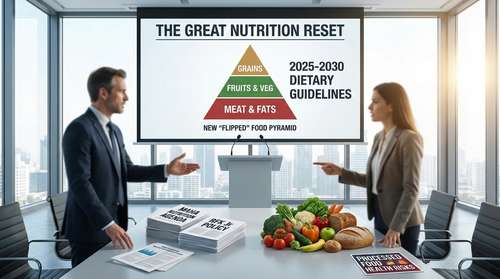
In what is being touted as the most radical overhaul of federal nutrition policy since 1980, the U.S. government has officially implemented the 2025-2030 Dietary Guidelines for Americans. Released jointly by HHS Secretary Robert F. Kennedy Jr. and USDA Secretary Brooke Rollins, the new framework centers on a simple, provocative mandate: "Eat Real Food." However, the introduction of a new food pyramid 2026—visually inverted to prioritize animal proteins and fats while minimizing grains—has ignited a firestorm of debate among top nutrition scientists.
The 'Flipped' Pyramid: A Radical Departure
For decades, the USDA food pyramid (and later MyPlate) placed grains and carbohydrates at the foundational base of the American diet. The new 2025-2030 Dietary Guidelines completely upend this model. In a move that aligns with the Administration's MAHA nutrition agenda (Make America Healthy Again), the new visual guide is an "inverted triangle," placing whole proteins—including red meat, poultry, and eggs—and full-fat dairy at the widest top section.
This protein-forward diet benefits approach explicitly encourages the consumption of nutrient-dense animal foods. In a stark contrast to previous years, the guidelines now list butter, beef tallow, and olive oil as preferred cooking fats, moving away from industrial seed oils. Meanwhile, grains, fruits, and processed carbohydrates have been relegated to the narrowed bottom tip of the pyramid, signaling a recommendation for sharply reduced intake.
Key Changes in the 2026 Guidelines:
- Prioritization of Whole Proteins: Red meat and eggs are classified as "foundational" nutrient sources.
- Acceptance of Saturated Fats: While the text retains a technical 10% limit, the visual emphasis on full-fat dairy and animal fats suggests a softening stance.
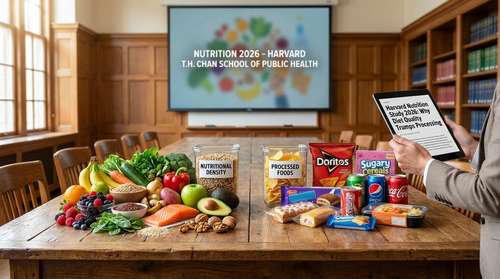
- War on Processed Foods: A new, aggressive classification system defines "ultra-processed" foods as the primary driver of chronic disease, discouraging their consumption entirely.
Experts Sound the Alarm on Saturated Fat Risks
While the "Eat Real Food" slogan has populist appeal, the scientific community is deeply divided. Leading experts from institutions like Harvard T.H. Chan School of Public Health and Boston University are publicly challenging the scientific validity of the new policy. Their primary concern revolves around the mixed messaging regarding saturated fat guidelines 2026.
Dr. Frank Hu, chair of the Department of Nutrition at Harvard, warned that the visual prominence of high-fat animal products contradicts the guidelines' own fine print, which still technically limits saturated fat to 10% of daily calories. "The mixed messages surrounding saturated-fat-rich foods such as red meat and butter may lead to confusion and potentially higher cardiovascular risk," Hu stated, noting that the visual impact of the "flipped" pyramid often outweighs the nuanced text in the full report.
Similarly, faculty at Boston University have criticized the rollout as "aggressive" and "divisive." Nutrition professors argued that by demonizing grains—including whole grains previously linked to heart health—the RFK Jr nutrition policy risks discarding decades of evidence-based research in favor of ideology. "This isn't just a pivot; it's a demolition of the consensus," noted one senior researcher.
The MAHA Agenda and the War on Processing
The overhaul is a direct realization of the "Make America Healthy Again" platform. Secretary Kennedy has long argued that the obesity epidemic is driven not by traditional foods like meat and butter, but by the modern influx of chemical additives and processed food health risks. By prioritizing whole, single-ingredient foods, the administration aims to reverse chronic disease trends that affect over 70% of adults.
"We are putting real food back at the center of the American diet," Kennedy declared at the launch. "Real food nourishes the body. Real food restores health." This philosophy has led to the inclusion of controversial recommendations, such as endorsing raw milk availability and questioning the necessity of fortified grains.
What This Means for Your Grocery List
For the average American, these changes signal a shift in what "healthy" looks like on the plate. School lunch programs and WIC benefits are expected to be overhauled in the coming months to reflect the new priorities, potentially replacing cereal-heavy breakfasts with egg-and-meat-based options. As the new food pyramid 2026 makes its way into classrooms and doctor's offices, the clash between traditional nutrition science and the new "ancestral" approach is likely just beginning.