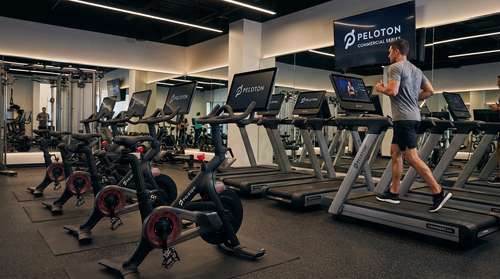
For years, Peloton was synonymous with the at-home fitness revolution. Now, the company is packing its bags and heading directly to your local health club. On Monday, March 16, 2026, the fitness giant officially unveiled the Peloton Commercial Series, its first hardware line explicitly engineered for high-traffic, heavy-use environments. This launch signals a massive strategic pivot, transforming the company from a residential favorite into a formidable contender in the multi-billion-dollar global B2B commercial fitness market. By adapting its wildly popular interactive platform for public spaces, the brand is making a bold statement about the future of physical wellness spaces.
The Dawn of the Peloton Commercial Series
The move to create robust Peloton for gyms did not happen overnight. The new equipment lineup is the brainchild of the company's Commercial Business Unit (CBU), an entity formally established in 2025 through the strategic integration of Peloton for Business and legacy equipment manufacturer Precor.
By combining forces, the two brands have developed a highly effective hybrid model. Precor takes the reigns on hardware engineering, industrial-grade product development, and global delivery logistics. Their legacy in manufacturing ensures the machines can withstand the punishing environment of a public health club. Meanwhile, Peloton overlays its signature world-class digital content, competitive leaderboards, and immersive software experience. This synergy allows facility operators to offer premium, tech-forward workout stations without sacrificing the mechanical reliability required for round-the-clock operations.
A New Direction: Peter Stern Peloton CEO
Leadership changes often bring fresh roadmaps, and the current executive suite is entirely focused on enterprise expansion. "The introduction of the Commercial Series makes one thing very clear: Peloton is going to the gym," stated Peter Stern Peloton CEO, during Monday's global announcement.
Stern emphasized that the brand is aggressively targeting spaces outside the living room, recognizing that consumer habits have shifted toward hybrid workout routines. "We are bridging the gap between the home and the gym by pairing our world-class digital experience and design with some of the most durable hardware on the market," he added. This vision acknowledges modern consumer behavior, where fitness enthusiasts want a continuous, connected profile whether they are sweating in their basement, visiting a luxury hotel, or scanning into a massive commercial facility. Under Stern's guidance, the brand is moving past previous business models to secure long-term recurring revenue from institutional buyers.
Inside the Tech: Peloton Connected Treadmill and Professional Exercise Bikes
When placing equipment in a commercial facility, durability is the absolute baseline. The initial rollout features a heavy-duty connected bike and the highly anticipated Peloton connected treadmill. Designed explicitly for shared spaces, the Tread+ Pro is rigorously tested to withstand an impressive 1,460 hours of intense annual use.
These professional exercise bikes and treadmills feature enhanced motors, upgraded drivetrains, and commercial limited warranties built to handle back-to-back classes. Additionally, the machines include high-definition swivel screens to support off-equipment cross-training, such as strength, yoga, and mobility work. This functionality allows gym operators to maximize their floor space by offering multi-modal workout stations. Users simply log into the hardware via their existing profile, instantly pulling up their personalized metrics, class history, and preferred instructors. For non-subscribers, the platform offers streamlined access to free modes and select introductory classes to drive brand acquisition straight from the gym floor.
Reshaping B2B Fitness Trends
The financial framework behind this enterprise expansion shows early signs of robust validation. In the company's fiscal second quarter, the Commercial Business Unit reported a 10% year-over-year revenue growth. This metric stands out sharply against the backdrop of the company's broader restructuring efforts and fluctuating consumer retail sales over the last few years.
By leveraging Precor's massive existing footprint across more than 60 countries, Peloton is positioned to bypass many of the traditional logistical hurdles associated with global scaling. Industry insiders and facility buyers are getting their first hands-on look at the hardware this week, as the two brands debut a joint public demonstration at the prestigious Health & Fitness Association (HFA) Show. This visibility is crucial for capturing the attention of large-scale franchise owners and independent club operators alike.
The Future of Commercial Fitness Equipment 2026
Gym operators looking to upgrade their cardio floors will be able to partner directly with the CBU to outfit their entire facilities with connected cardio, strength, and recovery equipment. The new hardware is slated to begin shipping in late 2026. Initial distribution will strategically target six key markets: the United States, the United Kingdom, Canada, Germany, Australia, and Austria.
As commercial fitness equipment 2026 standards evolve to demand greater digital integration, fitness centers face mounting pressure to provide smart, networked hardware that tracks user data seamlessly. This launch positions the brand not just as a content provider, but as a holistic infrastructure partner for health clubs worldwide. The battle for the gym floor has officially entered a new, highly connected era, and the standards for public cardio equipment will never be the same.