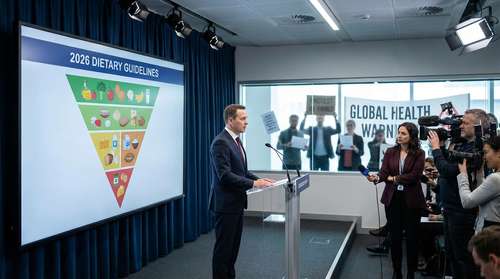
Over the weekend of March 14-15, the Department of Health and Human Services (HHS) fiercely defended the controversial 2026 Dietary Guidelines for Americans, doubling down on the administration's sweeping overhaul of federal nutrition advice. At the center of an escalating international firestorm is the newly implemented inverted food pyramid, a striking visual that places red meat, full-fat dairy, and animal fats at the apex of American diets while actively minimizing grains. As global health organizations and medical boards issue fresh warnings this week about the long-term dangers of this saturated-fat-heavy approach, federal officials are holding their ground. They insist this radical shift is the only viable method to reverse the nation's skyrocketing chronic disease epidemic.
The Core of the RFK Jr. Nutrition Policy
Spearheaded by HHS Secretary Robert F. Kennedy Jr. and Agriculture Secretary Brooke Rollins, the new USDA food guidelines represent the most dramatic pivot in federal dietary history. Released officially earlier this year under the banner of the Make America Healthy Again food initiative, the updated framework dismantles decades of conventional public health advice. This weekend, administration officials took to the airwaves to shield the policy from its fiercest critics yet.
Turning the Traditional Pyramid Upside Down
Instead of a broad base of carbohydrates, the new visual—dubbed by some clinical nutritionists as 'MyTriangle'—elevates protein and healthy fats to the top tier alongside fruits and vegetables. The guidelines mandate a sharp, uncompromising reduction in ultra-processed foods, artificial sweeteners, and seed oils. One of the most praised aspects of the guidelines is the strict cap on added sugars, limiting them to no more than 10 grams per meal.
However, the policy simultaneously encourages Americans to consume up to 1.6 grams of protein per kilogram of body weight daily. It explicitly greenlights full-fat dairy, butter, beef tallow, and red meat. To achieve this, the administration effectively bypassed the traditional review process, discarding large portions of a 421-page systematic report compiled by independent scientists over three years, which had cautioned against high saturated fat intake.
Medical Experts Highlight High Protein Diet Risks
The weekend's defensive press tour from HHS officials came in direct response to a coordinated pushback from cardiovascular, nephrology, and environmental experts worldwide. Over the last 48 hours, several prominent medical coalitions have issued stark public advisories detailing the high protein diet risks associated with the new framework.
Cardiovascular and Renal Health Concerns
While independent nutritionists universally applaud the administration's aggressive stance against ultra-processed snacks and sugary beverages, the government's promotion of saturated fats has drawn intense scientific scrutiny. Leading cardiologists argue that encouraging the unrestricted consumption of red meat and butter contradicts decades of peer-reviewed data linking high saturated fat intake to elevated LDL cholesterol and cardiovascular disease.
Furthermore, kidney specialists are raising red flags. They warn that the aggressive protein targets could overwhelm renal function in individuals suffering from undiagnosed early-stage kidney disease. The Physicians Committee for Responsible Medicine recently filed a petition urging a recall of the guidelines, arguing that the public deserves guidance built on independent evidence rather than messaging that disproportionately benefits the meat and dairy industries.
Beyond human health, environmental advocates have joined the chorus of recent critics. They point out that scaling up red meat and dairy consumption to meet these new federal targets would require a massive expansion of resource-intensive industrial agriculture, accelerating deforestation and greenhouse gas emissions.
HHS Stands Firm on the Make America Healthy Again Food Agenda
Facing this fresh wave of global criticism, HHS remains entirely unyielding. During a series of contentious weekend briefings, administration representatives argued that the previous grain-heavy, fat-phobic guidelines directly engineered the current crises of obesity and type 2 diabetes. The foundation of the RFK Jr. nutrition policy operates on the premise that nutrient-dense whole foods—even those rich in animal fats—satiate hunger better and stabilize blood sugar far more effectively than the carbohydrate-loaded diets promoted in the 1990s and 2000s.
Officials maintain that current critics are heavily influenced by the pharmaceutical and highly processed food sectors, which stand to lose billions if American consumers return to cooking whole, single-ingredient foods. 'The message is simple: eat real food,' the guidelines declare, flatly rejecting the long-held nutritional consensus that animal proteins are the primary root cause of metabolic dysfunction.
The stakes are remarkably high. These guidelines do not merely exist as website recommendations; they dictate the nutritional standards for over 30 million children relying on the National School Lunch Program, as well as military bases and federal food assistance programs like SNAP. By aggressively defending the framework this weekend, HHS signaled that it intends to push these high-protein, full-fat mandates into every publicly funded cafeteria in the country.
Navigating the New USDA Food Guidelines
For everyday consumers caught in the crossfire of this escalating nutritional culture war, finding a balanced, evidence-based path forward is essential. The 2026 Dietary Guidelines for Americans successfully identify the indisputable dangers of refined sugars, artificial dyes, and packaged foods, offering a much-needed correction to modern dietary habits. However, readers must personalize the aggressive protein and fat recommendations based on their unique medical profiles.
At healthvot nutrition, we recommend focusing on the undisputed common ground found between the administration and the medical community: prioritize whole, unprocessed foods. You can confidently embrace the government's call to eliminate chemical additives and sugary sodas while still opting for heart-healthy protein sources like wild-caught fish, poultry, legumes, and nuts to mitigate any potential cardiovascular risks.
As the fierce debate over the inverted food pyramid continues to dominate headlines this week, relying on localized, personalized medical advice rather than sweeping federal mandates remains your safest dietary strategy.