Motor vehicle collisions continue to claim the lives of thousands of young Americans every year, maintaining their grim status as a leading cause of death for this demographic. When you hand over the car keys, the anxiety is real—but according to a fresh survey, so is the denial. Released today, the March 16, 2026 Mott Children’s Hospital poll exposes a fascinating contradiction: exactly one in three parents live in fear that their teenager will cause a major accident. Yet, an overwhelming 96 percent of those same parents insist their child drives just as well as, or significantly better than, everyone else on the road. Navigating teen driving safety 2026 requires families to bridge this gap between legitimate fear and blind confidence, putting a much-needed spotlight on modern healthvot family safety priorities.
The Optimism Bias in Parenting Teen Drivers
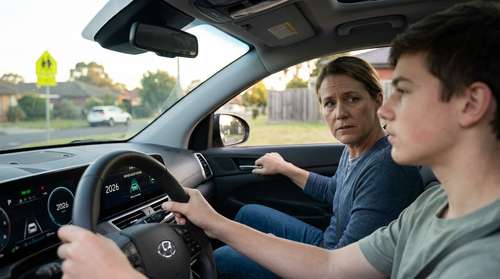
The nationally representative survey, which gathered responses from 1,780 parents of youths ages 16 to 25, brings the everyday realities of parenting teen drivers into sharp focus. Over 80 percent of the surveyed parents report that their child drives regularly, with nearly two-thirds taking the wheel almost every single day. Underneath this daily commute lies a troubling pattern of observed risks. More than half of the parents admitted to witnessing their child perform at least one unsafe maneuver from the passenger seat.
Despite watching their teens speed, tailgate, or check their phones, 53 percent still rate their child’s driving ability as perfectly average, and 43 percent call it better than their peers. A mere 4 percent were willing to rank their child as a worse driver than average. Sarah Clark, M.P.H., Co-Director of the Mott Poll, noted that the report highlights a massive disconnect between parents' concerns about risky driving and their unwavering confidence in their own child's skills. Families tend to suffer from a dangerous optimism bias—assuming the worst teen car crash statistics apply exclusively to other people's children, even when the danger is sitting right next to them.
A Closer Look at Teen Car Crash Statistics
The numbers from the poll paint a clear picture of what is actually happening on American roads. When parents rode shotgun, they frequently documented hazardous habits that contribute directly to fatal accidents. Nearly half of all parents (44 percent) reported aggressive driving behaviors from their teens. This included excessive speeding at 41 percent, tailgating at 12 percent, and outright road rage at 6 percent.
Addressing Distracted Driving in Teens
Beyond physical aggression, distracted driving in teens remains a premier threat. One-quarter of parents caught their children engaging in digital or cognitive distractions. Specifically, 17 percent observed texting while driving, and 19 percent witnessed multitasking behind the wheel. Shockingly, older youth between the ages of 21 and 25 actually showed higher rates of distracted driving compared to the 16-to-20 demographic, proving that age and experience alone do not cure bad habits.
Furthermore, 17 percent of parents noticed their kids driving while impaired. This does not just mean illegal substances; it includes driving while sleepy (10 percent), emotionally distressed (9 percent), or under the influence of alcohol and marijuana (2 percent). Even a momentary glance at a smartphone or driving while exhausted severely limits reaction times, turning minor miscalculations into severe collisions.
Actionable Steps for Injury Prevention for Adolescents
Despite the high level of observed risk and underlying worry, a surprising lack of enforcement exists at home. Only one in four parents (24 percent) reported taking concrete steps to correct their teenager's risky habits. Experts emphasize that passive observation is simply not enough when it comes to effective injury prevention for adolescents.
Families must transition from worrying to enforcing strict boundaries. The minority of parents who do intervene utilize practical strategies to hold their teens accountable. According to the poll, parents took the following actions:
- Installing a vehicle monitoring device or app (13 percent)
- Refusing the use of the family car (8 percent)
- Temporarily taking away driving privileges (6 percent)
- Threatening to stop paying for car insurance (6 percent)
Because driver's education requirements vary wildly across state lines—with some regions allowing online-only instruction or lacking formal requirements entirely—active parental involvement is absolutely non-negotiable for keeping roads safe.
Advancing Teen Driving Safety 2026
As vehicles become faster, more silent, and digital distractions multiply, you cannot simply hope your teenager will naturally make the right choices. Real safety requires proactive communication. Health safety advocates recommend drafting a clear, written parent-teen driving contract before anyone turns the ignition. Establish non-negotiable rules regarding cell phone usage, passenger limits, and nighttime curfews. Enforce consequences immediately and consistently when those rules are broken. By moving past the assumption that your child is inherently a superior driver, you take a critical step toward ensuring they arrive home safely every single night.