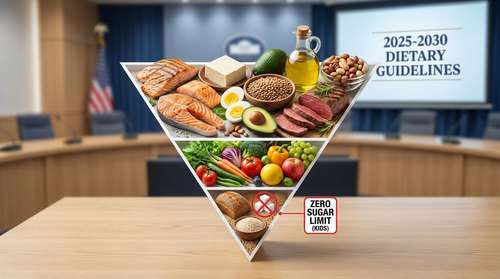
It marks the end of an era for MyPlate and the beginning of a radical new chapter in American nutrition. U.S. health officials have officially begun the nationwide rollout of the 2025-2030 Dietary Guidelines for Americans, introducing a controversial "flipped" food pyramid that completely inverts decades of federal dietary advice. For the first time, high-quality proteins and healthy fats take the top spot, while grains—once the foundation of the American diet—are relegated to the bottom tier. This historic shift, part of the broader "Make America Healthy Again" initiative, also ushers in the strictest added sugar limits in history, aiming to combat the rising tide of chronic disease.
The New Flipped Food Pyramid 2026: What Changed?
The most visible change in the 2025-2030 Dietary Guidelines is the visual replacement of the USDA's MyPlate with the "Flipped Pyramid." Unlike the original 1992 Food Guide Pyramid, which suggested 6-11 servings of bread, cereal, rice, and pasta daily, the new 2026 model turns that logic on its head.
At the broad top of the inverted triangle, the guidelines now prioritize nutrient-dense proteins—including red meat, poultry, and eggs—alongside healthy fats like butter, tallow, olive oil, and full-fat dairy. Vegetables occupy the middle tier, while fruits and grains are squeezed into the narrowest point at the bottom, signaling they should be consumed in moderation.
Key Visual Shifts:
- Top Tier (Primary Focus): Proteins (meat, eggs, fish) and Fats (dairy, natural oils).
- Middle Tier: Vegetables and Fermented Foods.
- Bottom Tier (Limit): Fruits, Grains, and Starches.
This "protein-forward" approach aligns with recent trends favoring real food over processed carbohydrates, but it has sparked intense debate among dietitians accustomed to grain-heavy recommendations.
Strict Added Sugar Limits for Children and Adults
Perhaps the most aggressive policy in the new guidelines is the war on added sugar. Citing a direct link between sugar consumption and metabolic dysfunction, the guidelines introduce a recommendation of zero added sugars for children under 11. This is a massive leap from previous advice, which only cautioned against sugar for children under two.
For adults and adolescents, the guidance is nearly as strict, capping added sugar intake at just 10 grams per meal. To put this in perspective, a single can of standard soda contains roughly 40 grams of sugar—four times the new per-meal limit. These added sugar limits for children and adults are expected to force a major reformulation of school lunches and federally subsidized meal programs starting this month.
The Ultra-Processed Food Recommendations
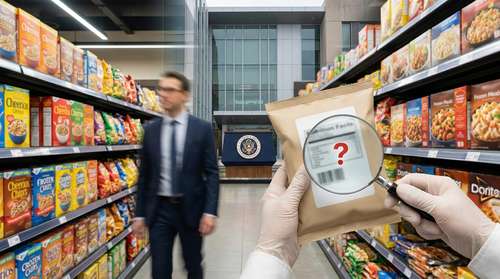
For the first time, the federal guidelines explicitly define and discourage "ultra-processed foods" (UPFs). The document advises Americans to avoid products with "ingredients you wouldn't find in a home kitchen," effectively targeting boxed mac-and-cheese, commercial baked goods, and seed-oil-based snacks.
This move validates years of independent research linking UPFs to obesity and inflammation. The ultra-processed food recommendations urge shoppers to stick to the perimeter of the grocery store, focusing on whole ingredients rather than packaged "health" foods that rely on fortifications.
Flipped Food Pyramid Controversy: Healthy Fats vs Grains
The rollout has not been without pushback. The flipped food pyramid controversy centers on the tension between the visual graphic and the fine print. While the pyramid emphasizes steak and butter, the text still retains a recommendation to limit saturated fat to 10% of daily calories—a contradiction that has left many nutritionists confused.
"The imagery suggests a keto-like or carnivore-adjacent diet, yet the written standards still fear saturated fat," notes Dr. Elena Rostova, a leading metabolic health researcher. "Consumers are seeing the pictures and buying butter, while the text technically still says to be careful. It’s a mixed message."
Furthermore, the demotion of grains has angered the agricultural sector and some plant-based advocates, who argue that healthy fats vs grains is a false dichotomy and that whole grains remain essential for fiber intake. However, proponents argue that the fiber gap can be closed with vegetables, without the glycemic load of modern wheat products.
Real Food Diet Trends Entering the Mainstream
The 2025-2030 guidelines effectively institutionalize real food diet trends that have been growing on social media and in functional medicine circles. By endorsing full-fat dairy and demonizing processed seed oils and sugars, the government is catching up to how many health-conscious Americans already eat.
As the rollout continues this week, schools and hospitals will be the first testing grounds for this new nutritional philosophy. Whether the "Flipped Pyramid" will reverse America's chronic disease epidemic remains to be seen, but one thing is certain: the era of the low-fat, high-grain government diet is officially over.