As National Nutrition Month kicks off this March, Americans are waking up to the most significant overhaul of federal dietary advice in forty years. In a move that has stunned food industry lobbyists and delighted metabolic health experts, the USDA and HHS have officially released the 2026 Dietary Guidelines for Americans, introducing a radical "flipped" food pyramid model. The new guidance explicitly demotes grains and ultra-processed foods while elevating protein and whole, minimally processed ingredients to the foundation of a healthy diet.
The 'Flipped' Pyramid: A New Era for Nutrition
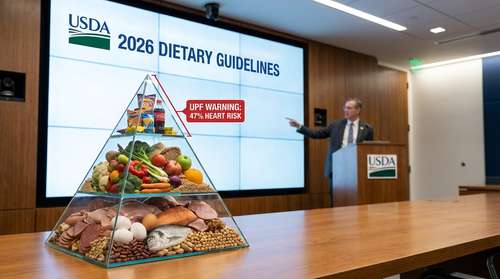
For decades, the iconic Food Guide Pyramid (and later MyPlate) urged Americans to build their diet on a massive base of carbohydrates—bread, cereal, rice, and pasta. The new food pyramid 2026 turns that logic on its head. The updated graphic features a wide top tier—representing the foods we should consume most—dominated by high-quality proteins, vegetables, and healthy fats. Grains and starchy carbohydrates have been relegated to the narrow bottom tip, signaling that they should be consumed sparingly.
"This isn't just a tweak; it's a complete paradigm shift," says Dr. Elena Rostova, a leading nutritional epidemiologist. "For the first time, the guidelines acknowledge that the grain-heavy approach of the 1990s may have inadvertently fueled the metabolic health crisis. The new model prioritizes nutrient density and satiety over cheap calories."
Daily Protein Requirements 2026: The New Standard
Perhaps the most actionable change in the 2025-2030 update is the dramatic increase in recommended protein intake. The previous standard of 0.8 grams per kilogram of body weight—long criticized by muscle physiology experts as merely a minimum to prevent deficiency—has been scrapped.
The daily protein requirements 2026 guidelines now advise a target of 1.2 to 1.6 grams per kilogram of body weight for the average adult. For a 150-pound (68kg) person, this means aiming for roughly 80 to 110 grams of protein daily, nearly double the old minimum. The committee cited overwhelming evidence that higher protein intake is critical for preserving lean muscle mass, regulating blood sugar, and supporting healthy aging.
Why the Increase?
The shift aims to combat the rising tide of sarcopenia (age-related muscle loss) and metabolic syndrome. "We are seeing that protein is not just for bodybuilders," explains the guideline's executive summary. "It is the metabolic currency of a healthy immune system and a functioning metabolism."
The Stern Warning: Ultra-Processed Foods Heart Risk
If the protein recommendation is the carrot, the warning against ultra-processed foods (UPFs) is the stick. For the first time, the guidelines issue a specific, quantifiable warning against industrial food products containing emulsifiers, high-fructose corn syrup, and artificial flavorings.
This decision follows a bombshell study released last month by researchers at Florida Atlantic University, which found that adults with the highest intake of UPFs faced a 47% higher risk of heart attack and stroke. The ultra-processed foods heart risk data was reportedly the tipping point that convinced the USDA committee to classify these products as "consumables to actively avoid" rather than just "foods to limit."
Under the new guidelines, products like sugary breakfast cereals, pre-packaged deli meats, and frozen diet meals are no longer considered neutral options. The advice is stark: "If it contains ingredients you wouldn't find in a home kitchen, it does not belong in your daily diet."
National Nutrition Month 2026: 'Discover the Power of Nutrition'
The release coincides with National Nutrition Month 2026, which has adopted the theme "Discover the Power of Nutrition." This year, the campaign is focusing heavily on the "Real Food" movement, encouraging families to step away from the center aisles of the grocery store and return to cooking with single-ingredient foods.
Real food diet trends have been gaining momentum on social media for years, but this marks the first time federal policy has fully aligned with the philosophy. The new guidelines encourage Americans to:
- Prioritize whole eggs, meat, fish, and legumes over protein powders or bars.
- Choose whole fruit over fruit juice.
- Use natural fats like butter, olive oil, and avocado oil instead of industrial seed oils.
What This Means for Your Grocery List
Adapting to these changes doesn't require a degree in nutrition, but it does require a mindset shift. The HealthVot nutrition news team recommends starting with simple swaps. Instead of a bagel for breakfast, the new guidelines suggest eggs with spinach. Instead of a pasta dinner, the focus shifts to a serving of steak or salmon with a side of roasted vegetables.
As these guidelines roll out into school lunch programs and hospital menus over the coming year, we can expect a significant transformation in how America eats. The message from the 2026 guidelines is clear: The era of empty calories is over. The era of real food has begun.