A growing national health crisis has reached the West Coast, as Placer County health officials confirmed a new family cluster of measles on Monday, March 2. This development marks a significant escalation in the 2026 measles outbreak, which has already seen U.S. case numbers surpass 1,100—a figure not seen this early in the year since the resurgence of the early 1990s. The local outbreak, identified within a single household, has been directly linked to travel from South Carolina, where a massive surge of nearly 1,000 cases is currently overwhelming public health resources.
Placer County Health Alert: The West Coast Breach
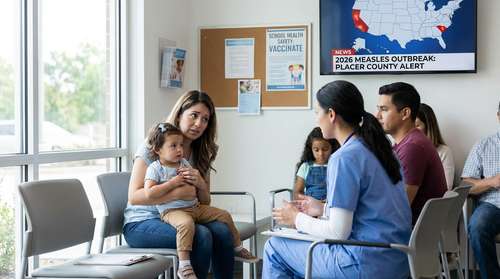
Public Health officials in Placer County moved swiftly to isolate the affected family members and trace potential contacts. The confirmed cluster involves three individuals who recently returned from the Southeast. This transmission event has triggered a Placer County health alert, urging residents who may have visited specific exposure sites to monitor for symptoms. Local hospitals have been placed on high alert, implementing strict isolation protocols for any patients presenting with fever and rash.
"This was not a matter of if, but when," stated a county health spokesperson during a press briefing Tuesday morning. "With the volume of cases we are seeing nationally, localized clusters are expected. Our priority now is containment to prevent community spread within California schools and neighborhoods." The swift arrival of the virus in California highlights the extreme contagiousness of measles, which can remain airborne in a room for up to two hours after an infected person has left.
South Carolina Measles Cases: The Epicenter
The situation in the West is a ripple effect from the epicenter of the crisis. South Carolina measles cases have exploded since January, accounting for nearly 90% of the national total. What began as a small cluster in the Upstate region has ballooned into a statewide emergency, with over 950 confirmed infections. Health experts attribute this rapid spread to pockets of low vaccination coverage in specific communities, creating what epidemiologists call "fuel for the fire."
The magnitude of the South Carolina outbreak is driving the national surge, overwhelming pediatric units and prompting emergency vaccination campaigns. The CDC has deployed additional field teams to the region to assist with contact tracing, but the sheer volume of exposures has made containment difficult. This regional crisis is now spilling over state lines, as evidenced by the new cases in California, raising fears of a coast-to-coast epidemic.
Spotting the Signs: Measles Symptoms in Children
With anxiety rising among parents, distinguishing measles from the common flu is critical. Measles symptoms in children typically appear 7 to 14 days after infection. The illness often begins with a high fever—sometimes spiking above 104°F—followed by the "three C's": cough, coryza (runny nose), and conjunctivitis (red, watery eyes).
One distinct marker parents should watch for are Koplik spots—tiny white spots that appear inside the mouth two to three days before the skin rash develops. The infamous measles rash usually starts at the hairline and spreads downward to the neck, trunk, and limbs. Because the virus is infectious four days before the rash appears, children can unwittingly spread the disease before parents realize they are sick. Complications can be severe, ranging from ear infections to pneumonia and, in rare cases, encephalitis (brain swelling).
School Health Safety 2026: Protecting Classrooms
As the outbreak widens, school health safety 2026 protocols are being tested. Several districts in affected areas have already reinstated strict exclusion policies for unvaccinated students during active transmission periods. Administrators are working closely with local health departments to verify immunization records, ensuring that the "herd immunity" threshold of 95% is met within classrooms.
For families, the most effective defense remains the MMR vaccine for families. Medical data confirms that two doses of the MMR vaccine are 97% effective at preventing measles. In light of the current child vaccination news, pediatricians are reporting a surge in appointments as parents rush to catch up on missed doses. Health officials emphasize that it is never too late to vaccinate; even a single dose given within 72 hours of exposure can provide some protection or modify the severity of the illness.
"We are urging everyone to check their vaccination status immediately," the CDC advised in its latest update. "This virus finds the vulnerable with ruthless efficiency. The only way to stop this historical trajectory is through high community immunity."