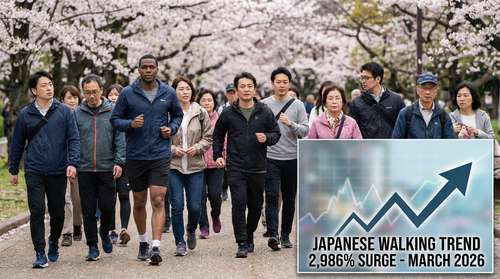
If you have noticed your local park filling up with people alternating between power-walking and casual strolling this month, you are witnessing the explosion of the Japanese walking trend. Known scientifically as Interval Walking Training IWT, this specific exercise protocol has seen a staggering 2,986% surge in search interest in March 2026, according to recent fitness industry data. Unlike the grueling high-intensity workouts of the early 2020s, this method promises significant fitness for longevity and walking for weight loss without the heavy joint impact. But what exactly is driving this sudden viral fame, and does the science from Japan's Shinshu University back up the hype?
What Is the Japanese Walking Method?
At its core, the Japanese walking method is a structured form of interval training that is deceptively simple but metabolically potent. Unlike the vague goal of hitting 10,000 steps a day, this protocol focuses on intensity variation rather than just distance.
The official method, developed by Dr. Hiroshi Nose and his team at Shinshu University, follows a strict "3-minute" rule:
- 3 Minutes of Fast Walking: You walk at roughly 70% of your maximum effort. This should feel "somewhat hard," meaning you can talk but not sing.
- 3 Minutes of Slow Walking: You drop down to about 40% effort for a full recovery stroll.
- Repeat: This cycle is repeated for 5 sets, totaling 30 minutes.
This structure turns a standard daily walk into a metabolic engine. By constantly forcing your heart rate up and then allowing it to recover, you trigger physiological adaptations that steady-state walking simply cannot match.
The Science: Shinshu University Walking Study Findings
While the trend is exploding in March 2026, the science has been building for nearly two decades. The Shinshu University walking study provided the foundational evidence that is now captivating the wellness world. Researchers found that participants who followed this specific Interval Walking Training IWT regimen for five months saw results that far outpaced those who simply walked at a continuous pace.
Key Research Benefits
The data is compelling for anyone over 40 or those looking for low impact cardio 2026 solutions. The study participants demonstrated:
- Increased Aerobic Capacity: A boost in VO2 max by up to 20%, a marker strongly correlated with longevity.
- Reduced Lifestyle Disease Risk: Significant drops in resting blood pressure and blood sugar levels.
- Thigh Muscle Strength: Unlike regular walking, the high-intensity intervals engaged fast-twitch muscle fibers, increasing leg strength by 10-15%.
Why Is This Trending in March 2026?
Fitness trends are cyclical, but the 2026 fitness trends landscape is unique. We are currently seeing a massive cultural shift away from "punishing" workouts toward "sustainable" movement. The "Japanese Walking" craze fits perfectly into the current Longevity Era of fitness.
Several factors have caused this specific method to go viral right now:
- The Anti-Burnout Movement: After years of cortisol-spiking HIIT classes, people are seeking effective cardio that doesn't leave them exhausted for the rest of the day.
- Accessibility: It requires zero equipment and no gym membership. As inflation impacts household budgets in 2026, free, science-backed fitness is premium.
- Spring Motivation: As warmer weather arrives in the Northern Hemisphere this March, walkers are looking to upgrade their winter strolls into actual workouts.
Japanese Walking vs. Traditional Cardio
Is this really better than just going for a run or hitting your step count? For many, the answer is yes, specifically when optimizing for walking for weight loss and joint health.
Traditional steady-state cardio (like jogging at one pace) often leads to a plateau where the body becomes efficient and burns fewer calories. The varying intensity of Japanese walking keeps the metabolic demand high. Furthermore, for those with knee or hip issues, the low-impact nature of walking combined with the high-reward of intervals offers a "sweet spot" that running cannot provide.
While 10,000 steps remains a good baseline for activity, Interval Walking Training transforms that time into a potent medical intervention. It turns a passive activity into an active pursuit of longevity.
How to Get Started Today
You don't need a heart rate monitor to start Interval Walking Training IWT. The "talk test" is your best tool. During your fast intervals, you should feel slightly breathless. During your slow intervals, you should feel completely relaxed.
Start with just 3 sets (18 minutes) if you are a beginner, and work your way up to the recommended 5 sets (30 minutes) at least four days a week. As with any new fitness regimen, consistency beats intensity. The magic of the Japanese method isn't in a single session, but in the cumulative effect of weeks of interval training.