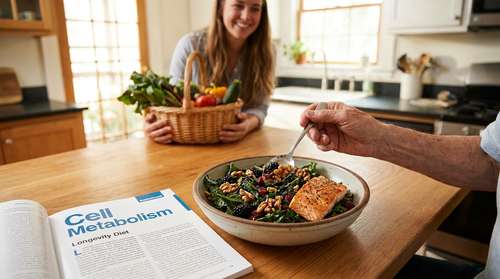
It’s officially National Nutrition Month 2026, but this year, the conversation isn’t just about eating your veggies—it’s about a radical overhaul of America’s nutritional foundation. As of March 1st, the health community is buzzing about the 2025-2030 Dietary Guidelines for Americans, which have officially reintroduced—and inverted—the food pyramid. This flipped food pyramid places high-quality proteins and healthy fats at the broad top, relegating carbohydrates and grains to the shrinking bottom tip. It is the most significant shift in USDA policy in decades, signaling a new era of "Eat Real Food" that challenges everything we thought we knew about the standard American diet.
The 'Flipped' Food Pyramid: A Radical Reset
For the first time since the original pyramid’s debut, the USDA and HHS have completely restructured the visual guide for American eating. Gone is the grain-heavy base of the 90s; in its place is a new food pyramid 2026 model that prioritizes metabolic health through nutrient density.
The new graphic, which critics and supporters alike are calling the "inverted pyramid," explicitly encourages the consumption of whole foods. At the widely emphasized top section, you’ll now find red meat, poultry, eggs, and full-fat dairy—foods previously limited by saturated fat concerns. The guidelines argue these are essential for satiety and muscle preservation. Meanwhile, refined grains and even some starchy fruits have been moved to the "use sparingly" section at the bottom. This "flipped" approach aims to combat the obesity epidemic by targeting insulin resistance directly, marking a decisive break from the low-fat dogma of the last 40 years.
High Protein Daily Requirements: Doubling Down
Perhaps the most shocking update in the USDA nutrition guidelines 2026 is the new recommendation for protein intake. For years, the Recommended Dietary Allowance (RDA) sat at a modest 0.8 grams per kilogram of body weight. The new guidelines have shattered this ceiling, advising a target of 1.2 to 1.6 grams of protein per kilogram daily for the average adult.
Why the Jump?
Health officials cite emerging research on sarcopenia (muscle loss) and metabolic flexibility as the drivers for these high protein daily requirements. The logic is simple: a higher protein baseline supports longevity, blood sugar control, and weight management better than a carbohydrate-centric diet. For a 150-pound person, this means aiming for roughly 80 to 110 grams of protein a day—nearly double the old minimum. This shift has sparked a massive industry pivot, with "protein-forward" becoming the dominant marketing term on grocery shelves this month.
The War on Ultra-Processed Foods and Sugar
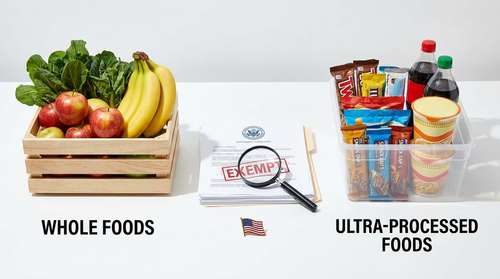
While the protein push is headline news, the crackdown on additives is equally aggressive. The 2025-2030 framework adopts a zero-tolerance policy toward added sugars for children under 10—a massive leap from the previous age limit of 2. Furthermore, the guidelines explicitly advise against ultra-processed foods (UPFs), categorizing them as distinct from "real food."
The mantra "Eat Real Food" is repeated throughout the documentation. This isn't just about avoiding candy; it's a structural recommendation to replace boxed, shelf-stable items with whole ingredients. The guidelines now suggest that no amount of added sugar is considered part of a healthy diet, a statement that has sent shockwaves through the beverage and snack industries.
The 'Fibermaxxing' Trend Meets Policy
Interestingly, while the USDA is preaching protein, social media is currently obsessed with the fibermaxxing trend. As National Nutrition Month 2026 kicks off, TikTok and Instagram are flooded with users tracking their fiber intake to hit 30, 40, or even 50 grams a day.
This creates a unique tension. The new flipped food pyramid de-emphasizes grains—traditionally the primary source of fiber for Americans—in favor of meat and fats. However, savvy nutritionists are bridging the gap by promoting "fibrous fats" like avocados, nuts, and seeds, alongside low-starch vegetables. The fibermaxxing trend serves as a citizen-led counterbalance to the guidelines, ensuring that gut health doesn't fall by the wayside in the rush for more protein. It’s a fascinating example of how public health policy and grassroots wellness trends are evolving in real-time.
What This Means for You
As we navigate these changes, the takeaway is clear: the era of the low-fat, grain-heavy diet is officially over. The 2025-2030 Dietary Guidelines for Americans invite you to prioritize whole proteins and natural fats while treating processed carbs as occasional treats. Whether you agree with the "flipped" logic or stand by traditional methods, one thing is certain—National Nutrition Month 2026 will be the most debated and transformative one yet.