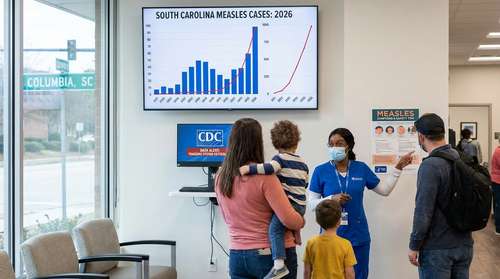
South Carolina measles outbreak 2026 has reached a critical new milestone, with health officials reporting a staggering 985 confirmed cases as of March 1. The outbreak, primarily centered in Spartanburg County, is now the largest localized spread of the virus in the United States in over three decades. This localized health emergency is unfolding against a disturbing backdrop: a reported breakdown in federal disease surveillance that experts warn is leaving American families navigating a blind spot during a pediatric measles surge. As parents scramble for family health alerts today, the collision of a highly contagious virus and faltering national data tracking has created a perfect storm for infectious disease vulnerability.
Spartanburg Crisis: Inside the Numbers
The situation in South Carolina’s Upstate region has deteriorated rapidly since the first cluster was identified late last year. State Epidemiologist Dr. Linda Bell confirmed that the outbreak shows no signs of immediate abatement, with the case count climbing to 985 this week. The vast majority of these infections—approximately 93%—are occurring in unvaccinated individuals, with children bearing the brunt of the suffering.
Recent contact tracing efforts have identified high-traffic exposure sites, including a Costco in Spartanburg and several local schools like Sugar Ridge Elementary and Libertas Academy. Health officials are urging anyone who visited these locations during late February to monitor closely for symptoms. The density of the outbreak in Spartanburg County highlights a critical vulnerability: pockets of low immunization rates that allow the virus to wildfire through communities, overwhelming local health resources.
CDC Health Data Tracking Crisis: A National Blind Spot
While South Carolina battles the virus on the ground, a broader systemic failure is complicating the response. A startling new audit published in the Annals of Internal Medicine reveals a CDC health data tracking crisis that has gone largely unnoticed by the public. The study found that nearly half of the CDC’s routine surveillance databases—vital systems used to track vaccination rates and respiratory virus trends—halted or delayed updates throughout late 2025 and early 2026.
Public health experts warn that this data blackout is eroding the "evidence base" required for effective policy. Without real-time federal data, states like South Carolina are essentially flying blind, unable to benchmark their local crisis against accurate national trends. This breakdown in the federal radar system means that outbreaks may spread undetected across state lines longer than in previous years, delaying critical resource allocation and public warnings.
The Threat to Measles Elimination Status
The United States is now perilously close to losing its measles elimination status—a designation held since 2000. With national case counts surpassing 1,100 in just the first two months of 2026, the virus is threatening to become endemic once again. If the transmission chain continues unbroken for 12 months, the U.S. will officially regress in its public health standing, a shift that could have long-term consequences for travel and international trade.
Measles Symptoms in Kids: What Parents Must Know
With the pediatric measles surge intensifying, recognizing early warning signs is vital for infectious disease prevention for families. Measles is not merely a harmless rash; it is a severe respiratory infection that can lead to pneumonia, encephalitis, and hospitalization. Parents should be vigilant for the following progression of symptoms:
- High Fever: Often spiking to 104°F (40°C) or higher.
- The "Three C's": Cough, Coryza (runny nose), and Conjunctivitis (pink eye).
- Koplik Spots: Tiny white spots that appear inside the mouth 2-3 days after symptoms begin.
- The Rash: A flat, red rash that starts at the hairline and spreads downward to the neck, trunk, and limbs.
If you suspect your child has been exposed, call your pediatrician immediately before visiting a clinic to avoid infecting others in waiting rooms. Isolation is critical, as the virus can linger in the air for up to two hours after an infected person leaves a room.
Vaccination News 2026: The Path Forward
The definitive solution to halting this wave remains the MMR (measles-mumps-rubella) vaccine. Vaccination news 2026 highlights a renewed push by state officials to set up mobile clinics in affected counties. The vaccine is 97% effective at preventing measles after two doses. For those in the Spartanburg area, health departments are offering no-cost immunization clinics to stem the tide.
In a time where federal data may be lagging, local vigilance is your best defense. ensuring your family is up-to-date on immunizations creates a personal firewall against the outbreak, protecting not just your household but the most vulnerable members of your community who cannot be vaccinated for medical reasons.