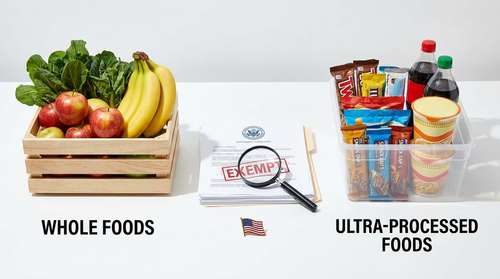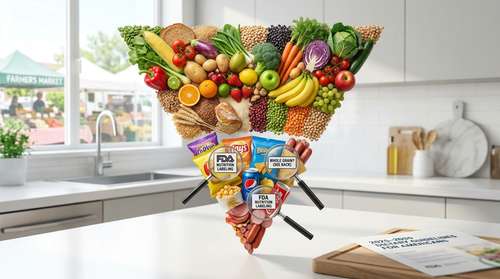
The U.S. government has officially drawn a hard line in the sand regarding the national diet, marking a dramatic departure from decades of carbohydrate-heavy advice. With the rollout of the 2025-2030 Dietary Guidelines, federal nutrition policy has undertaken its most significant reset in history. At the center of this paradigm shift is the new food pyramid 2026, which fundamentally flips traditional recommendations to prioritize vegetables, fruits, and healthy proteins at its base. But while the guidelines explicitly warn against industrial food products, consumer watchdogs are actively sounding the alarm this week over corporate workarounds. Massive whole grain labeling loopholes are currently allowing heavily manufactured junk food to maintain a healthy facade, sparking a fierce debate over transparency in the supermarket aisle.
The Inverted Approach to National Nutrition
For generations, Americans were told to build their diets on a wide foundation of grains, cereals, and pastas. The updated federal framework dismantles that model entirely. By inverting the visual graphic, the latest guidelines establish nutrient-dense, minimally modified foods as the true dietary bedrock. This reset aligns with a growing consensus among physicians and researchers focused on improving metabolic health 2026.
Rather than merely counting calories, the new standards emphasize the physical structure and quality of what we eat. The objective is straightforward: reverse the trajectory of chronic diet-related illnesses by pushing Americans back toward foods found in nature. However, executing this vision in a modern food environment dominated by highly engineered snacks is proving to be a complex battlefield.
Confronting the Hidden Dangers in the Pantry
Perhaps the most consequential aspect of the new policy is what it tells the public to stop eating. For the first time, federal officials are directly naming highly processed products as central drivers of chronic disease. The official recognition of ultra-processed foods health risks validates years of independent research linking these items to obesity, type 2 diabetes, fatty liver disease, and severe cardiovascular issues.
These factory-made products go far beyond simple preservation. They are built from re-engineered ingredients, synthetic emulsifiers, industrial dyes, and intense artificial sweeteners designed to maximize shelf life and hyper-palatability. While the scientific community celebrates the government's newfound candor regarding these dangers, food manufacturers are fighting to protect their market share by leveraging vague terminology and outdated regulatory frameworks.
Exposing the Deception in the Cereal Aisle
The tension between public health directives and corporate marketing reached a boiling point in late April. Nutrition experts and consumer advocacy groups have launched aggressive campaigns demanding strict overhauls to FDA nutrition labeling. Their primary target? The deceptive practices surrounding grain-based products.
Under current standards, food conglomerates can legally slap a whole-grain health claim on a box as long as the grain portion is just 51 percent whole grain by weight. Furthermore, industry-backed certifications often award popular 'healthy' stamps to items containing as little as 8 grams of whole grains per serving-completely ignoring the amount of added sugars, refined inflammatory flours, or artificial additives present in the rest of the package.
How the Matrix Matters
Nutritionists point out that physical form dictates metabolic response. When grains are heavily milled, flaked, or pulverized into flour, their dense cellular matrix is destroyed. The body digests these finely milled grains almost instantaneously, causing a glycemic spike virtually identical to refined white sugar. These whole grain labeling loopholes allow a sugary, ultra-processed cereal to masquerade as a smart dietary choice, directly undermining the core message of the updated federal guidelines.
Actionable Steps for the Grocery Store
The gap between policy and packaging means consumers must become their own most vigilant advocates. When it comes to avoiding processed foods, relying on the front of the box is a losing strategy. Instead, shoppers need practical methods for navigating the shelves to align with the new flipped pyramid.
- Examine the Ingredient Hierarchy: Ingredients are listed by weight. If the first few items include multiple names for sugar (like syrups or fruit juice concentrates) or unrecognizable chemical additives, leave the product on the shelf.
- Look for Intact Structures: Choose grains that retain their visible, natural shape. Steel-cut oats, intact farro, and whole barley kernels digest slowly and provide genuine fiber benefits, unlike products that dissolve into a paste when exposed to water.
- Shop the Perimeter: The safest way to adhere to the new guidelines is to spend the majority of your grocery budget on the outer edges of the store. Produce, fresh proteins, and dairy naturally fall into the foundational categories of the revised dietary model.
The historic pivot in federal nutrition advice is a monumental victory for public health. Yet, as long as regulatory blind spots persist, the responsibility falls on everyday shoppers to see through the marketing spin and prioritize genuinely real food.