It has been nearly a month since the Department of Health and Human Services (HHS) and the USDA unveiled the 2026 U.S. Dietary Guidelines, yet the shockwaves are only just beginning to reshape American kitchens. In a historic press conference on January 7, HHS Secretary Robert F. Kennedy Jr. and USDA Secretary Brooke Rollins introduced a radical departure from five decades of nutrition policy: a new, inverted food pyramid that prioritizes whole proteins and healthy fats while declaring war on ultra-processed foods (UPFs). Dubbed the "MAHA" (Make America Healthy Again) framework, this policy shift marks the official end of the low-fat era and the beginning of a controversial, yet aggressive, campaign to eliminate artificial additives from the nation's food supply.
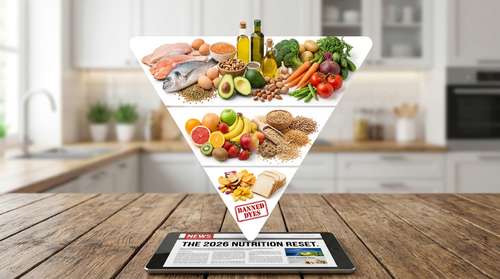
The New ‘Upside-Down’ Food Pyramid 2026
For millennials and Gen Xers raised on the grain-heavy base of the 1992 Food Guide Pyramid, the new food pyramid 2026 visualization is jarring. The graphic has literally been flipped. At the widest top section—now the designated foundation of the American diet—sit red meat, poultry, eggs, and, most surprisingly, full-fat dairy. Grains, once the bedrock of federal nutrition advice, have been demoted to a smaller tier, with a strict distinction drawn between "fiber-rich whole grains" and "refined carbohydrates."
"Protein and healthy fats are essential and were wrongly discouraged in prior dietary guidelines," Secretary Kennedy stated during the rollout. "We are ending the war on saturated fats." The new guidelines explicitly recommend consuming "nutrient-dense animal proteins" and have removed the long-standing cap on dietary cholesterol, encouraging the consumption of butter and tallow over industrial seed oils.
MAHA Nutrition Policy: Banning Dyes and Additives
Perhaps the most tangible aspect of the MAHA nutrition policy is its aggressive timeline for removing artificial ingredients. Building on the FDA's recent move to ban Red Dye No. 3, the new framework targets the elimination of Red No. 40 and Yellow No. 5 from all federal food programs by the end of 2026. This food additive restrictions 2026 mandate directly impacts the $1 trillion processed food industry, forcing manufacturers to reformulate products rapidly.
The policy specifically targets "chemical calories" in school lunches. Starting in the fall 2026 semester, schools receiving federal reimbursement must eliminate products containing targeted synthetic dyes. "We are stripping the chemicals out of our children's cafeterias," noted USDA Secretary Rollins. "If it looks like plastic, it shouldn't be on a lunch tray."
The Crusade Against Ultra-Processed Foods
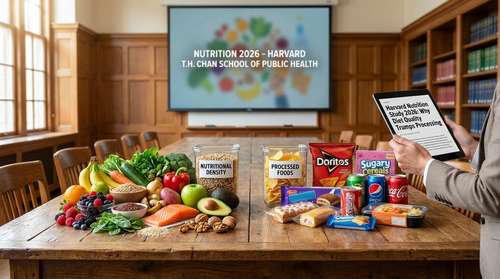
The guidelines also introduce the first federal definition and warning label system for UPFs. Citing recent studies linking ultra-processed foods health risks to metabolic dysfunction and autoimmune issues, the USDA now advises Americans to "avoid highly processed packaged foods that are salty or sweet." This categorization lumps many traditional snack foods, sugary cereals, and energy drinks into a "do not consume" tier, previously reserved for alcohol and added sugars.
Healthy Fats vs. Refined Carbs: A Scientific U-Turn
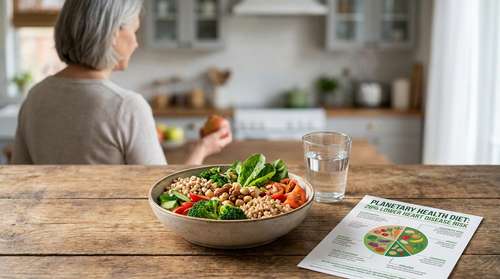
The core scientific debate driving this reset is the battle of healthy fats vs refined carbs. For decades, Americans were told to swap butter for margarine and eggs for cereal to protect their hearts. The 2026 guidelines argue that this advice backfired, driving the obesity epidemic. The new text asserts that natural saturated fats found in whole foods are neutral or beneficial, whereas refined carbohydrates and added sugars are the primary drivers of chronic disease.
This pivot has drawn mixed reactions from the medical community. While many functional medicine practitioners cheer the return to "ancestral" eating, some cardiologists worry about the unrestricted recommendation of red meat. However, the administration points to the distinction in USDA whole food standards: the recommendation is for unprocessed meats, explicitly excluding nitrate-laden deli meats and fast-food burgers, which remain in the "ultra-processed" caution zone.
What This Means for School Lunches
Parents will see the most immediate changes in the National School Lunch Program. The days of sugary chocolate milk and crinkle-cut fries fried in vegetable oil are numbered. The new standards prioritize:
- Whole Milk: The return of full-fat unflavored milk options.
- Tallow frying: A pilot program testing traditional animal fats for cooking potatoes.
- Zero Added Sugar: A complete ban on added sugar for children under age 4 in federal daycare programs.
While the implementation will face logistical hurdles—specifically the higher cost of fresh proteins—the administration has pledged to redirect subsidies from commodity crops like corn and soy toward fresh produce and livestock to support these changes. As the 2026 school year approaches, the nation watches to see if this radical nutritional experiment can indeed Make America Healthy Again.