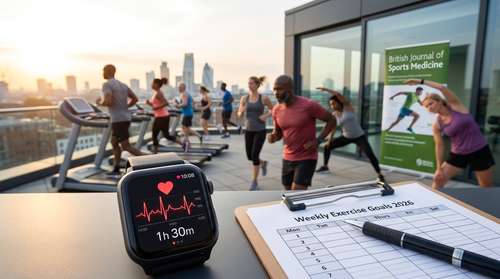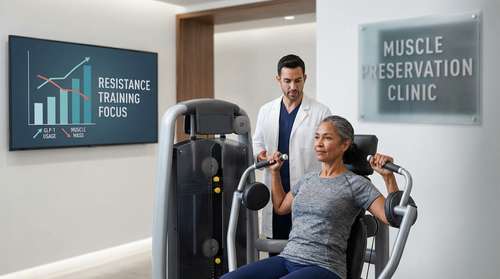
Walk into any major health club right now, and you will notice a drastic change in the floor plan. Rows of treadmills and ellipticals are shrinking, making way for expanded free-weight zones, functional cable machines, and targeted strength equipment. This architectural shift isn't a random aesthetic choice—it is a direct response to a pharmacological revolution. According to recent Gallup data, a staggering 12.4% of U.S. adults are now actively taking GLP-1 medications. As these drugs reshape the nation's waistlines, they are also forcing the fitness industry to radically adapt. Enter the new era of GLP-1 fitness programs, where the primary goal is no longer burning calories, but saving muscle.
The Hidden Threat: Muscle Loss on Ozempic and Wegovy
Medications like semaglutide (Ozempic, Wegovy) and tirzepatide (Mounjaro, Zepbound) are highly effective at suppressing appetite and inducing rapid fat reduction. However, the weight melting off the scale is not entirely fat. Clinical data reveals a concerning side effect: up to 40% of the total weight lost during GLP-1 therapy comes from lean body mass.
Muscle is not simply biological scaffolding. It is the engine of human metabolism, the armor for our joints, and the foundation of independent aging. Rapid muscle loss on Ozempic and similar drugs creates a very real risk for early-onset frailty and metabolic slowdown. When users inevitably stop or taper their medication, this diminished muscle mass severely compromises their ability to maintain the weight loss. As a result, the medical and fitness communities have reached a consensus: prioritizing muscle mass preservation is non-negotiable for anyone utilizing these treatments.
How Gyms Are Pivoting: Resistance Training for Weight Loss
For decades, the standard gym prescription for weight management was steady-state cardio. Today, that advice is largely obsolete. The Q1 2026 Inspire360 Club Intelligence Report indicates that at least 17 major fitness operators have aggressively restructured their protocols to focus heavily on resistance training for weight loss.
The Rise of Resistance-First Protocols
Leading the charge are industry giants like Planet Fitness and F45 Training. Planet Fitness recently launched a high-profile partnership with telehealth provider Ro, signaling the first major move by a High-Value, Low-Price (HVLP) chain to directly support members on weight-loss drugs. Similarly, boutique franchise F45 expanded its alliance with the healthcare platform Dr. B, offering co-branded programs that explicitly mandate progressive overload and strength routines to combat drug-induced muscle wasting.
Luxury operator Equinox has also gone all-in, rolling out a specialized "GLP-1 Protocol." This targeted personal training system is designed to help members aggressively protect and build lean tissue while their overall body weight drops.
Medical Fitness Integration Leads 2026 Fitness Trends
What we are witnessing is the rapid acceleration of medical fitness integration. Gyms are no longer operating in isolation from healthcare providers; they are becoming vital extensions of the clinical prescription. According to the American College of Sports Medicine (ACSM), which recently released its top 2026 fitness trends, exercise programming for weight management now heavily relies on direct clinical oversight and specialized training approaches.
The lines between the doctor's office and the weight room have permanently blurred. Telehealth white-label programs are popping up inside health clubs, and personal trainers are required to understand basic GLP-1 pharmacology. Fitness professionals are stepping into a vital new role: actively managing a client's physiological triage to ensure they lose weight without sacrificing functional strength.
The Ultimate Goal: Strength Training for Longevity
Ultimately, the explosion of GLP-1 medications has corrected a long-standing flaw in diet culture. By stripping away the need to endlessly burn calories on a treadmill, these drugs have allowed everyday gym-goers to focus on what truly matters. strength training for longevity has moved from a niche concept favored by biohackers to a mainstream public health imperative.
The core objective of the modern workout is resilience. Whether you are using pharmacological support or relying purely on lifestyle interventions, the blueprint for a healthy life requires building and maintaining lean tissue. The cardio era is officially winding down, and in its place, the resistance-first movement is building a stronger, more sustainable future.