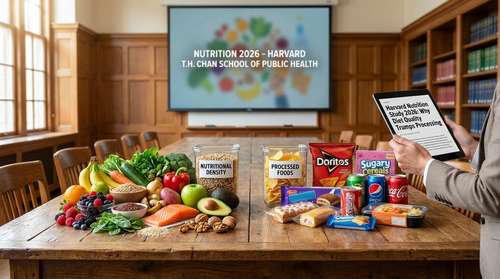
March is officially National Nutrition Month 2026, and this year's celebration brings a monumental shift in American public health. Driven by the ambitious Make America Healthy Again (MAHA) agenda, the U.S. Food and Drug Administration (FDA) alongside the Department of Agriculture (USDA) are finalizing the first-ever federal ultra-processed foods definition. U.S. Health Secretary Robert F. Kennedy Jr. recently confirmed on a popular podcast that this regulatory milestone will be released by April, shaking up decades of standard industry practices. For consumers who have spent years navigating confusing ingredient lists and conflicting dietary advice, this upcoming nutrition policy 2026 update promises unprecedented transparency and long-overdue accountability.
A Historic Shift in Processed Food Regulations
The conversation surrounding industrial ingredients has moved rapidly from niche academic circles right to the center stage of federal policy. Currently, food manufacturers rely heavily on substances designated as Generally Recognized as Safe (GRAS) to pump supermarket shelves full of cheap, shelf-stable items. However, the FDA's Human Foods Program has made GRAS reform and strict chemical reassessments a top priority for early 2026. The agency is actively reviewing a high-profile citizen petition filed by a former FDA commissioner aimed at revoking the GRAS status of industrial refined carbohydrates, including extrusion-modified flours, maltodextrin, and high-fructose corn syrups.
Once the federal ultra-processed foods definition is officially published in April, it will serve as the bedrock for aggressive new processed food regulations. Federal agencies plan to use this standardized legal language to evaluate exactly how these highly modified foods affect human metabolic health. Experts will also conduct targeted studies on the role of maternal and infant dietary exposures to synthetic additives. This sweeping regulatory change ensures that medical researchers, lawmakers, and everyday shoppers will finally speak the exact same language when identifying hyper-palatable, industrially formulated products.
The Push for FDA Traffic Light Labels
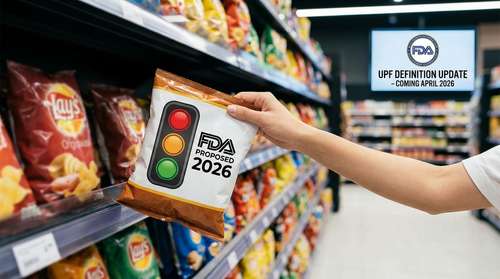
Defining these synthetic products is only the first foundational step. The next phase of the administration's strategy involves completely overhauling how dietary information is presented to shoppers in the grocery store aisles. The FDA is actively evaluating mandatory front-of-package (FOP) labeling systems designed to give buyers immediate, at-a-glance safety warnings.
Red, Yellow, and Green Warnings
Health officials have strongly suggested moving away from the complex, text-heavy "Nutrition Info" boxes proposed by the previous administration. Instead, the agency is exploring an intuitive system of FDA traffic light labels. This color-coded graphic approach would instantly indicate a product's baseline healthfulness by assigning red, yellow, or green lights based on the totality of its synthetic ingredients—not just isolated macronutrient metrics like saturated fat or sodium. If a food item is packed with artificial dyes, harmful chemical preservatives, or fits the new ultra-processed foods definition, it could prominently feature a glaring red light.
These impending food labeling changes are already pushing massive food corporations to rethink their manufacturing pipelines. Facing the genuine threat of mandatory red-light labels, several major grocery brands have proactively begun reformulating their product lines. We are currently seeing a massive push to phase out petroleum-based synthetic dyes like Red 40, Yellow 5, and Blue 1, well before the FDA's official phase-out deadlines take effect.
Understanding UPF Health Risks and the MAHA Agenda
Why is the federal government suddenly taking such an aggressive stance against convenient snack foods and microwaveable meals? The urgency stems from an undeniable, skyrocketing epidemic of diet-related chronic diseases. Recent comprehensive studies estimate that more than half of all calories consumed by American adults and children now come from heavily manufactured sources.
The UPF health risks are extensive and thoroughly documented by independent researchers. Regular, daily consumption of foods laden with artificial preservatives, synthetic dyes, and heavily refined carbohydrates is strongly associated with cardiovascular disease, type 2 diabetes, rampant obesity, and certain digestive system cancers. The FDA's 2026 priority deliverables explicitly emphasize the vital need to address these exact risks to protect public health. By creating a unified, science-backed ultra-processed foods definition, public health officials hope to draw a clear, uncrossable line between whole foods that genuinely nourish the human body and industrial products that drive the chronic disease epidemic.
National Nutrition Month 2026: Discover the Power of Nutrition
The timing of these monumental federal announcements perfectly aligns with the Academy of Nutrition and Dietetics' 2026 campaign theme: "Discover the Power of Nutrition". This year, National Nutrition Month 2026 is about significantly more than just improving your personal kitchen habits; it is about recognizing how national policies directly influence our daily lives and long-term health outcomes.
While the federal government works diligently to finalize the ultra-processed foods definition and implement straightforward FDA traffic light labels, you can take immediate, actionable steps to improve your family's dietary routine. Start by prioritizing whole, nutrient-dense foods over packaged items with long lists of unrecognizable chemicals. Spend the majority of your grocery shopping time in the perimeter of the store, where fresh produce, meats, and dairy are located. Look for items with minimal packaging, and familiarize yourself with the natural sources of essential vitamins and minerals. With sweeping food labeling changes clearly on the horizon, the power to make informed, healthful choices has never been more accessible.