In a milestone announcement for longevity research, scientists have uncovered what appears to be a master 'brain aging switch.' Published just days ago on May 24, 2026, new findings point to a specific protein in the brain that drives the biological decay of the entire body. By targeting the Menin protein aging process, researchers successfully reversed physical deterioration and cognitive decline in aged models. This breakthrough shifts our understanding of growing old from an inevitable, passive decline into a highly orchestrated mechanism that can be paused or even reversed.
The Hypothalamus and Longevity: A Surprising Connection
For decades, researchers have suspected that the hypothalamus acts as a central control center for aging. This tiny region deep within the brain regulates vital bodily functions like body temperature, sleep cycles, hunger, and metabolic health. As we grow older, the hypothalamus experiences mounting neuroinflammation, which sends cascading destructive signals that degrade other systems in the body.
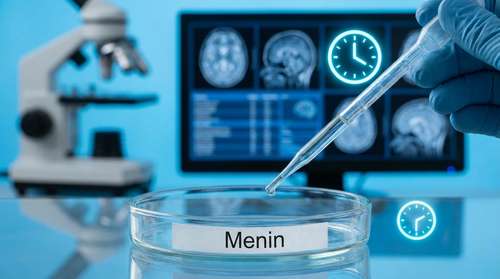
The latest longevity science updates reveal that the Menin protein is the missing puzzle piece. It naturally acts as a powerful brake on neuroinflammation. However, scientists found that as mammals age, Menin levels in the hypothalamus plummet. When this protective barrier drops, widespread inflammatory signaling takes over, accelerating the decay of cells far beyond the brain. The relationship between the hypothalamus and longevity is no longer just a theory; it is a mapped physiological pathway.
How the Brain Aging Switch Works
To confirm whether they had truly found a brain aging switch, researchers engineered younger mice to experience a premature drop in Menin levels. The results were startling and immediate. Without sufficient Menin, the younger models rapidly exhibited classic signs of advanced aging.
They lost bone mass, their skin thinned out significantly, and they suffered visible cognitive impairment. Their overall lifespans even contracted moderately. This data paints a clear picture: aging isn't just cumulative damage to individual cells over time. It is heavily dictated by this central hypothalamic dial. When the dial turns down, systemic deterioration speeds up across the entire body.
The Neurotransmitter Link and D-Serine Supplement Benefits
Digging deeper into the chemical changes, scientists identified a crucial secondary effect of Menin deficiency. The loss of this protein severely cripples the production of D-serine, a critical amino acid that functions as a neurotransmitter. D-serine is naturally found in foods like soybeans, fish, eggs, and nuts, but older individuals consistently show markedly reduced blood levels of it.
When the brain lacks Menin, the enzyme responsible for synthesizing D-serine loses its activity. This specific chain reaction is primarily responsible for the memory loss and loss of balance associated with old age. Recognizing this exact pathway led the researchers to a highly actionable solution, opening up exciting new avenues for exploring D-serine supplement benefits in aging populations.
Healthy Aging Breakthroughs: The Restoration Phase
The most promising healthy aging breakthroughs from this study come from the reversal phase. Once the researchers established that dropping Menin causes aging, they attempted to turn the clock back on elderly, 20-month-old models. Through targeted gene therapy, they delivered the Menin gene directly back into the hypothalamus.
Within just 30 days, the physical and mental transformations were profound. The older subjects regained skin thickness and bone density. Their learning capacity, memory retention, and physical balance improved dramatically. The biological restoration essentially rebooted their systems, proving that the damage of aging is not entirely permanent.
Equally exciting for human applications are the results from simple dietary interventions. While direct gene therapy into the human brain remains incredibly complex, researchers tested a non-invasive alternative. They fed the older subjects D-serine supplements for three weeks. Remarkably, this simple oral intervention successfully rescued cognitive decline and restored memory function, proving that you don't necessarily need complex genetic engineering to reverse cognitive decline 2026 protocols.
What This Means for the Future of Human Health
Finding a biological switch that governs physical decay transforms how medical science views longevity. We are moving away from treating age-related symptoms in isolation—like taking one drug for osteoporosis and another for dementia—and moving toward addressing the central control mechanism.
While models are not humans and dietary supplements are not instant cure-alls, this discovery provides a razor-sharp map of how the brain governs the pace of bodily decline. Researchers are now looking toward carefully controlled human trials to see if advanced pharmacological therapies or over-the-counter D-serine can safely mimic these results in aging adults. For now, the identification of this master regulator stands as one of the most compelling biological discoveries of the year, offering genuine hope that our later years could soon be characterized by vitality rather than inevitable decay.