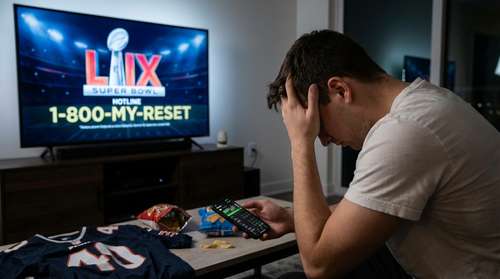
FEBRUARY 9, 2026 – The confetti has barely settled at Levi’s Stadium following the Seattle Seahawks' thrilling clash with the New England Patriots in Super Bowl LX, but for thousands of Americans, the morning after brings a different kind of reality check. National mental health organizations reported an unprecedented spike in calls to the 1-800-GAMBLER and the newly launched 1-800-MY-RESET helplines early Monday morning, driven primarily by young men facing acute financial despair and psychological distress.
Following a record-breaking weekend of sports wagering—where an estimated $7.1 billion was bet online—experts warn that the ubiquity of mobile betting apps, combined with the rise of instant "micro-bets," has created a perfect storm for gambling-induced mental health crises. As the dust settles on the year's largest sporting event, the hidden cost of the betting boom is coming into sharp focus.
The "Monday Morning" Crisis: A Record Surge in Help-Seeking
In the 24 hours following Super Bowl LX, call centers across the country have been inundated. Preliminary data from the National Council on Problem Gambling (NCPG) suggests a call volume increase significantly outpacing previous years. The surge is particularly acute among men aged 21 to 35, a demographic that has become the primary target for aggressive sportsbook marketing campaigns.
"We are seeing a 'hangover effect' that is less about alcohol and more about dopamine and debt," says Dr. James McKowen, a clinical psychologist specializing in addiction. "For many young men, the Super Bowl wasn't just a game; it was a high-stakes financial event. When the adrenaline fades and the losses crystallize on Monday morning, the psychological crash can be severe."
The distress is compounded by the nature of modern betting. Unlike traditional wagers on a final score, today's "prop bets" and live in-game wagering allow users to bet on everything from the coin toss result to the color of the Gatorade shower. This continuous cycle of risk and reward keeps the brain's dopamine levels artificially high, making the inevitable crash feel like a physical withdrawal.
Micro-Bets and the Gamification of despair
A major driver of this year's crisis is the explosion of micro-betting. Platforms like Kalshi and Polymarket saw trading volumes soar by over 500% compared to last year, offering event contracts on minute-by-minute outcomes. This "gamification" of sports betting turns a three-hour football game into thousands of individual gambling opportunities.
"It’s no longer about picking a winner," explains addiction counselor Sarah Martinez. "It’s about the next play, the next drive, the next song Bad Bunny performs at halftime. This rapid-fire betting short-circuits the brain's decision-making processes. By the time the game ends, many bettors haven't just lost money—they've lost the ability to stop."
The Unregulated Market Threat
Compounding the issue is the staggering volume of bets placed through unregulated channels. New data from Gaming Compliance International (GCI) estimates that of the $7.1 billion wagered online this weekend, nearly 78% flowed to unregulated, offshore operators. These platforms often lack the responsible gaming tools—such as deposit limits and "cool-off" periods—mandated by U.S. states, leaving vulnerable bettors with no safety net.
A Cultural Wake-Up Call: The Kayshon Boutte Effect
This year's conversation around gambling addiction has been amplified by the personal story of New England Patriots receiver Kayshon Boutte. His public admission of struggling with a gambling addiction during his college years has put a human face on the statistics. For many young fans seeing a star athlete vulnerable enough to admit "I couldn't stop," the stigma of seeking help has slightly lessened.
"Seeing a player on the field who has battled this demon validates the struggle for thousands of young men watching at home," notes Dr. McKowen. "It reminds them that addiction doesn't discriminate based on talent or income."
Responsible Gaming Resources and Recovery
If you or someone you know is feeling overwhelmed by gambling losses or anxiety today, immediate help is available. The NCPG has recently adopted a new, less stigmatizing national number: 1-800-MY-RESET (1-800-697-3738), which runs alongside the traditional 1-800-GAMBLER line.
Steps for Post-Super Bowl Recovery:
- Disconnect Immediately: Delete betting apps and unsubscribe from sportsbook emails to break the cycle of triggers.
- Financial Triage: Do not try to "win back" losses. Be honest with a trusted family member or financial advisor about the extent of the debt.
- Seek Peer Support: Organizations like Gamblers Anonymous offer meetings specifically for those in acute crisis.
- Use Blocking Software: Tools like Gamban can block access to thousands of gambling sites and apps across all your devices.
The excitement of Super Bowl LX may be over, but for those grappling with the fallout, the road to recovery is just beginning. Recognizing the problem is the first step toward reclaiming control.