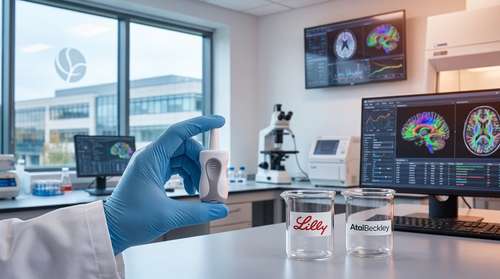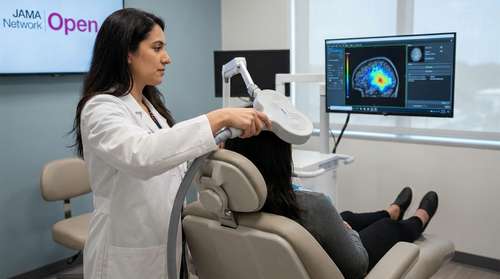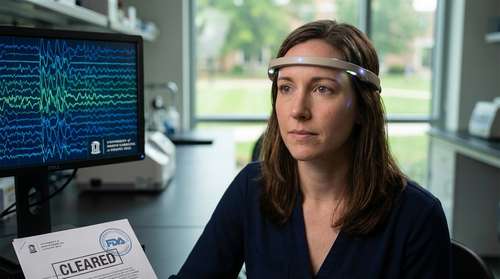
In a landmark decision that could redefine mental health treatment, the FDA has officially cleared XCSITE, a revolutionary wearable device that treats major depressive disorder (MDD) by 'tuning' brainwaves in real-time. Developed by researchers at the University of North Carolina at Chapel Hill and commercialized by Pulvinar Neuro, this non-invasive technology promises rapid depression relief without the side effects of traditional medication.
The clearance, announced late Friday, comes on the heels of groundbreaking clinical trial results showing an unprecedented 80% remission rate in patients after just two weeks of treatment. Unlike previous brain stimulation tools that apply a constant current, XCSITE uses a sophisticated closed-loop system to listen to the brain's electrical activity and adjust its stimulation millisecond-by-millisecond, effectively resynchronizing neural rhythms that have gone off-key.
The Science of Neural Rhythm Therapy
At the heart of XCSITE's success is its ability to target specific neural rhythm therapy mechanisms. Depression is often characterized by asymmetrical or disrupted alpha oscillations—the electrical rhythms in the brain associated with relaxed, wakeful states. Dr. Flavio Fröhlich, the UNC neuroscientist who invented the technology, compares the brain's activity to a musical orchestra.
"In depression, the timing of the orchestra is off. The sections aren't playing in sync," explains Dr. Fröhlich. "XCSITE acts like a conductor. It doesn't just play a loud noise over the music; it listens to the rhythm and provides a precise, alternating current that guides the brain waves back into a harmonious state."
This approach, known as personalized mental health technology, represents a significant leap forward from earlier FDA approved depression devices. While devices like the Flow FL-100 (approved late 2025) use transcranial direct current stimulation (tDCS), XCSITE utilizes transcranial alternating current stimulation (tACS) combined with an EEG (electroencephalogram) monitor. This allows the device to create a feedback loop, customizing the treatment to the patient's unique brain physiology in real-time.
Clinical Trials Show Rapid Results
The FDA's decision was heavily influenced by data from a pivotal multi-center study led by Dr. Fröhlich and Dr. David Rubinow, former chair of UNC's Department of Psychiatry. The trial focused on patients with treatment-resistant depression who had failed to respond to standard antidepressants.
- Speed of Relief: While SSRIs typically take 4-6 weeks to show effects, XCSITE patients reported significant mood improvements within days.
- High Remission Rates: A staggering 80% of participants met the criteria for remission—meaning they were virtually symptom-free—after completing the two-week protocol.
- Safety Profile: The treatment is non-invasive, with patients reporting only mild tingling sensations during sessions and no systemic side effects.
How the Treatment Works
Patients wear the XCSITE device, which resembles a lightweight mesh cap, for 20-minute daily sessions. The device requires no surgery or implants. Sensors in the mesh map the brain's alpha oscillations, and the system instantly calculates the precise frequency needed to boost and synchronize these waves. This UNC brainwave tuning method is the first of its kind to reach the commercial market.
A New Era for Non-Drug Depression Treatment
The mental health community has welcomed the news with cautious optimism, viewing XCSITE neurostimulation as a vital alternative for the estimated 14.5 million U.S. adults struggling with major depressive episodes. For many, the prospect of a non-drug depression treatment that avoids common medication side effects like weight gain, insomnia, and emotional blunting is life-changing.
"We are moving away from the 'one-pill-fits-all' model," says Dr. Samantha Meltzer-Brody, Chair of the Department of Psychiatry at UNC. "This approval validates the idea that psychiatry can be precise, personalized, and driven by the underlying electrical language of the brain."
Availability and Next Steps
Pulvinar Neuro has announced plans to roll out XCSITE to specialized clinics across the United States starting in April 2026, with a prescription-based home-use version expected to follow by late 2027. Insurance coverage discussions are already underway, given the potential for the device to reduce long-term healthcare costs associated with chronic depression.
As rapid depression relief 2026 becomes a reality, XCSITE stands as a testament to the power of integrating neuroscience with advanced engineering. For millions of patients waiting for a solution that works, the future just got a little brighter.