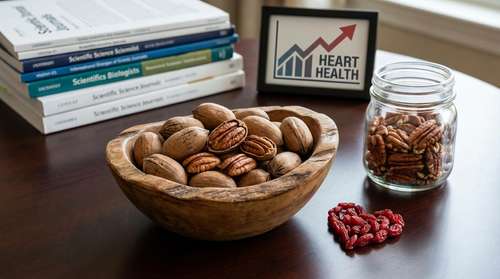
Just in time for the tail end of American Heart Month 2026, a groundbreaking scientific review has solidified the humble pecan's status as a nutritional powerhouse. A comprehensive analysis published in the journal Nutrients this week examines over two decades of research, confirming that regular pecan consumption can significantly boost cardiovascular health. The study, conducted by researchers at the Illinois Institute of Technology, provides the strongest evidence to date that these native American nuts are a potent weapon against high cholesterol and triglycerides.
The Science Behind the 'Heart Power' Superfood
For years, nutritionists have suspected that pecans offered benefits beyond their delicious taste, but this new 20-year review consolidates scattered findings into a clear medical consensus. The analysis, which evaluated 52 studies published between 2000 and 2025, found consistent proof that pecans significantly lower "bad" LDL cholesterol and non-HDL cholesterol levels. This is a critical development for millions of Americans looking to lower LDL cholesterol naturally.
Lead researcher Dr. Britt Burton-Freeman and her team highlighted that the improvements weren't just marginal. When participants replaced traditional processed snacks with a simple handful of pecans, they saw measurable drops in triglycerides and total cholesterol. "What stands out in the research is the consistency of evidence linking pecans to markers of heart health," the review notes, emphasizing that these benefits occurred without participants gaining weight—a common fear associated with nut consumption.
Antioxidants and Metabolic Defense
What makes pecans distinct among heart healthy snacks? It comes down to their unique chemical matrix. Pecans are loaded with bioactive compounds, specifically polyphenols and Vitamin E, which function as high-grade fuel for the body's antioxidant defenses. The review details how these compounds reduce "lipid oxidation"—a dangerous process where cholesterol particles oxidize and adhere to artery walls, leading to atherosclerosis.
More Than Just Good Fats
While the high unsaturated fat content drives much of the cholesterol-lowering effect, the pecan nutrition science points to a synergistic effect. The fiber, plant sterols, and flavonoids work together to improve post-meal blood lipid metabolism. This means that eating pecans doesn't just lower resting cholesterol; it helps the body handle fats from other foods more efficiently, preventing the spikes in blood fats that often occur after a heavy meal.
Busting the Weight Gain Myth
One of the most encouraging findings from this extensive review is the verdict on weight management. Despite being calorie-dense, pecans do not appear to contribute to obesity. In fact, the review suggests they may be a secret weapon for weight control. Several studies included in the analysis reported that pecans increased satiety—the feeling of fullness—more effectively than other snacks.
This "satiety effect" is likely due to the combination of fiber and healthy fats, which slows digestion and stabilizes appetite. For those seeking natural ways to lower triglycerides while watching their waistline, this confirms that pecans are a safe and smart addition to a daily diet. The researchers found that replacing refined carbohydrates (like pretzels or chips) with pecans improved insulin response in some trials, suggesting potential benefits for blood sugar control as well.
How to Integrate Pecans into a Heart-Healthy Diet
You don't need to overhaul your entire lifestyle to see these benefits. The research specifically points to "snack-sized portions"—typically about 1.5 ounces or a small handful—as effective. This makes pecans one of the easiest superfoods for cholesterol to add to a busy routine.
- Swap, Don't Add: The key to success is substitution. Instead of eating a granola bar or bag of chips, reach for raw or dry-roasted pecans.
- Morning Boost: Crumbled pecans on oatmeal or yogurt can increase the antioxidant value of your breakfast.
- Savory Applications: Pecans aren't just for pie. They make an excellent crust for fish or chicken, adding crunch without the refined carbs of breadcrumbs.
As we navigate the dietary landscape of 2026, the message from the scientific community is clear: whole foods like pecans are not just passive calories, but active biological tools that can repair and protect the cardiovascular system. With this new major review, the pecan has officially graduated from a holiday treat to a daily essential for heart health.