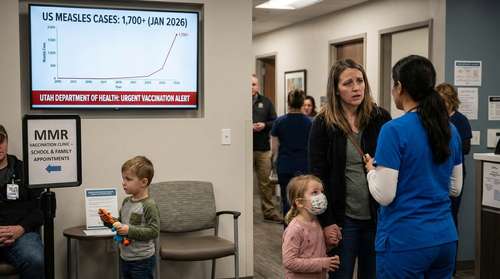
The nationwide public health landscape is facing a severe test this spring. The measles outbreak 2026 has reached a critical milestone, with confirmed infections officially approaching 1,700 across the United States. Public health officials are increasingly alarmed by a localized Utah measles surge, where 73 new cases were recorded in just the past week. As this highly contagious virus continues to infiltrate schools and community centers, particularly in areas with declining immunization rates, medical professionals are issuing urgent pediatric health alerts. For parents navigating this rapidly evolving situation, understanding the scope of the virus and how to safeguard their households is paramount.
Utah Measles Surge Highlights a Nationwide Crisis
While the virus has touched dozens of states, the Intermountain West is currently bearing the brunt of the epidemic. Utah's outbreak is skyrocketing, with the state tallying over 360 cases since January. What began predominantly in the southwest corner of the state has now fractured into multiple transmission chains reaching Salt Lake City and neighboring counties.
The rapid transmission is forcing health departments to take decisive action. Epidemiologists note that the sheer volume of patients—142 new cases in Utah over the past three weeks alone—places immense pressure on local urgent care clinics and pediatric wards. This localized spike mirrors a broader vulnerability in pockets of the country where community immunity has dropped below the 95% threshold required to prevent sustained transmission.
The Numbers: Current Measles Cases US
Looking at the broader picture, the current measles cases US data paints a sobering reality. The Centers for Disease Control and Prevention recently confirmed that 94% of the infections this year are tied to 17 distinct outbreaks. The vast majority of those falling ill—roughly 92%—are either unvaccinated or have an unknown immunization status.
This resurgence directly threatens a major public health achievement. The United States officially eliminated measles in 2000, meaning the disease was no longer constantly present. If these active chains of transmission persist through November, the country risks losing that elimination status entirely. Furthermore, the severity of the infections cannot be ignored. Approximately 5% of patients have required hospitalization this year, a stark reminder that this is not merely a benign childhood illness.
Recognizing Measles Symptoms in Children
Because the virus spreads through the air when an infected person coughs or sneezes, it is notoriously contagious. It can linger in an airspace for up to two hours after the sick individual has left. Recognizing early measles symptoms in children is critical for isolating the infection and seeking appropriate medical guidance.
Parents should watch for a specific progression of clinical signs:
- Initial Phase: The illness typically begins with a high fever, often spiking over 104 degrees. This is accompanied by a persistent cough, a runny nose (coryza), and red, watery eyes (conjunctivitis).
- Koplik Spots: Two to three days after symptoms begin, tiny white spots may appear inside the mouth.
- The Rash: Three to five days into the illness, the characteristic measles rash breaks out. It usually starts as flat red spots on the face at the hairline and spreads downward to the neck, trunk, arms, and legs.
If you suspect an infection, contact your pediatrician by phone before arriving at a clinic. Facilities need to enact specific isolation protocols to prevent exposing other vulnerable patients in the waiting room.
MMR Vaccine Safety 2026: Rebuilding Trust
The anchor of defense against this virus remains the measles, mumps, and rubella (MMR) vaccine. Despite decades of clinical data proving its efficacy, vaccine skepticism has created fertile ground for the current outbreaks. Addressing questions around MMR vaccine safety 2026 is a priority for healthcare providers working to contain the spread.
The vaccine is exceptionally effective. Two doses provide 97% protection against the virus. Medical experts emphasize that severe allergic reactions are exceedingly rare, while the risks associated with a natural measles infection—including pneumonia, brain swelling, and long-term immune system suppression—are well-documented and severe. Ensuring your family is up to date on their immunization schedule is the single most effective intervention available.
Actionable Measles Prevention for Families
With transmission rates accelerating, proactive measles prevention for families goes beyond basic hygiene. While regular handwashing and avoiding large indoor gatherings in outbreak hot spots offer some protection, these measures alone cannot stop an airborne virus of this caliber.
To secure your household, start by verifying medical records. Check with your healthcare provider to confirm that all family members, including adults, have received the recommended two doses of the MMR vaccine. If you live in an area experiencing active outbreaks, pay close attention to communications from local school districts. During active exposures, unvaccinated students may be required to stay home for up to 21 days to break the chain of transmission.
For parents traveling internationally or venturing into domestic high-transmission zones, consult a travel medicine clinic. Infants aged 6 to 11 months may be eligible for an early, accelerated dose of the MMR vaccine to provide critical baseline protection before potential exposure. Acting swiftly on these precautions can shield your family and help stabilize the wider community.