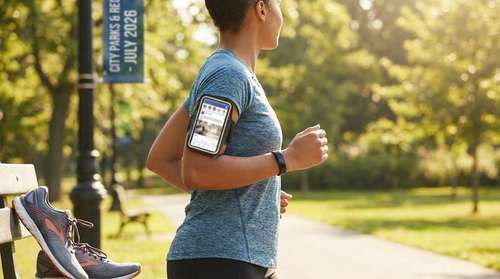
If your social media feeds look like a synchronized fast-walking competition this week, you are witnessing the birth of the year's smartest workout craze. In just the last 48 hours, the Japanese walking TikTok challenge has racked up millions of views, with fitness creators and everyday users alike ditching their grueling treadmill sprints for a highly structured, surprisingly simple outdoor routine.
Fitness coach Eugene Teo helped popularize the concept online, noting it can offer up to ten times the cardiovascular benefits of aimlessly walking 10,000 steps. Now a massive wave of users are sharing their impressive cardiovascular data online. But unlike most viral internet challenges that fade by the weekend, the Japanese walking method is anchored in more than twenty years of rigorous clinical research. By alternating three minutes of high-intensity pacing with three minutes of active recovery, this protocol completely redefines how we approach daily steps. Here is exactly why this routine is dominating low impact fitness trends 2026 and how you can implement it today.
The Fascinating Shinshu University Walking Study
The roots of this viral sensation trace back to the early 2000s, courtesy of Dr. Hiroshi Nose and his research team at Shinshu University in Nagano, Japan. During the initial phases of the now-famous Shinshu University walking study, researchers asked 246 adults to walk at a high intensity for 30 minutes straight. The result? Not a single participant finished the program. They found continuous high-exertion walking completely unsustainable and too boring to maintain.
That universal failure sparked a breakthrough. The research team realized that human bodies respond significantly better to fluctuating intensities. They developed Interval Walking Training (IWT), which breaks the 30 minutes down into manageable, alternating blocks. The resulting interval walking benefits were staggering. In a landmark randomized controlled trial published in the Mayo Clinic Proceedings, participants who followed the 3x3 interval protocol for five months experienced an increase of up to 20 percent in peak aerobic capacity and a 13 percent increase in thigh muscle strength. Furthermore, lifestyle-related disease risk factors—including blood pressure and cholesterol levels—saw measurable improvements. Those who walked at a moderate, continuous pace saw barely a fraction of those physiological gains.
Walking vs Gym for Weight Loss: The Shift in 2026
Over the past decade, the fitness industry heavily promoted punishing high-intensity interval training (HIIT) and exhausting gym sessions as the only valid paths to fitness. However, the cultural pendulum has officially swung back. When examining walking vs gym for weight loss, sports scientists are increasingly pointing to metabolic consistency over sheer exhaustion.
While a grueling 60-minute boot camp might burn slightly more calories in the moment, the massive central nervous system fatigue often leaves people sedentary for the rest of the day. This phenomenon completely negates the workout's calorie deficit. The Japanese walking method circumvents this trap entirely. Because the three-minute recovery phases actively allow your heart rate to drop to 40-50 percent of your maximum, you finish the 30-minute session feeling energized rather than depleted. It is rapidly becoming one of the most effective metabolic health hacks for busy professionals who want maximum cardiovascular results without needing a nap afterward.
How to Master the 30-Minute Protocol
You do not need an expensive app or a smartwatch to nail this routine, though having a simple timer on your phone helps. The entire workout takes exactly 30 minutes and requires zero equipment.
Step 1: The Warm-Up
Spend your first three to five minutes doing a gentle stroll. Let your joints loosen up and find a natural, comfortable rhythm before pushing your heart rate.
Step 2: The Fast Interval (3 Minutes)
Kick your speed up to roughly 70 to 85 percent of your maximum effort. You should be moving briskly enough that holding a full conversation becomes difficult, but not so fast that you break into a jog. Your breathing will become heavy. This variable intensity is exactly what activates more muscle fibers and drives aerobic adaptations.
Step 3: The Slow Interval (3 Minutes)
Drop back down to a leisurely, recovery pace. This should feel easy, allowing for comfortable conversation while your heart rate settles and you catch your breath.
Step 4: Repeat and Cool Down
Alternate between the fast and slow paces until you have completed five full cycles. Finish with a few minutes of slow walking to bring your heart rate down completely.
A Sustainable Future for Fitness
What makes this week's social media explosion so refreshing is the renewed focus on sustainable, functional movement. We are finally moving away from the arbitrary goal of hitting 10,000 continuous steps—a number originally invented for a 1960s pedometer marketing campaign rather than medical science.
By embracing this alternating rhythm, you are working with your body's natural cardiovascular thresholds rather than fighting against them. Whether you are recovering from an injury, looking to break a weight-loss plateau, or simply wanting to enjoy the outdoors while getting a legitimate workout, this 30-minute routine delivers. Grab your sneakers, set a timer, and see for yourself why millions are making this incredibly simple swap.