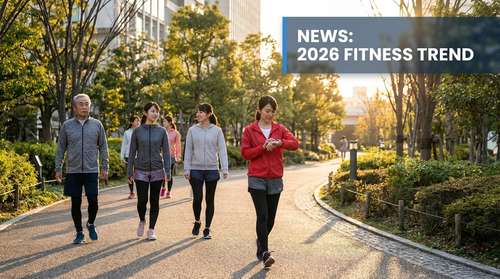
Forget the metaverse gyms and AI-generated workout plans that dominated 2025. As we settle into March 2026, the global fitness community has made a surprising U-turn back to basics. A specific, scientifically backed method known as the Japanese walking technique has seen a staggering 3,000% surge in search traffic over the last week alone, dethroning high-intensity interval training (HIIT) as the year's most viral workout. But this isn't just a TikTok fad; it is a "smart cardio" protocol developed by medical researchers that promises to reverse biological aging in just 30 minutes a day.
The "Sokuho" Phenomenon: What Is Japanese Walking?
At its core, the trend refers to Interval Walking Training (IWT), or "Sokuho," a method originally pioneered by Dr. Hiroshi Nose and Dr. Shizue Masuki at Japan's Shinshu University. Unlike the casual 10,000-step goal that has become a standard metric, the Japanese walking technique focuses on intensity variance rather than distance.
The protocol is deceptively simple but biologically potent. It requires alternating between two specific paces:
- 3 Minutes of Fast Walking: Moving at a pace where you reach 70% of your maximum heart rate. A simple cue is that you should feel slightly out of breath—able to speak in short phrases, but not hold a full conversation.
- 3 Minutes of Slow Walking: A leisurely stroll at about 40% effort to allow for active recovery.
Repeating this 3-minute walking interval cycle for five sets (totaling 30 minutes) at least four days a week is the magic formula that has captivated the 2026 fitness trends landscape.
The Science: Why It Beats the 10,000 Step Rule
Why has this decades-old research suddenly exploded in 2026? The answer lies in efficiency and longevity. Recent meta-analyses confirming Dr. Nose's original findings have circulated widely this month, revealing that interval walking for longevity is significantly more effective than continuous steady-state walking.
According to the clinical data, participants who adhered to this regimen for five months saw improvements that steady walkers did not:
- VO2 Max Increase: Aerobic capacity improved by up to 20%, a marker directly correlated with a longer lifespan.
- Thigh Muscle Strength: A 13-17% increase in knee extension and flexion strength. This is critical for aging bodies, as thigh strength is a primary predictor of mobility and fall prevention in later life.
- Hypertension Reversal: Significant reductions in systolic blood pressure, often outperforming medication in borderline hypertensive patients.
Metabolic Magic: Walking for Weight Loss in 2026
For those focused on body composition, walking for weight loss 2026 has a new gold standard. The fluctuation between high and low intensity triggers an "afterburn" effect (excess post-exercise oxygen consumption) that steady walking fails to ignite. By spiking your heart rate during the fast intervals, you force your mitochondria to work harder, improving glycemic control and insulin sensitivity.
This makes the method particularly effective for visceral fat reduction. The "slow" intervals are just as important as the fast ones; they allow lactate to clear from the muscles, enabling you to push harder during the next fast interval than you could if you were trying to sustain that pace continuously.
The Shift to Low Impact Cardio Workouts
The viral nature of Japanese Walking also speaks to a cultural shift. After years of punishing CrossFit regimes and high-impact boot camps, the fitness world is embracing low impact cardio workouts that deliver results without cortisol spikes or joint trauma. We are seeing a move toward "Sustainability Fitness"—routines you can maintain for decades, not just weeks.
"It's the perfect antidote to the burnout culture of the early 2020s," explains Dr. Elena Rosales, a sports physiologist analyzing the trend. "You get the cardiovascular benefits of a run without the impact force on your knees or hips. It is democratizing elite fitness principles for the general population."
How to Execute the Perfect Interval Walk
Ready to join the movement? Here is how to structure your session to maximize the health benefits of Japanese walking:
- The Warm-Up: Start with a 5-minute steady walk to lubricate the joints.
- The Interval Sets:
- Set 1: Walk as fast as you can without running for 3 minutes. Swing your arms and lengthen your stride.
- Recovery 1: Slow down to a stroll for 3 minutes. Compose your breath.
- Repeat this cycle 4 more times (5 sets total).
- The Cool Down: Finish with 5 minutes of easy walking and static stretching, focusing on the calves and hamstrings.
As we navigate 2026, the lesson is clear: we don't need more complex equipment or longer hours in the gym. We just need to walk smarter. By adopting this science-backed interval method, you aren't just taking steps; you are stepping into a longer, healthier life.