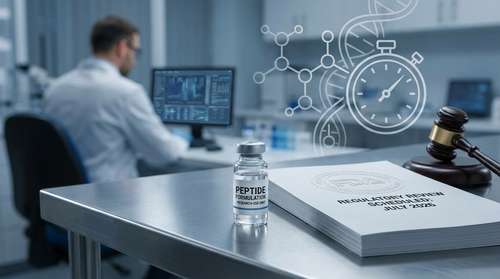
On April 15, 2026, the Food and Drug Administration issued a federal notice that sent shockwaves through the sports medicine and longevity communities. The agency announced it will convene a Pharmacy Compounding Advisory Committee panel on July 23 and 24 to evaluate easing restrictions on at least seven previously restricted injectable compounds. For athletes, anti-aging advocates, and holistic clinics, the upcoming FDA peptide regulations 2026 represent a watershed moment. Driven in part by the vocal support of Health and Human Services Secretary Robert F. Kennedy Jr., the regulatory review aims to address the soaring demand for regenerative treatments that have come to dominate the modern fitness landscape.
The public's fascination with these amino acid chains didn't materialize out of thin air. The blockbuster success of GLP-1 receptor agonists—FDA-approved peptides prescribed for obesity and diabetes—has completely normalized injectable therapies. Consumers who experienced dramatic weight loss with mainstream medications are now aggressively seeking out similar pharmaceutical tools for injury recovery and anti-aging.
Decoding the BPC-157 Legal Status and Compounding Controversy
To understand the current policy shift, you have to look back at late 2023. The FDA abruptly moved approximately 19 therapeutic peptides to its "Category 2" bulk drug substance list, effectively banning licensed compounding pharmacies from producing them. The agency cited a lack of large-scale human clinical trials and concerns over potential immunogenicity and toxicity.
Now, the pendulum is swinging back. The upcoming July panel will specifically review the compounding eligibility of these highly sought-after compounds. At the absolute center of the debate is the BPC-157 legal status. Originally derived from human gastric juice proteins, BPC-157 has gained immense traction for its reported ability to accelerate the healing of tendons, ligaments, and gastrointestinal tissue. Alongside TB-500 (Thymosin Beta-4), these compounds are widely regarded by functional medicine physicians as vital muscle repair breakthroughs.
Under the Federal Food, Drug, and Cosmetic Act, compounded drugs operate in a unique space. They are not subjected to the standard New Drug Application (NDA) process, provided they are mixed for individual patients based on a strict prescription. When the FDA relegated BPC-157 to Category 2 status, they flagged it for significant safety risks, stopping legitimate pharmacies from dispensing it. The argument currently championed by longevity experts and federal health leadership is that the agency lacked the necessary safety signals to justify that aggressive suppression in the first place.
The Intersection of Peptides and Biohacking Fitness Technology
This regulatory pivot aligns perfectly with broader metabolic health trends 2026, an era where biological optimization has replaced basic maintenance. Modern fitness enthusiasts are no longer satisfied with standard whey protein and generic vitamins. Instead, they are utilizing advanced wearables, continuous glucose monitors, and precision diagnostics. This surge in biohacking fitness technology has fueled the use of targeted injectables to push human physical performance past its natural baseline.
Beyond recovery, the FDA panel will scrutinize growth hormone-releasing agents like CJC-1295, Ipamorelin, and the mitochondrial-targeting peptide MOTS-c. These specific amino acid chains stimulate the pituitary gland or target cellular function, offering purported benefits ranging from enhanced deep sleep to accelerated fat loss. While professional sports organizations like the World Anti-Doping Agency (WADA) maintain strict bans on many of these substances, everyday fitness enthusiasts view them as the ultimate performance enhancement supplements.
Weighing the Risks and Rewards of Peptides for Muscle Recovery
The explosive popularity of peptides for muscle recovery has inadvertently fueled a massive, unregulated gray market. With compounding pharmacies handcuffed by the 2023 restrictions, desperate users turned to illicit online suppliers importing research-grade chemicals from overseas.
This shadow market presents severe dangers. Physicians have documented cases of vial contamination, severe dosing errors, and even compartment syndrome—a dangerous buildup of muscle pressure that can lead to emergency surgery or death—stemming from illicit peptide injections. By bringing compounds like BPC-157 and CJC-1295 back into the regulated compounding space, proponents argue that patients will receive clinically pure, accurately dosed medications under the direct supervision of licensed medical professionals.
Critics, however, maintain a firm stance. They argue that broadening access without rigorous Phase 3 clinical trials exposes the public to unquantified long-term health risks, pointing to adverse events reported in isolated animal studies.
What the Shifting FDA Peptide Regulations 2026 Mean for Consumers
The July 2026 advisory meetings will heavily dictate the trajectory of functional and regenerative medicine for the next decade. If the FDA reclassifies these core peptides back to Category 1, patients currently navigating a confusing legal gray area will finally have a safe, domestic avenue for treatment. In addition to the immediate seven peptides under review, the FDA has also announced intentions to hold subsequent advisory committee meetings to consider five more peptides by early 2027, indicating a systemic overhaul of the agency's stance.
For anyone currently considering therapeutic injectables, the most prudent approach remains patience. Federal health leadership has signaled a clear willingness to modernize access, but the procedural red tape will take months to clear even after the July hearings. In the interim, athletes and wellness seekers should consult board-certified clinicians who specialize in integrative health protocols to prepare for the eventual policy updates. The landscape of longevity and tissue repair is undoubtedly transforming, and the impending regulatory decisions will determine exactly how we approach human recovery moving forward.