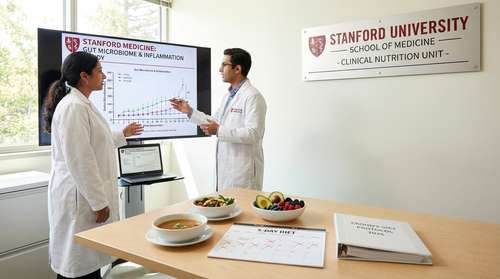
Over the past 48 hours, the gastroenterology community has been buzzing with fresh clinical analyses surrounding the ultimate Crohn's disease diet 2026 breakthrough. Building upon a landmark clinical trial, new independent medical reviews published this weekend confirm what millions of patients have desperately hoped for: a brief, five-day dietary intervention can trigger profound healing in the digestive tract. This groundbreaking Stanford Medicine nutrition study reveals that a periodic fasting-mimicking diet safely and effectively eases mild-to-moderate Crohn's disease symptoms, offering an escape from an endless cycle of heavy medications.
The Science Behind Fasting-Mimicking Diet Benefits
For decades, physicians have struggled to give concrete, evidence-based answers when patients ask what they should eat to manage their condition. Up until now, standard treatment for mild Crohn's heavily relied on steroid therapies. While effective in the short term, steroids carry notorious long-term side effects that complicate patient care. However, the latest Nature Medicine Crohn's research completely shifts this traditional paradigm by introducing a highly effective non-pharmacological solution.
Led by Dr. Sidhartha R. Sinha, an assistant professor of gastroenterology and hepatology at Stanford, researchers designed a rigorous randomized controlled trial tracking 97 adults across the United States. The experimental group followed a fasting-mimicking diet (FMD) for just five consecutive days each month over a three-month period. During these five crucial days, participants consumed specialized, plant-based meals strictly restricted to roughly 700 to 1,100 calories. For the remaining 25 days of the month, they seamlessly returned to their regular baseline eating habits.
"We were very pleasantly surprised that the majority of patients seemed to benefit from this diet," Dr. Sinha stated in press releases, noting that a significant portion of participants experienced tangible relief after completing just a single five-day cycle.
Achieving Unprecedented Gut Inflammation Relief
The clinical outcomes from the Stanford trial have sent shockwaves through medical forums this week. Nearly 70 percent (exactly 69.2%) of the patients in the fasting-mimicking group achieved a robust clinical response, defined by a massive drop in the Crohn's Disease Activity Index (CDAI). In contrast, only 43.8% in the control group saw similar improvements. Even more remarkably, 64.6% of the fasting-mimicking cohort entered full clinical remission, compared to a mere 37.5% of those eating their standard, unadjusted diets.
Measurable Biological Improvements
Unlike subjective dietary trends that rely entirely on patient surveys, this trial measured hard, indisputable biological data. Researchers observed a massive 22% drop in fecal calprotectin—a primary stool protein marker indicating active inflammation—among the fasting group. In stark contrast, the control group saw their calprotectin levels actually rise by 8% during the same timeframe.
Blood tests further corroborated these physical improvements. Scientists recorded steep decreases in key inflammatory lipid mediators and immune-effector transcripts. By temporarily drastically lowering caloric intake, the body is forced into a protective, regenerative metabolic state. This short-term starvation environment suppresses harmful inflammatory signaling pathways while starving out detrimental gut bacteria.
A Sustainable Inflammatory Bowel Disease Diet Guide
What makes this specific approach superior to traditional dietary therapy for IBD? Simply put, it is far more sustainable for the average working adult. Implementing a permanent, highly restrictive daily eating plan—like a strict carbohydrate exclusion diet—can be mentally exhausting and culturally isolating for patients over the long haul. The FMD model provides an entirely different strategy: a temporary, high-impact "reset" button.
By confining the strict plant-based, low-calorie window to just five days, patients enjoy dietary freedom for the remainder of the month. This drastically improves long-term compliance rates. While researchers do note that mild adverse effects like transient fatigue, headaches, and minor bloating can occur during the actual fasting days, participants generally found these trade-offs vastly preferable to the debilitating cramps, severe diarrhea, and chronic pain associated with active Crohn's flare-ups.
Looking Ahead: The Future of IBD Management
As weekend medical panels digest these findings, the conversation is rapidly shifting from symptom suppression to dietary rehabilitation. Medical professionals are already looking into how these fasting mechanics alter the intricate balance of the gut microbiome, aiming to map out precisely which bacterial strains flourish during the fasting window.
Physicians heavily emphasize that patients should never attempt extreme caloric restriction without direct medical supervision, especially considering the malnutrition risks already inherent to severe bowel diseases. Still, as the data circulates globally, one thing is abundantly clear: we finally have a scientifically validated nutritional blueprint. For the roughly one million Americans currently navigating the daily hurdles of Crohn's disease, enduring five hungry days a month might just be the most powerful prescription modern medicine has to offer.