The federal government has officially overhauled America's nutrition policy, releasing the highly anticipated 2025-2030 Dietary Guidelines for Americans this week. In a stunning departure from decades of conventional advice, the USDA and HHS have introduced an inverted food pyramid that prioritizes high-quality animal proteins, full-fat dairy, and healthy fats while aggressively targeting ultra-processed foods. This historic reset, championed by Health and Human Services Secretary Robert F. Kennedy Jr., signals a new era in public health aimed at combating the nation's chronic disease epidemic through a return to "real food."
The Inverted Food Pyramid 2026: A Radical Visual Shift
For the first time since the original food pyramid's debut in the 1990s, the government has completely flipped the visual script. The new inverted food pyramid 2026 places nutrient-dense animal proteins, dairy, and vegetables at the widest top section, signifying they should form the bulk of the American diet. This is a direct reversal of previous models that positioned grain-based carbohydrates as the foundation of daily eating.
Under the new visual framework, the hierarchy is clear:
- Top Tier (Priority): Red meat, poultry, eggs, full-fat dairy, and vegetables.
- Middle Tier: Fruits, nuts, seeds, and healthy fats like butter and olive oil.
- Bottom Tier (Limit): Whole grains, which have been demoted from a staple to a smaller, supplementary role.
This rebranding effectively retires the "MyPlate" icon in favor of a model that supporters argue better reflects human biological needs. "My message is clear: Eat real food," Secretary Kennedy stated during the release, emphasizing that the new graphic is designed to be instantly actionable for families confused by years of conflicting advice.
High Protein Diet Recommendations Take Center Stage
One of the most significant changes in the 2025-2030 guidelines is the explicit endorsement of high protein diet recommendations. The new standards advise adults to consume between 1.2 to 1.6 grams of protein per kilogram of body weight daily—nearly double the previous minimum requirement of 0.8 grams. This shift acknowledges growing evidence that higher protein intake is critical for metabolic health, muscle maintenance, and satiety.
Crucially, the guidelines make no apology for recommending animal-based nutrition. "Nutrient-dense animal foods are the most efficient way to meet these new protein targets," the document notes. This includes a specific nod to red meat and eggs, foods that were often villainized in past iterations due to cholesterol concerns. The updated policy suggests that these whole foods are essential for combating frailty and obesity, directly challenging the plant-based narratives that dominated the previous administration's discourse.
Full-Fat Dairy Health Benefits Recognized
In perhaps the most controversial yet celebrated move among nutritionists, the USDA has lifted the long-standing stigma against dietary fat. The new guidelines officially recognize full-fat dairy health benefits, advising Americans to choose whole milk, cheese, and yogurt over low-fat or skim varieties. The rationale is two-fold: full-fat dairy improves the absorption of fat-soluble vitamins (A, D, E, and K) and provides greater satiety, potentially reducing overall calorie consumption.
The Return of Butter and Beef Tallow
The rehabilitation of fats extends beyond the dairy aisle. For the first time, the guidelines list butter and beef tallow as acceptable cooking fats alongside olive oil, marking a decisive pivot away from industrial seed oils. This aligns with the administration's broader skepticism regarding processed vegetable oils, which many "real food" advocates link to inflammation. While the cap on saturated fat remains at 10% of daily calories, the source of that fat now matters more than the metric itself—prioritizing natural fats over engineered alternatives.
War on Ultra-Processed Food Avoidance
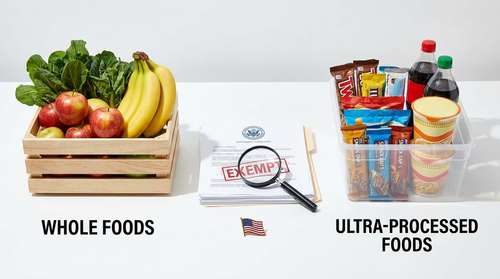
If the new pyramid has a hero, it is whole food; if it has a villain, it is the industrial food system. The 2025-2030 standards issue a stark warning for ultra-processed food avoidance. The document explicitly defines these products—such as sugary cereals, pre-packaged snacks, and shelf-stable meals—as "food-like substances" rather than nutrition.
The guidelines recommend:
- Zero added sugar for children under age four.
- Strict limits on foods containing artificial dyes and preservatives.
- Elimination of seed-oil based processed snacks from school lunch programs.
This policy is expected to have immediate ripple effects on federal programs, including the National School Lunch Program and WIC, forcing a reformulation of what millions of Americans eat daily. "We are declaring war on the chemicals that have hijacked our health," said Agriculture Secretary Brooke Rollins, signaling that the real food movement has officially entered the White House.
RFK Jr Nutrition Policy and the MAHA Agenda
The fingerprint of the "Make America Healthy Again" (MAHA) movement is unmistakable in these documents. The RFK Jr nutrition policy focuses on decentralizing food systems and empowering consumer choice through transparency. By validating the health benefits of regenerative agriculture and animal fats, the administration is effectively endorsing a farm-to-table approach on a national scale.
Critics from the plant-based sector argue the new protein targets are unsustainable, but proponents hail the guidelines as a victory for metabolic science. "For decades, we’ve been told to eat grain and fear fat, and we’ve only gotten sicker," Kennedy argued. "This reset is about returning to the wisdom of our ancestors backed by modern biochemistry." As these guidelines take effect, the impact will likely be seen not just on dinner plates, but in the declining stock prices of major processed food manufacturers.