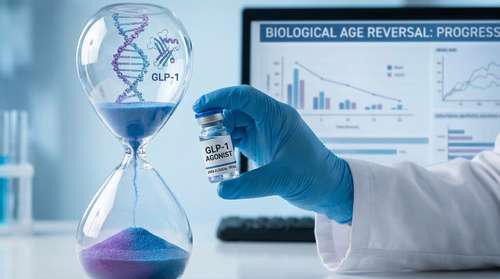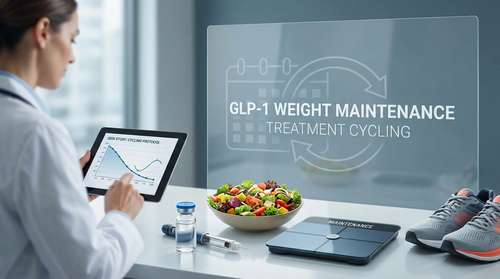
The fear of massive weight regain after stopping medications like Ozempic and Wegovy has shadowed one of the most significant medical breakthroughs of the decade. For years, early clinical trials warned that patients who halted their weekly injections would inevitably see the scale climb back up. But a groundbreaking real-world analysis released this week is rewriting the narrative on post-medication metabolism. According to the latest data, the secret to lasting success isn't necessarily staying on the drugs forever. Instead, patients are successfully achieving GLP-1 weight maintenance through a strategic, physician-guided protocol known as treatment cycling.
The Real-World Data Behind the Ozempic Rebound Study 2026
In tightly controlled clinical environments—such as the famous STEP 1 extension trial—researchers found that individuals regained up to two-thirds of their lost weight within a year of stopping semaglutide. However, these trials required participants to halt all medical obesity interventions to isolate the drug's effect. The real world operates differently, as doctors and patients adapt to metabolic changes in real time.
Researchers at the Cleveland Clinic just proved this point by analyzing the health records of 7,938 adult patients across Ohio and Florida. The results of this Ozempic rebound study 2026, finalized on March 17, stand in stark contrast to the initial panic over post-medication weight gain. The cohort consisted of individuals who initiated injectable semaglutide or tirzepatide but stopped within three to 12 months. Rather than experiencing severe metabolic blowback, the average patient treated for obesity regained merely 0.5% of their body weight one year after stopping the initial prescription.
Even more surprising, patients taking the medications for Type 2 diabetes who discontinued their prescriptions didn't just maintain their progress—they lost an additional 1.3% of their body weight over the following 12 months. This data completely upends the assumption that leaving the medication guarantees a rapid return to baseline weight.
How Treatment Cycling Weight Loss Actually Works
The stark difference between clinical trials and real-world outcomes comes down to what happens immediately after a patient stops taking the primary medication. Discontinuation is rarely the end of the therapeutic journey.
The most compelling Wegovy discontinuation results demonstrate that patients aren't just giving up. Instead, they are engaging in treatment cycling weight loss. Data shows that within a year of lapsing their initial prescription, 19.6% of patients strategically restarted the same medication, while 35.2% transitioned to alternative medical or therapeutic interventions. By stepping down the dosage, taking planned medication holidays, or switching to different pharmacological tools, patients can bypass the steep biological drive to regain fat while minimizing long-term gastrointestinal side effects.
Healthcare providers are recognizing that metabolic adaptation requires a dynamic response. Just as a patient might adjust their blood pressure medication over time, obesity treatment relies on shifting strategies to match the body's current needs.
The Cohort By the Numbers
The statistics from the newest retrospective analysis offer a highly optimistic outlook for patients concerned about lifetime drug dependency. When looking at the individual outcomes rather than just averages, the numbers tell a story of resilience:
- 45% of obesity patients either continued to lose weight or successfully maintained their new baseline in the year following discontinuation.
- 56% of diabetes patients achieved the same maintenance or further reduction after stopping the injections.
- More than half of the entire patient cohort actively transitioned to an alternative weight management strategy rather than quitting intervention entirely.
Shifting Obesity Nutrition Guidelines for Semaglutide Long-Term Health
While pharmacological bridges play a massive role in avoiding the rebound effect, dietary evolution remains the ultimate anchor. You cannot transition off a powerful appetite suppressant without a robust nutritional strategy in place. As the drug leaves your system, the dampening of food noise fades, and natural hunger cues return. Managing this biological reality is critical for semaglutide long-term health.
Leading dietitians and endocrinologists are heavily revising obesity nutrition guidelines to support patients transitioning off GLP-1 receptor agonists. The new protocols emphasize hyper-satiety diets heavily front-loaded with lean proteins and complex, high-fiber carbohydrates. Because patients often lose a percentage of lean muscle mass alongside body fat during the active weight-loss phase, aggressive protein intake and resistance training are now considered non-negotiable pillars for anyone planning to taper off their dosage.
These nutritional shifts are designed to naturally replicate the delayed gastric emptying that medications like Ozempic provide artificially. By filling the stomach with nutrient-dense, slow-digesting foods, patients can manage returning hunger cues without falling back into a caloric surplus.
The Future of Weight Management Drug News
The conversation around anti-obesity medications is finally maturing. We are moving past the binary idea that a patient must either rely on weekly injections for life or face total metabolic relapse. If the latest weight management drug news indicates anything, it is that obesity is being treated with the same nuanced, dynamic approach as hypertension or asthma.
For patients and providers, the takeaway is overwhelmingly positive. A prescription pause does not equal failure. With the right combination of strategic medication cycling, targeted nutritional support, and active medical supervision, sustainable life after GLP-1s isn't just a possibility—it is the new clinical standard.