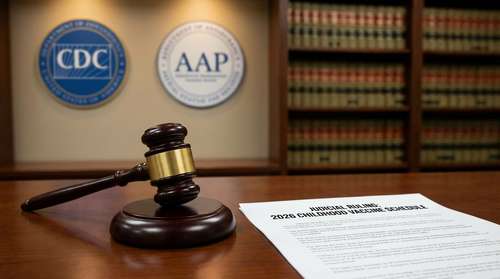
In a monumental shift for pediatric health news, a federal court in Boston has temporarily blocked controversial reductions to the 2026 childhood vaccine schedule. The sweeping preliminary injunction puts an immediate halt to the Department of Health and Human Services (HHS) attempts to strip several essential immunizations from the nation's standard pediatric care guidelines. Families and physicians alike are now navigating the fallout of this unprecedented legal intervention.
Understanding the Judge Brian E. Murphy Ruling
Issued on Monday, the Judge Brian E. Murphy ruling delivers a sharp rebuke of HHS Secretary Robert F. Kennedy Jr.’s recent overhaul of federal immunization guidelines. The court found that the government bypassed fundamental scientific procedures when it abruptly reduced the number of universally recommended routine pediatric shots from 18 to 11.
At the center of the legal dispute was the administration's controversial restructuring of the Advisory Committee on Immunization Practices (ACIP). The federal court noted that HHS unlawfully dismissed 17 voting ACIP members last June. These experts were replaced with hand-picked appointees who lacked the rigorous vetting and medical expertise traditionally required for the panel. Judge Murphy described the government's maneuvers as an "abandonment of the technical knowledge and expertise" that has historically safeguarded public health. The ruling also halts any immediate policy changes from the newly formed committee. The ACIP had been scheduled to hold a two-day meeting this week to vote on further guidelines, but those sessions have now been indefinitely postponed following the judge's orders.
AAP vs CDC Vaccines: A Historic Standoff
The lawsuit, spearheaded by the American Academy of Pediatrics (AAP) and supported by over 70 medical organizations, highlights an unprecedented rift between pediatricians and federal health agencies. This AAP vs CDC vaccines conflict reached a boiling point when federal officials rescinded universal recommendations for vaccines protecting against influenza, rotavirus, hepatitis A, hepatitis B, meningitis, and RSV.
Rather than accept these rollbacks, the AAP boldly broke ranks. The organization published its own comprehensive 2026 childhood vaccine schedule, explicitly endorsing the full array of 18 immunizations to protect infants and adolescents. AAP President Dr. Andrew Racine praised the court's decision, calling it a critical milestone for restoring scientific integrity to federal policy and protecting communities from preventable diseases.
Impact on Mandatory Childhood Immunizations
Parents and schools across the country have been caught in the crossfire of this legal battle. State health departments often rely on federal guidance to determine mandatory childhood immunizations for public school enrollment and daycares. The sudden federal policy shift left local officials scrambling to determine whether to maintain their existing school entry requirements or follow the scaled-back memo.
The lawsuit is part of a broader pushback, with 15 states recently joining forces to legally challenge what they described as a radical overhaul of national health policy. This judicial ruling vaccines 2026 intervention effectively freezes the newly proposed, limited schedule. By staying the federal rollbacks, the court restores the baseline evidence-based recommendations while the broader lawsuit proceeds. Families navigating back-to-school preparations can expect local health departments to lean heavily on the robust AAP guidelines during this interim period.
Prioritizing Vaccine Safety for Kids
At the heart of this legal clash is the fundamental issue of vaccine safety for kids. The ACIP has long served as the gold standard for analyzing clinical data to ensure that every shot added to the 2026 childhood vaccine schedule is both highly effective and necessary. The court's decision signals that political maneuvers cannot override established medical consensus.
Bypassing this independent committee triggered immediate alarms across the medical community. The universal hepatitis B birth dose alone, which the recent HHS memo attempted to eliminate, has prevented over 500,000 childhood infections and saved tens of thousands of lives over the past few decades. By halting the unvetted ACIP appointments, the judicial order ensures that any future changes to immunization protocols will require transparent, evidence-based clinical review.
What Families Need to Know Now
As this landmark civil case moves forward in the courts, healthcare providers urge parents to maintain their children's routine wellness checkups. Pediatricians overwhelmingly advise families to follow the science-backed protective guidelines upheld by the AAP rather than waiting for the legal dust to settle.
If you have questions regarding the 2026 childhood vaccine schedule or specific immunizations, schedule a consultation with your family physician. Medical professionals possess the most accurate, up-to-date clinical knowledge to help you make informed, confident decisions about your child's long-term health and well-being.