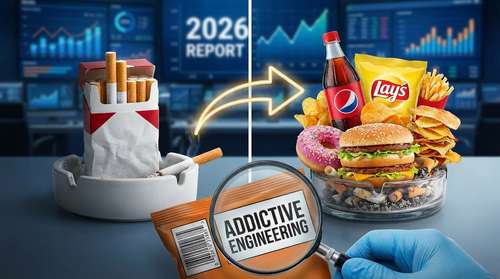
A groundbreaking report published this week has fundamentally shifted the conversation on global nutrition, declaring that ultra-processed foods (UPFs) are not merely unhealthy but are engineered with the same addictive strategies as nicotine products. The comprehensive analysis, released in The Milbank Quarterly by researchers from Harvard, Duke, and the University of Michigan, provides the strongest evidence to date that the industrial food complex uses "dose optimization" and "rapid reward delivery" to hijack the brain's reward centers. Coming alongside new data linking high UPF intake to a staggering 47% increased risk of heart attack and stroke, health experts are now calling for immediate, tobacco-style regulations on the $10 trillion processed food industry.
The Engineering of Addiction: How UPFs Mimic Tobacco
For decades, public health messaging focused on willpower and personal choice. However, this new 2026 study dismantles that narrative by revealing the intentional design behind your favorite snacks. Lead author Dr. Ashley Gearhardt, a psychology professor at the University of Michigan, argues that UPFs are "engineered less like food and more like cigarettes."
The report identifies specific manufacturing techniques used to create dependency:
- Dose Optimization: Just as tobacco companies manipulated nicotine levels for maximum addiction, food manufacturers calculate the precise ratio of salt, sugar, and fat (the "bliss point") to override the body's natural satiety signals.
- Rapid Reward Delivery: UPFs are processed to break down instantly in the mouth, delivering a glucose and dopamine spike to the brain in seconds—mirroring the rapid hit of nicotine from smoking.
- Deceptive Reformulation: The study highlights how "health washing"—marketing products as "low fat" or "natural"—mimics the "light" and "mild" cigarette campaigns of the 20th century, which offered no real health protection.
"These products are designed to bypass the biological brakes that tell us to stop eating," explains Dr. Gearhardt. "It is a pharmacological effect, not a failure of character."
New Data: 47% Higher Risk of Heart Attack and Stroke
The release of the addiction report coincides with alarming new cardiovascular data published this week in the American Journal of Medicine. Researchers tracking dietary habits found that adults with the highest consumption of ultra-processed foods faced a 47% higher risk of heart attack and stroke compared to those who ate the least.
This statistic is particularly disturbing because it holds true even after adjusting for other risk factors like smoking, BMI, and physical activity. The study suggests that the chemical additives, emulsifiers, and inflammatory nature of UPFs cause direct vascular damage independent of weight gain. With UPFs now comprising nearly 60% of the average American adult's diet and 70% of children's calories, the implications for heart disease prevention are catastrophic.
"We are witnessing a slow-motion public health disaster similar to the tobacco epidemic of the 1950s," warns Dr. Carlos Monteiro, a pioneer in nutrition science who coined the term 'ultra-processed.' "The data is undeniable: these foods are cutting lives short."
Calls for Tobacco-Style Regulation in 2026
The mounting evidence has triggered aggressive calls for policy reform. The Harvard nutrition study authors argue that the "individual responsibility" model is broken and must be replaced by industry accountability. They propose a regulatory framework inspired by the World Health Organization’s Framework Convention on Tobacco Control.
Proposed measures gaining traction include:
- Mandatory Warning Labels: prominent front-of-pack warnings explicitly stating addiction and heart disease risks.
- Marketing Bans: Restricting advertisements for UPFs, particularly those targeting children and teenagers on social media platforms.
- Fiscal Policies: heavy taxation on UPFs to subsidize fresh, whole foods, effectively flipping the price advantage that junk food currently enjoys.
As the 2026 dietary guidelines are debated in Washington, lobbyists for the food industry are already pushing back, claiming such classifications are unscientific. However, the parallels to the tobacco industry's historical denial tactics are becoming impossible for lawmakers to ignore.
Protecting Yourself: Navigating the Supermarket Aisle
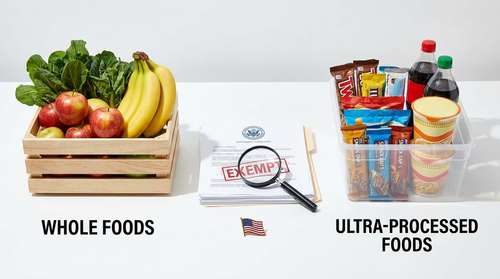
While policy changes may take years, consumers can take immediate steps to reduce their risk. The distinction between "processed" and "ultra-processed" is key. Canned beans or frozen vegetables are processed but healthy; UPFs are formulations of industrial ingredients you wouldn't find in a home kitchen.
To identify UPFs, look for the "markers of ultra-processing" on ingredient lists:
- High-fructose corn syrup or invert sugar
- Protein isolates (soy, pea, or whey)
- Chemical additives like emulsifiers, thickeners, and artificial flavors
- cosmetic additives (colors and glazing agents)
Replacing these items with whole foods—fruits, vegetables, nuts, and home-cooked meals—remains the most effective strategy for heart disease prevention and breaking the cycle of food addiction. As this week's reports make clear, stepping away from UPFs isn't just a diet choice; it's a necessary defense against an industry engineered to keep you hooked.